

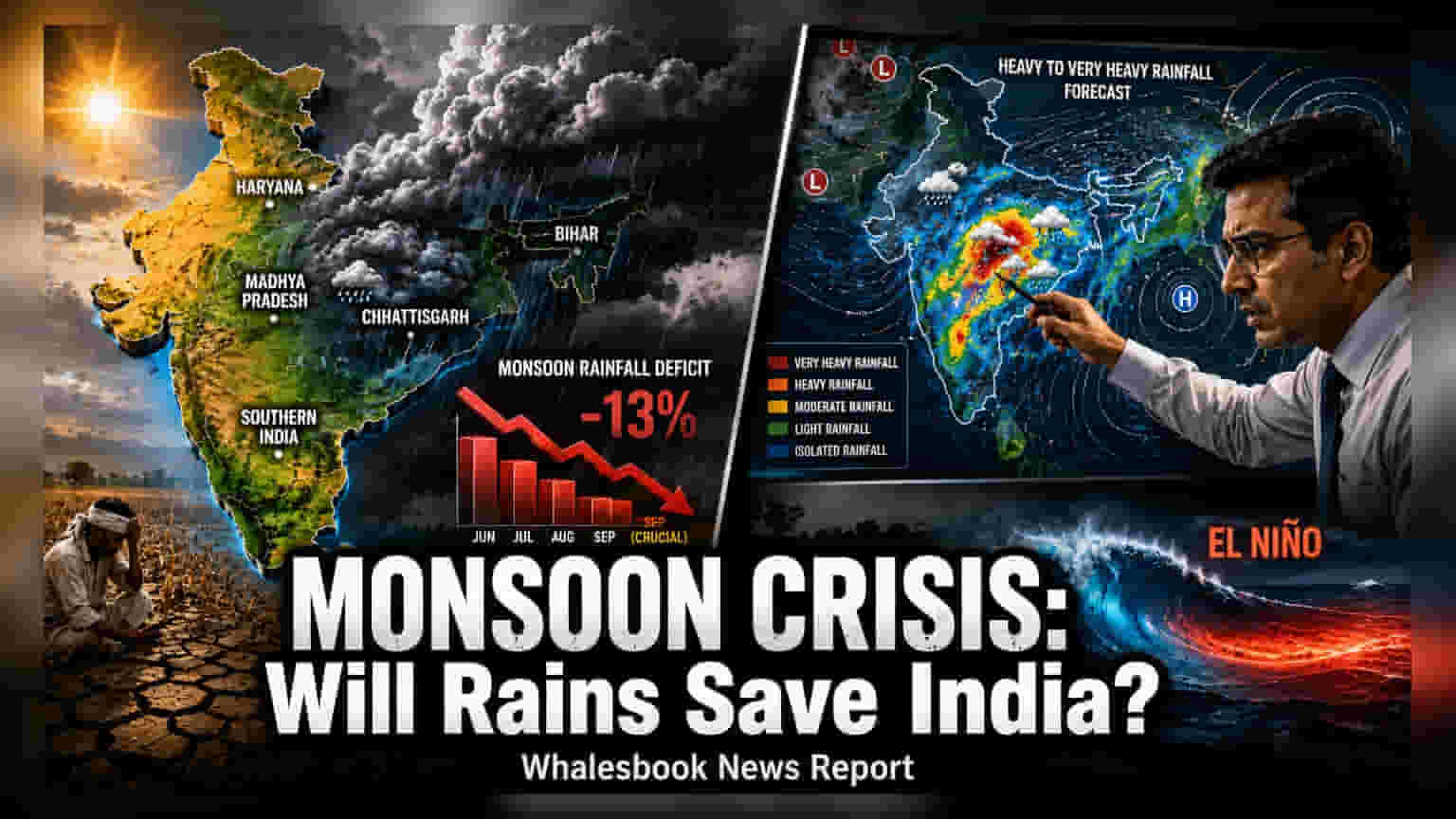
Heavy rains in Central and Eastern India are providing temporary relief, but the national monsoon deficit remains near 13%. Investors are tracking how this uneven rainfall impacts Kharif crop harvests, food inflation, and rural consumer spending, with September becoming a crucial month for recovery.
The India Meteorological Department has forecast heavy to very heavy rainfall across Chhattisgarh and Madhya Pradesh, offering a much-needed boost to moisture levels in parts of Central and Eastern India. Despite these new weather systems, the overall picture for the monsoon remains uneven. As of late August 2026, India faces a cumulative monsoon rainfall deficit of approximately 13%. This gap between the actual rainfall received and the long-term average is causing concern because the monsoon trough—the primary zone of rainfall—has remained positioned near the Himalayan foothills. This placement has kept rainfall weak in other key agricultural belts, including parts of Haryana, Bihar, and various states in Southern India.
For investors, the primary concern is not just the weather, but how it connects to the broader rural economy. A weak or uneven monsoon directly affects the Kharif crop season, which includes essential crops like soybeans and pulses. If harvest yields are lower than expected due to dry spells or erratic rain, it often puts upward pressure on food prices. For companies in sectors like fast-moving consumer goods, tractors, and two-wheelers, the monsoon is a key indicator of rural purchasing power. When farmers face reduced yields, their ability to spend on non-essential items typically drops, which can impact the revenue growth of these consumer-facing companies.
Market focus is now shifting to September, which serves as the final, critical window for the monsoon to recover before the season begins its retreat from Northern India. Historically, September rainfall has the potential to mitigate some of the seasonal deficits, but this year's challenges are complicated by the established El Niño pattern. While the economy has shown resilience compared to previous years, continued uneven rainfall could force a reassessment of agricultural output and food inflation trends.
Investors are keeping a close watch on two specific developments in the coming weeks. The first is the official data on Kharif crop sowing and health, which will provide a clearer picture of potential food supply. The second is the spatial distribution of rainfall in September. If the monsoon fails to cover the remaining deficit, it could lead to stricter monitoring of food prices by the central bank and potentially influence the future direction of interest rates. For now, the reliance on late-season rainfall is a critical variable that will shape the sentiment for rural-focused stocks as the quarter closes.