 Whalesbook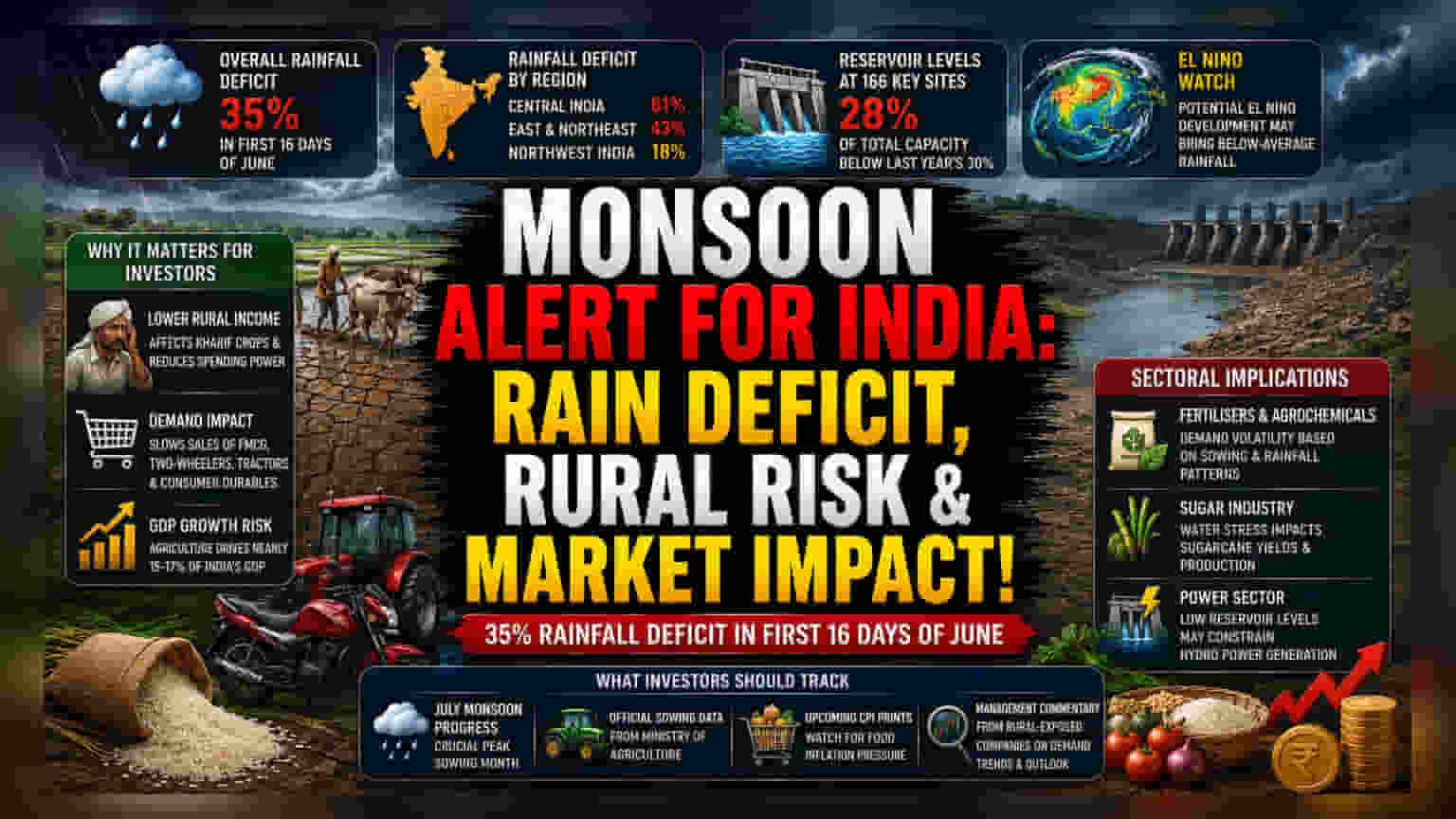


India’s monsoon season has recorded a 35% rainfall deficit in June, raising concerns for agricultural output and water security. The slow start, alongside El Nino forecasts, poses potential risks to rural consumption and food inflation. Investors may track how this impacts companies in the FMCG, auto, and fertiliser sectors, as rural spending relies heavily on a successful crop season.
What Happened
The Indian monsoon has experienced a sluggish start, with a 35% rainfall deficit recorded in the first 16 days of June. According to data from the India Meteorological Department, the distribution of rainfall has been uneven, with Central India facing a 61% deficit and the eastern and northeastern regions recording a 43% shortfall. Adding to the concern, reservoir levels in 166 key locations have dipped to 28% of total capacity, falling below the 30% level recorded during the same period last year. Forecasters have also pointed to the potential development of El Nino conditions, which historically correlate with below-average precipitation for the subcontinent.
Why This Matters For Investors
The monsoon is a critical engine for the Indian economy, as it delivers about 70% of the country's annual rainfall. For investors, the immediate concern is the impact on rural income. A significant portion of the Indian population relies on agriculture for their livelihood. When rainfall is deficient, it directly affects the Kharif crop sowing season, which leads to lower rural incomes. This reduction in disposable income often slows down demand for discretionary and non-discretionary goods in rural markets. Companies in the FMCG, two-wheeler, and tractor manufacturing sectors typically see their sales performance tied closely to the health of the agricultural season.
Food Inflation and Corporate Margins
Beyond demand, a poor monsoon can disrupt supply chains for agricultural commodities. Reduced rainfall can lead to lower production of essential crops like rice, pulses, and oilseeds, potentially pushing up food prices. This contributes to headline inflation, which influences the Reserve Bank of India’s monetary policy decisions. For consumer-facing companies, high food inflation can act as a double-edged sword. While it may increase input costs for food processing firms, it also leaves the average consumer with less money to spend on non-essential items, potentially putting pressure on volume growth and operating margins.
Sectoral Implications
The impact of rainfall distribution is felt differently across various sectors. Fertiliser and agrochemical companies often see demand volatility based on the timing and quantity of rainfall, as farmers adjust their sowing plans. Similarly, the sugar industry monitors water levels closely, as sugarcane is a water-intensive crop. Meanwhile, the power sector, particularly hydropower, depends on reservoir levels to maintain generation efficiency. If water levels remain below last year's average, companies reliant on hydro power may face operational constraints.
What Investors Should Track
Investors may monitor a few key developments over the coming weeks to gauge the economic impact. First, the progress of monsoon rainfall in July is crucial, as this is a peak month for sowing. Second, the official sowing data released by the Ministry of Agriculture will indicate how much area is being covered for key crops. Third, upcoming Consumer Price Index (CPI) prints will show if food inflation is beginning to creep up due to supply concerns. Finally, management commentary from companies with high rural exposure—such as tractor, two-wheeler, and FMCG players—will be important, as they will likely provide insights into early demand trends and how they are navigating the uncertain rainfall environment.