 Whalesbook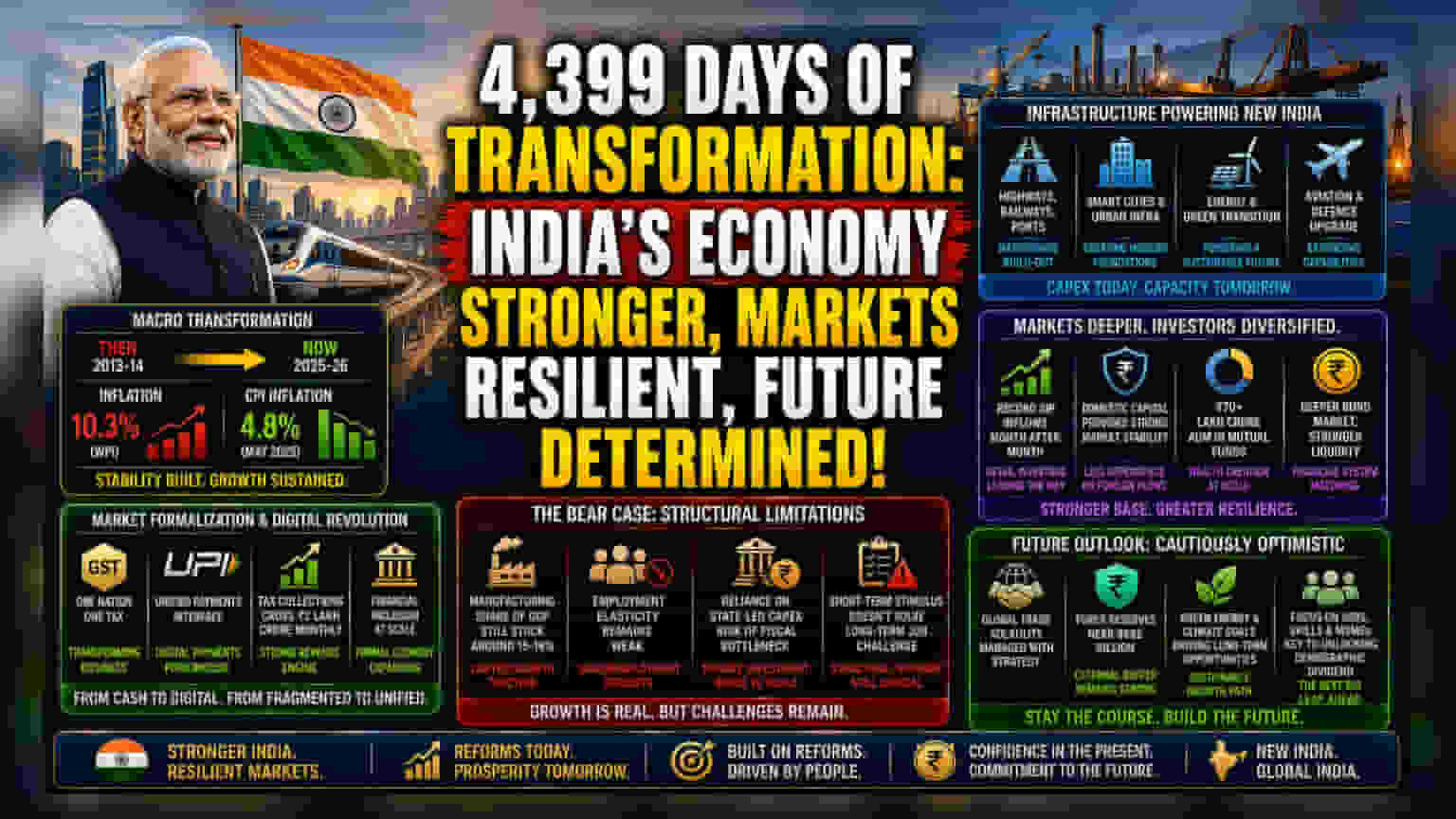


The Macro Shift Beyond the Headlines
The economic narrative surrounding the current administration’s record tenure often focuses on political longevity, but the true significance lies in the state’s transition from a regulator of scarcity to a facilitator of capital formation. By June 10, the completion of 4,399 days in power provides a high-resolution view of how India moved from the persistent policy paralysis of 2014 toward a more aggressive, state-led infrastructure model. The shift in core macroeconomic metrics—specifically moving from double-digit inflationary pressures to a more controlled CPI environment—has served as the foundation for the current cycle of capital expenditure.
The Mechanics of Market Formalization
Unlike previous decades, this period was marked by an aggressive push toward formalizing the economy. The implementation of the Goods and Services Tax was not merely a tax reform; it functioned as the primary catalyst for the integration of fragmented state-level markets into a singular national economy. This consolidation enabled the digital tax backbone that currently sustains monthly collections frequently north of ₹2 lakh crore. When cross-referenced with the proliferation of the Unified Payments Interface, the result is a massive expansion in the tax base and a significant reduction in friction for the informal sector to engage with formal banking systems.
The Forensic Bear Case: Structural Limitations
While the headline GDP growth figures remain robust, a cynical assessment reveals underlying cracks in the long-term thesis. Critics point to the disconnect between capital-intensive growth and employment elasticity. Despite the success of Production Linked Incentive schemes in electronics and select manufacturing sub-sectors, the broader manufacturing share of GDP remains resistant to significant expansion. Furthermore, the reliance on state-led capital expenditure creates a potential fiscal bottleneck if private sector investment does not crowd in more aggressively. Historical data suggests that while infrastructure spending is an effective short-term stimulus, it does not solve the structural underemployment that continues to plague the demographic dividend, a critical risk factor that remains unmitigated by current policy levers.
Future Outlook and Capital Resilience
Looking ahead, the resilience of domestic financial markets, evidenced by record-breaking systemic investment plan inflows, suggests a fundamental change in the investor base. Foreign institutional outflows no longer trigger the same degree of liquidity crises as seen in previous decades, thanks to the depth provided by domestic retail capital. However, the trajectory of this growth depends heavily on the government’s ability to maintain high foreign exchange reserves—currently sitting near $682 billion—while navigating global trade volatility and the transition toward greener energy mandates. The consensus among institutional observers remains cautious on the pace of manufacturing job creation, even as they remain bullish on the long-term utility of the nation’s digital infrastructure.