

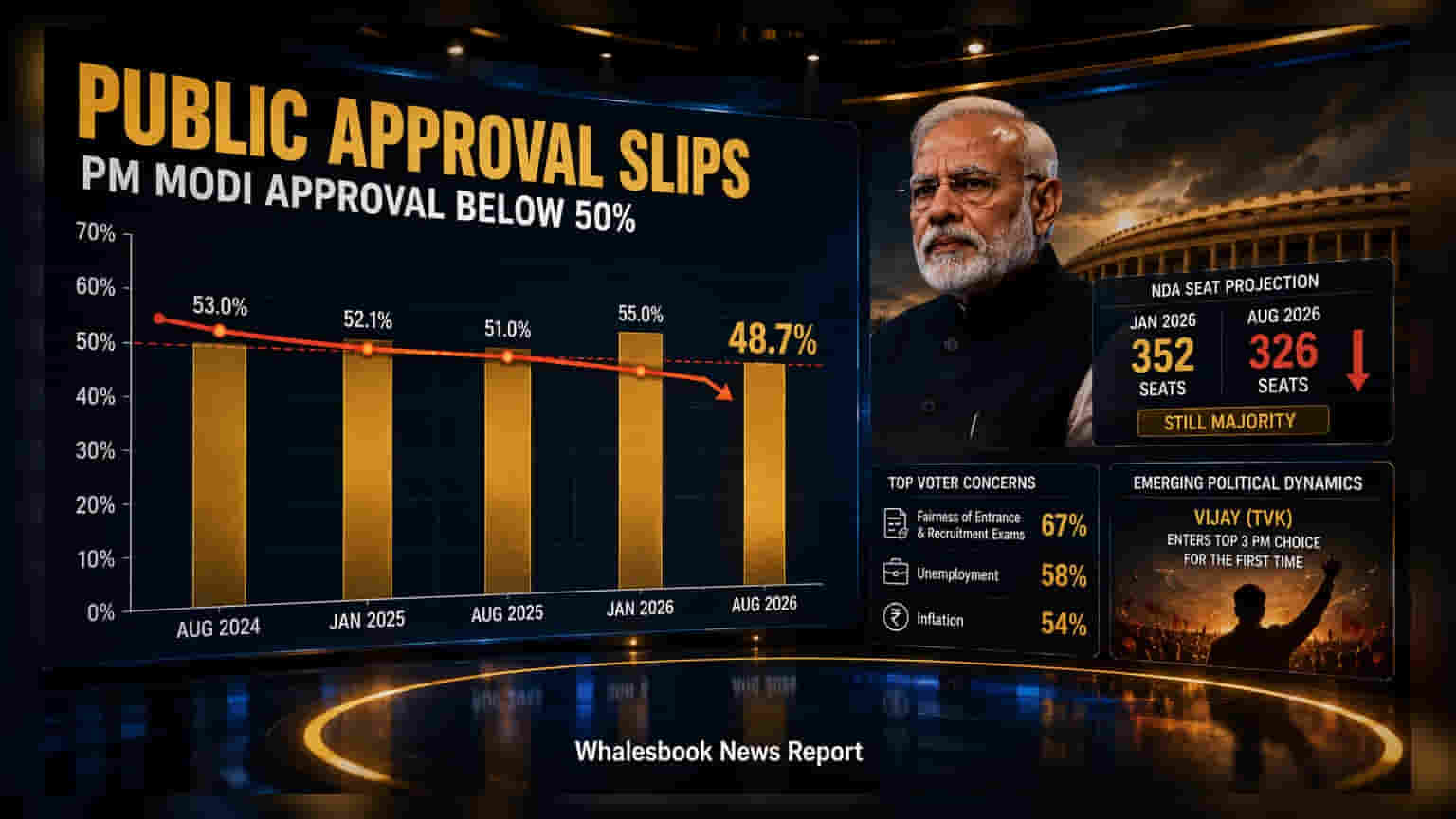
Prime Minister Narendra Modi's approval rating fell to 48.7% in the August 2026 Mood of the Nation survey, down from 55% in January. While the NDA remains projected to hold a majority, investors are monitoring rising concerns over unemployment and inflation, which may influence future policy decisions and government spending priorities.
Prime Minister Narendra Modi’s approval rating has slipped below the 50% mark for the first time since August 2024, according to the latest Mood of the Nation survey released in August 2026. The data shows approval at 48.7%, a notable decline from the 55% recorded in the January 2026 survey. While the National Democratic Alliance (NDA) is still projected to secure 326 seats—retaining a comfortable majority—the figure has dropped from the 352 seats projected earlier in the year.
Implications for Policy and Markets
In the Indian financial markets, political stability is often viewed as a key indicator for policy continuity and structural reforms. Institutional investors frequently monitor shifts in public sentiment to gauge the likelihood of future adjustments in governance. The decline in approval ratings highlights a changing political atmosphere that market participants track to assess potential risks to the current policy trajectory.
Addressing Voter Concerns
The survey highlights specific areas of public dissatisfaction that could potentially influence future government fiscal policy. Approximately 67% of respondents expressed limited confidence in the fairness of entrance and recruitment examinations, while concerns regarding unemployment and inflation remain prominent. For investors, these issues are significant because they may influence the government's budgetary agenda. There is a possibility that the administration could shift focus toward welfare-oriented measures, direct cash transfers, or increased employment-generation schemes to address these public concerns, which can have varying impacts on different economic sectors.
Emerging Political Dynamics
The survey also identified the rise of Tamil Nadu Chief Minister and Tamilaga Vettri Kazhagam (TVK) leader Vijay, who entered the top three rankings for preferred Prime Minister candidates for the first time. This emergence signals a more competitive political landscape. While the central government continues to leverage a track record of diplomatic and crisis management, the survey results suggest that domestic economic factors are becoming a primary focus for the electorate.
As the administration moves into the next phase of governance, the key monitorable for the market will be how the government balances economic growth initiatives with measures aimed at addressing inflation and job creation. Investors may track upcoming legislative sessions and budget allocations to see if policy priorities shift in response to these voter sentiments. The survey serves as a reminder to monitor how political competition and public demand influence the legislative agenda in the coming months.