

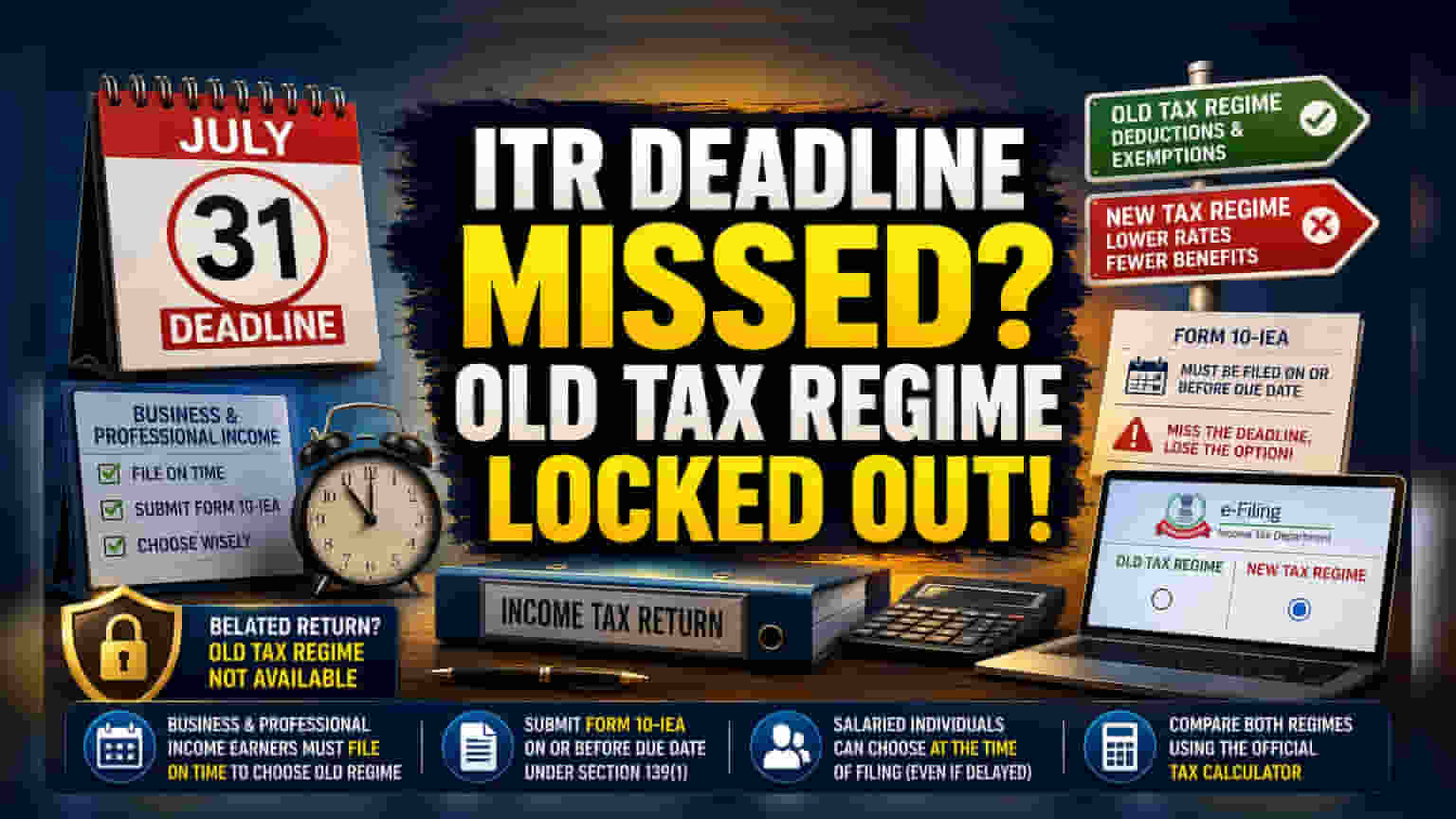
Taxpayers with business or professional income risk losing the option to use the old tax regime if they miss the income tax return filing deadline. While salaried individuals have more flexibility, those with business income must opt for the old regime via Form 10-IEA by the due date. Missing the deadline forces them into the default new tax regime, which may not be the most tax-efficient choice.
What Happened
For many Indian taxpayers, the annual rush to file Income Tax Returns (ITR) is underway as the July 31 deadline for non-audit cases approaches. A critical rule impacts individuals with income from a business or profession: the strict requirement to file on time if they wish to opt out of the default new tax regime. If these taxpayers miss the original due date and choose to file a 'belated return'—a return filed after the deadline—they effectively lose the ability to select the old tax regime for that year. They will be mandatorily taxed under the new tax regime, which might result in a higher tax liability depending on their specific deductions and exemptions.
Why The Distinction Matters
The Income Tax Department has designated the new tax regime as the default option for eligible taxpayers. This regime features lower tax slab rates but significantly restricts the ability to claim common deductions, such as House Rent Allowance (HRA), Section 80C investments, and interest on home loans. For many business owners and professionals, the old tax regime remains the more cost-effective choice because it allows these specific deductions. By missing the filing deadline, business and professional income earners essentially waive their right to leverage these tax-saving benefits for the financial year.
The Role Of Form 10-IEA
Taxpayers with business or professional income who want to choose the old tax regime must formally declare this intent. This is done by filing Form 10-IEA. Crucially, this form must be submitted on or before the due date specified under Section 139(1) of the Income-tax Act. If a taxpayer misses this timeline, the option to opt out of the new regime is closed for that assessment year. Even if they file their ITR under the 'belated' category, the income tax portal will typically not allow them to switch to the old regime because the window for submitting the required declaration form has passed.
Salaried vs Business Income
The rules for switching tax regimes differ significantly based on the source of income. Salaried individuals—those who generally file ITR-1 or ITR-2 and have no income from business or profession—retain much higher flexibility. They can usually decide between the old and new tax regimes at the time of filing their ITR, even if the filing is delayed. Their choice is not bound by a pre-filing deadline for a specific form like 10-IEA in the same way as business income earners. This creates a two-tiered system where business owners must be more vigilant about their filing timeline to avoid losing their preferred tax structure.
What Taxpayers Should Track
For taxpayers with business or professional income, the most important monitorable is the original ITR filing due date. It is essential to ensure that any necessary forms, such as Form 10-IEA, are submitted well within the window to maintain the option of using the old tax regime. Those who are unsure about their tax liability under the two regimes may consider using the official Income Tax Department’s online calculator to perform a quick comparison before finalizing their filing strategy. Procrastinating until the last few days increases the risk of technical glitches on the e-filing portal, which could inadvertently lead to a missed deadline.