

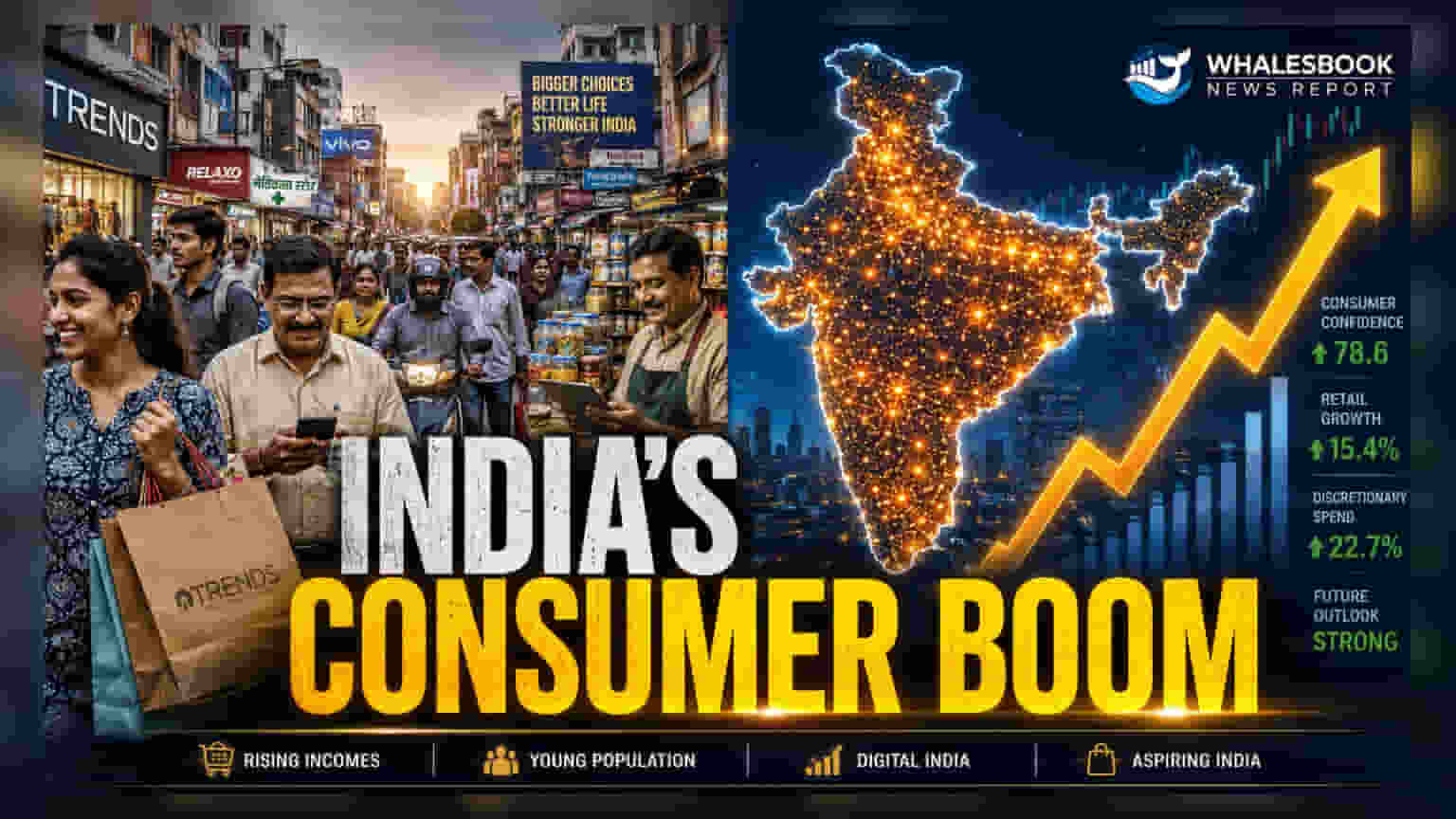
India's middle-class population is projected to account for 93% of national consumer spending. This expansion is moving beyond major metros, with 500 cities emerging as key economic hubs for business growth.
What Happened
Finance Minister Nirmala Sitharaman recently highlighted that India’s middle class, which now makes up about 31% of the total population, is set to become the primary force behind domestic consumption. Official projections indicate this group will drive 93% of the country's consumer spending. This growth is increasingly happening outside of traditional top-tier cities, with nearly 500 smaller cities emerging as significant centers for economic activity and wealth distribution.
Why This Matters for the Economy
For investors, the shift of consumption power toward tier-II and tier-III cities suggests a larger addressable market for consumer goods, retail, and financial services companies. When wealth and spending capacity spread across 500 cities rather than remaining concentrated in a few metros, companies that have strong distribution networks in these smaller regions may see long-term demand benefits. This trend reflects years of structural changes, including the formalization of the economy through GST and increased access to credit for small businesses.
Government Policies and Business Growth
Several government-led initiatives are currently supporting this transition. Schemes providing collateral-free loans to micro, small, and medium enterprises (MSMEs) and the streamlining of tax systems are aimed at boosting local business activity. As these smaller businesses grow, they contribute more to the local economy and regional employment, which in turn fuels the purchasing power of the middle class in those areas.
Focus on AI and Workforce Readiness
Beyond traditional consumer spending, the government is focusing on preparing the workforce for a digital economy. To address potential shifts in employment due to artificial intelligence, the government is coordinating with the private sector to conduct district-level AI skilling camps. For businesses, this focus on upskilling is essential because the MSME sector plays a critical role in India's export capabilities. A more skilled workforce in regional hubs could improve the productivity and competitiveness of smaller firms.
What Investors Should Track
Investors may look for companies that are specifically increasing their footprint in tier-II and tier-III cities. Key factors to monitor include the growth in retail reach, the ability of consumer-facing firms to maintain profit margins while expanding into smaller markets, and the adoption of digital technologies by smaller enterprises. Additionally, observing the performance of companies that provide services or tools to MSMEs may offer insights into how effectively these smaller cities are integrating into the broader national growth story.