

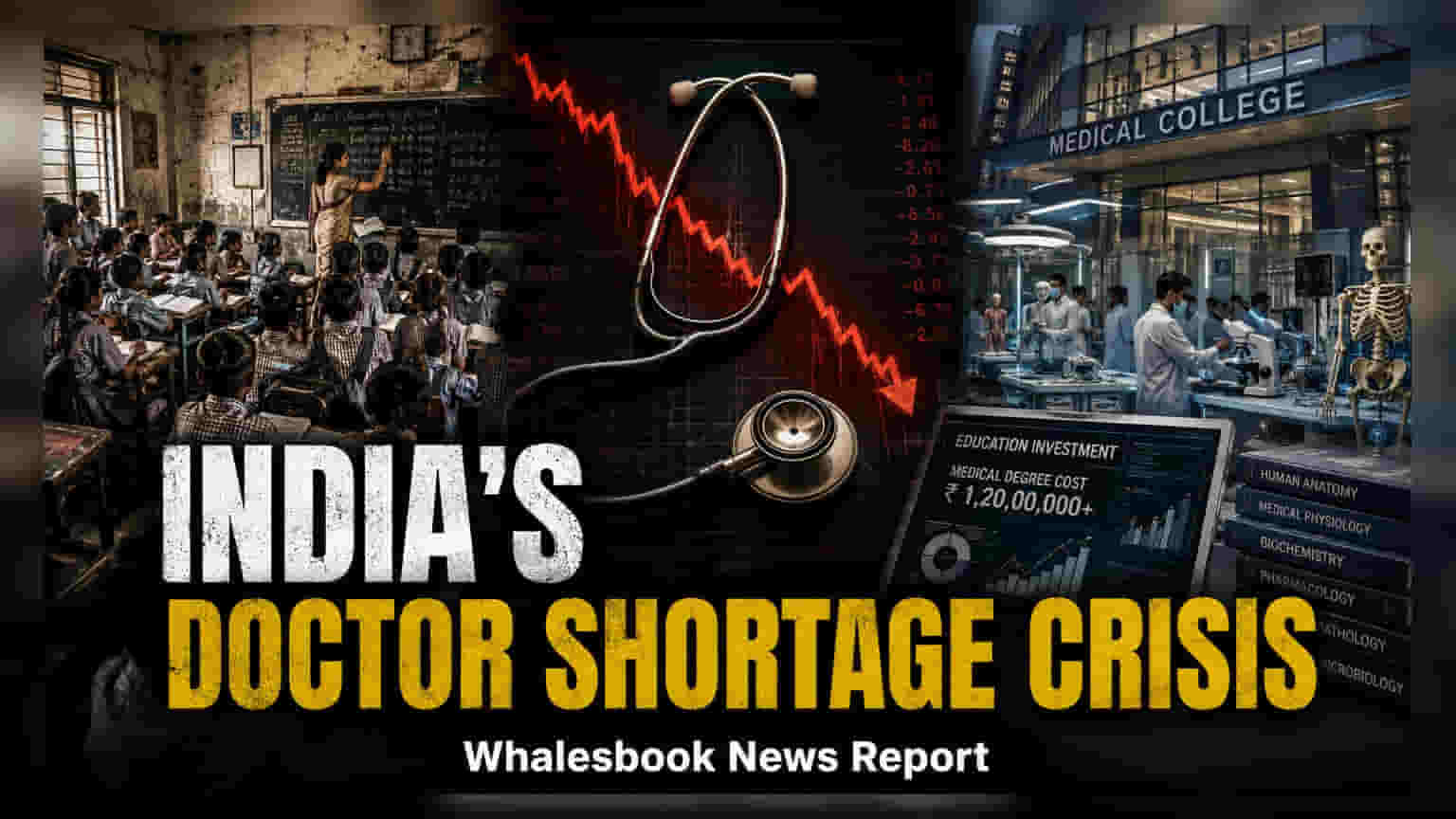
India needs roughly 700,000 more doctors, requiring the setup of 400 new medical colleges. With each college costing about ₹400 crore to build, the high capital requirement remains a major economic hurdle. This shortfall forces thousands of students to study abroad, spending approximately ₹7,500 crore annually, highlighting a significant gap in domestic infrastructure.
India’s medical education sector is facing a massive supply-demand imbalance that continues to shape both public policy and personal investment decisions. The nation requires an estimated 700,000 additional doctors to reach the target of one doctor for every 1,000 people. To bridge this gap, industry estimates suggest that India needs to establish roughly 400 new medical colleges, each requiring an upfront capital investment of approximately ₹400 crore, excluding ongoing operational costs.
Financial Barriers and Capital Allocation
The sheer scale of capital spending required to build these facilities places a heavy burden on both state and central government budgets. This situation creates a difficult choice regarding resource allocation, particularly when balanced against the need for investment in primary education, which is more time-intensive but less capital-heavy. Since the mid-1960s, policy experts have debated how best to fund this infrastructure, yet the gap between the need for doctors and the actual number of seats available remains wide.
The Impact of Capital Outflow
Because domestic capacity is currently insufficient, a large number of students—estimated at 25,000 annually—opt to pursue medical education in foreign countries. This migration results in a significant outflow of capital, with these students spending an estimated ₹7,500 crore each year on foreign education. This trend persists despite the high earning potential for medical professionals within India, where doctors earn an average daily income of around ₹7,000.
The Economic Paradox of Medical Tourism
While India faces a domestic shortage of trained professionals, it simultaneously maintains a thriving medical tourism industry that attracts approximately 500,000 patients annually. While this generates valuable revenue, it does not solve the underlying lack of domestic doctors. Furthermore, current regulations prohibit the commercial importation of foreign doctors, meaning the country must rely primarily on its own training capacity to meet future needs.
Future Outlook for the Sector
Investors and policymakers are looking at how this supply crunch might be addressed through potential changes in public-private partnerships or private investment in education. The core monitorable for the sector remains the speed at which new colleges are approved and constructed, as well as any shifts in government policy regarding the financing of medical training. As the demand for quality healthcare grows, the financial returns for established medical institutions and the cost of entry for new players will remain key points of analysis in the coming years.