

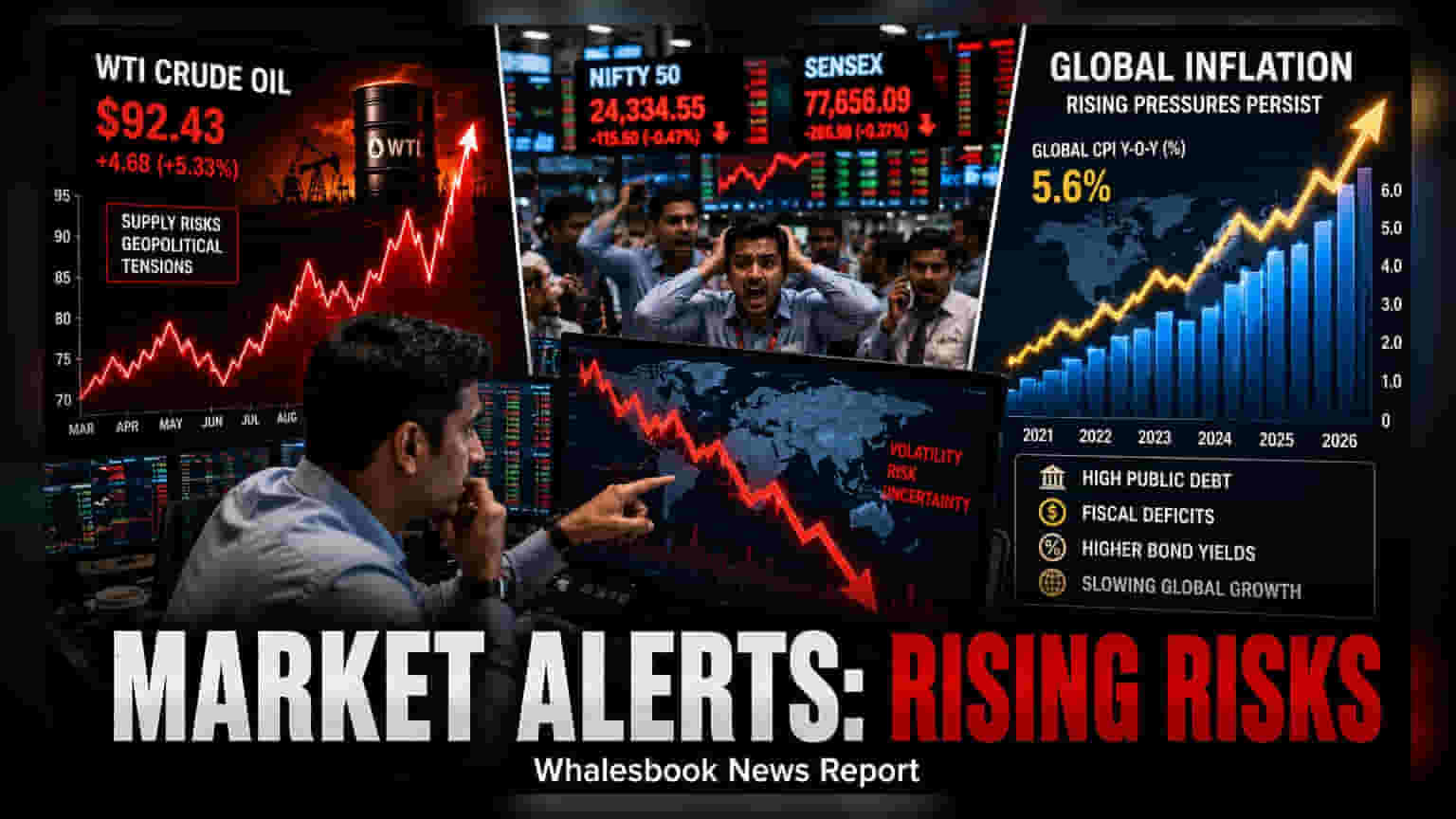
Indian markets are currently navigating a mix of global geopolitical tensions and macroeconomic challenges. Key areas of concern include volatile crude oil prices, persistent inflation, and rising public debt levels, all of which are influencing investor strategy and causing increased market volatility.
Indian stock markets are currently in a phase of adjustment as investors weigh strong domestic earnings expectations against a series of persistent global macroeconomic headwinds. While corporate performance in India remains resilient, the broader market discourse is increasingly dominated by concerns over geopolitical tensions, energy prices, and fiscal stability.
Geopolitical Uncertainty and Energy Prices
A primary point of discussion among market analysts and institutional investors is the ongoing instability in West Asia. Geopolitical stalemates in the region are creating significant uncertainty for global supply chains. For India, the primary risk remains the volatility in crude oil prices. Even moderate spikes in oil costs can have a non-linear impact on the Indian economy, affecting inflation, the current account deficit, and the profitability of oil-importing sectors. With global inventories showing sensitivity to supply disruptions, the energy market remains a key monitorable that could trigger sudden market movements.
Inflation and Global Bond Yields
Persistent inflation across both developed and emerging economies continues to be a challenging factor. While many central banks have sought to manage price levels through interest rate adjustments, inflation has proven to be stubborn in various regions. This environment, characterized by fiscal and monetary policies that are still adjusting to post-pandemic realities, is exerting upward pressure on global bond yields. Higher yields in markets like the US often reduce the appeal of emerging market equities for foreign investors, as they look for more stable returns elsewhere. The interplay between these global yields and local interest rates is a critical factor for the Indian debt and equity markets.
Valuation and Fiscal Challenges
Another layer of caution in the current market environment stems from high public debt levels globally. Governments across many nations are balancing fiscal deficits with the need for economic support, which raises questions about the long-term sustainability of debt. In the equity market, current valuations are largely built on expectations of robust earnings growth. However, this optimism leaves little buffer for negative surprises. Analysts are noting that if macroeconomic issues—such as elevated debt or a slowdown in global demand—materialize into tangible economic impact, the market may see periods of volatility as it recalibrates to these realities.
What Investors Should Track
For investors, the immediate path forward involves balancing optimism about domestic growth with the caution warranted by global macro conditions. The most important monitorables in the coming weeks include updates from the Reserve Bank of India (RBI) regarding monetary policy, trends in crude oil prices, and the monthly trajectory of inflation data. Additionally, market participants will likely watch for any signs that global fiscal policies are tightening, which could impact liquidity and sentiment in the Indian stock market. As the market moves through this cycle, a focus on company-specific fundamentals and earnings quality may be more important than betting on broad, macro-driven market movements.