 Whalesbook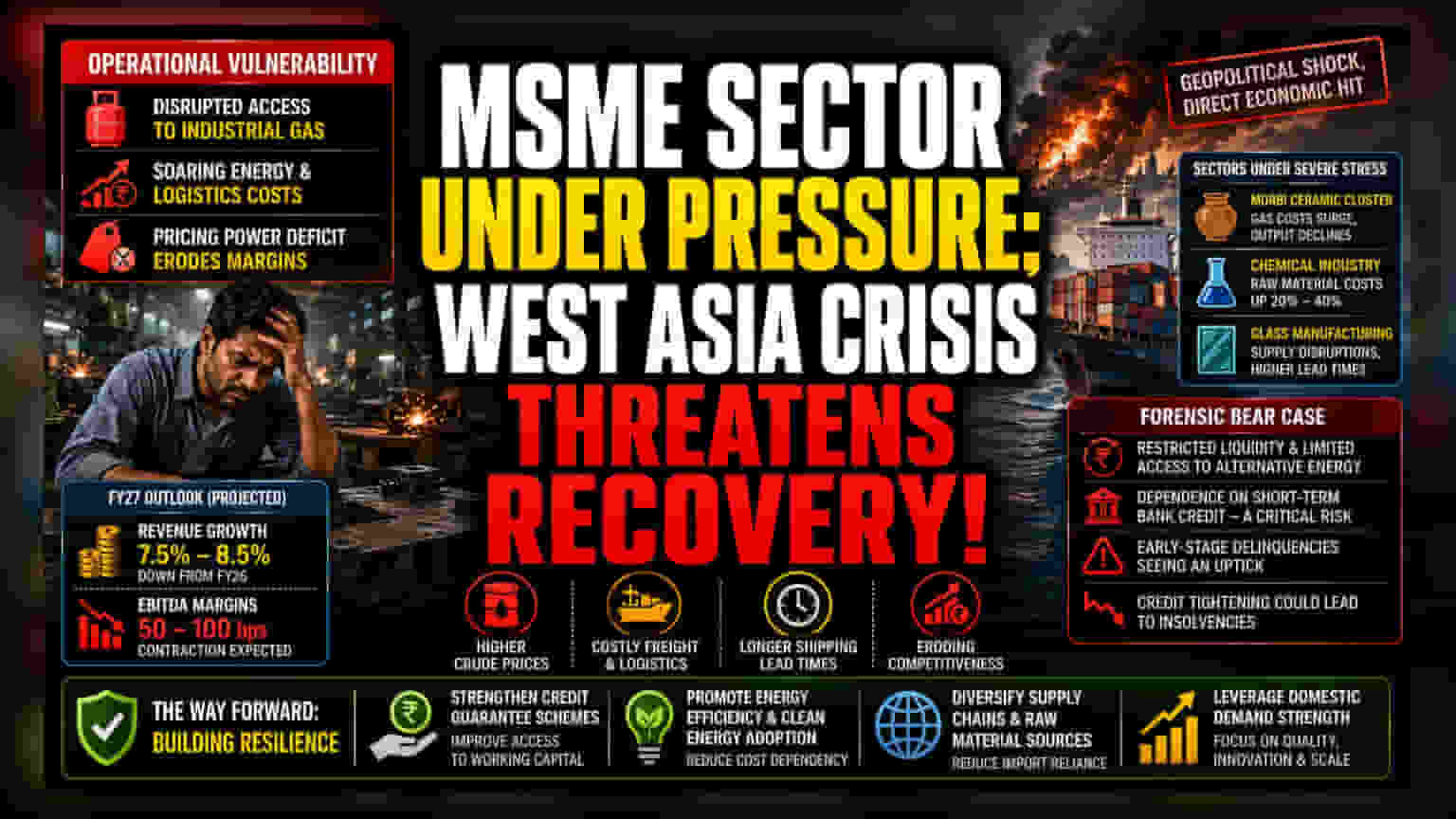


The Operational Vulnerability
While the government positions the current review as a precautionary measure, the underlying reality is a tightening financial noose around India’s small-scale manufacturers. The escalating crisis in West Asia has evolved from a distant geopolitical concern into a direct hit on the bottom line. Recent data suggests that the sector is grappling with a dual-pronged assault: disrupted access to essential raw materials like industrial gas and the inability to pass on soaring energy and logistics costs to consumers. This pricing power deficit, compounded by higher freight rates and extended shipping lead times, is effectively eroding the competitive advantage of small units compared to their larger, better-capitalized peers.
The Analytical Deep Dive: A Sector at Risk
Evidence suggests the impact is far from uniform, with energy-intensive clusters bearing the brunt of the instability. The ceramic manufacturing hub of Morbi in Gujarat serves as a stark warning, where significant output declines are projected as gas-based production becomes increasingly unviable. Similarly, the chemical and glass manufacturing segments are navigating raw material cost surges of 20% to 40% as supply lines originating from the Middle East face prolonged disruptions. For FY27, analysts project that MSME revenue growth will moderate to approximately 7.5% to 8.5%, a noticeable dip from the previous year. More alarmingly, EBITDA margins are anticipated to contract by 50 to 100 basis points, effectively stalling the recovery momentum seen in recent years.
The Forensic Bear Case: Structural Weaknesses
Beyond the immediate geopolitical shocks, the crisis has exposed deep-seated structural vulnerabilities within the MSME ecosystem. Unlike larger, diversified firms that can hedge against currency volatility and commodity spikes, smaller units suffer from restricted liquidity and limited access to alternative energy sources. The sector’s persistent reliance on short-term bank credit to bridge the gap between inventory investment and buyer realization remains a critical failure point. With early-stage delinquency levels in manufacturing already seeing a subtle uptick, lenders are beginning to pull back on credit, creating a liquidity crunch that could force smaller units into insolvency if the conflict-driven inflation persists through the second half of the year.
The Future Outlook: Seeking Resilience
Government officials are currently evaluating strategies to bolster the sector, with a potential emphasis on revitalizing credit guarantee schemes and promoting energy-efficiency transitions. However, the path forward is heavily dependent on the duration of the regional instability. While the broader domestic demand remains a pillar of strength, the long-term resilience of the sector will require a fundamental shift away from import-heavy dependencies and toward diversified supply chain partners to neutralize future exogenous shocks.