

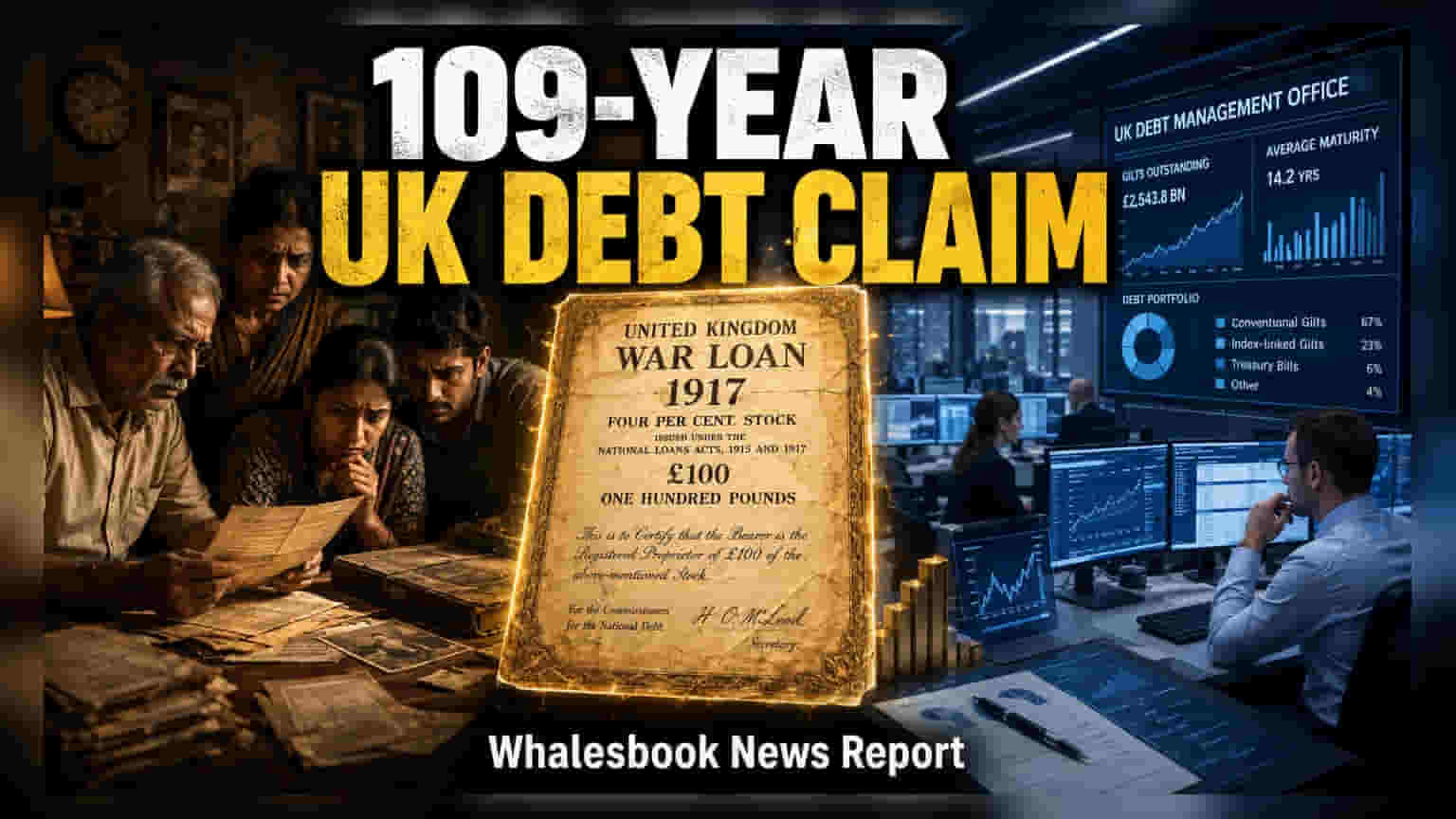
A Madhya Pradesh family is seeking repayment for a Rs 35,000 war loan made to the British Empire in 1917. The UK Debt Management Office has requested documentation, though experts warn of significant legal hurdles, including statute of limitations and sovereign immunity, in recovering such historical debt.
A family in Sehore, Madhya Pradesh, has received a response from the UK’s Debt Management Office (DMO) regarding a 109-year-old loan. The claim stems from a Rs 35,000 subscription to the Indian War Loan in 1917, made by the family’s ancestor, Seth Jumma Lal Ruthia, during World War I.
Vivek Ruthia, a descendant of the original lender, confirmed that the family’s legal representatives received an email from the UK government office requesting the original loan certificate and associated correspondence. This development has provided the family with a chance to formally present their case for a sum that they estimate could be worth significantly more today if adjusted for compound interest or gold price appreciation.
The document in question, dated June 4, 1917, bears the signature of the Political Agent in Bhopal, serving as the primary evidence for the transaction. The family asserts that this amount was never repaid following the loan's maturity or during the transition period surrounding India's independence in 1947.
While the DMO’s request for documentation is a procedural step, it does not confirm the validity or the repayability of the debt. Legal experts note that attempting to recover funds from a 109-year-old obligation involves immense complexity. Any potential claim faces significant legal barriers, including the statute of limitations, which generally restricts the time frame for initiating debt recovery actions. Furthermore, sovereign immunity principles often protect foreign states from being sued in domestic courts for historical administrative actions, and there is a distinct lack of legal precedent for individual recovery of colonial-era private loans.
For the family, this pursuit is described as a matter of historical accountability and honor rather than a simple financial transaction. The UK government's historical borrowing included the redemption of bonds, such as the £1.9 billion War Loan in 2015, but these were typically tied to specific, publicly tracked sovereign bond issuances. Whether a private, 109-year-old certificate can be substantiated and legally enforced against a modern-day government remains the central uncertainty. The family is currently focused on verifying and submitting the requested historical records to the UK authorities to determine the next steps in their long-standing claim.