 Whalesbook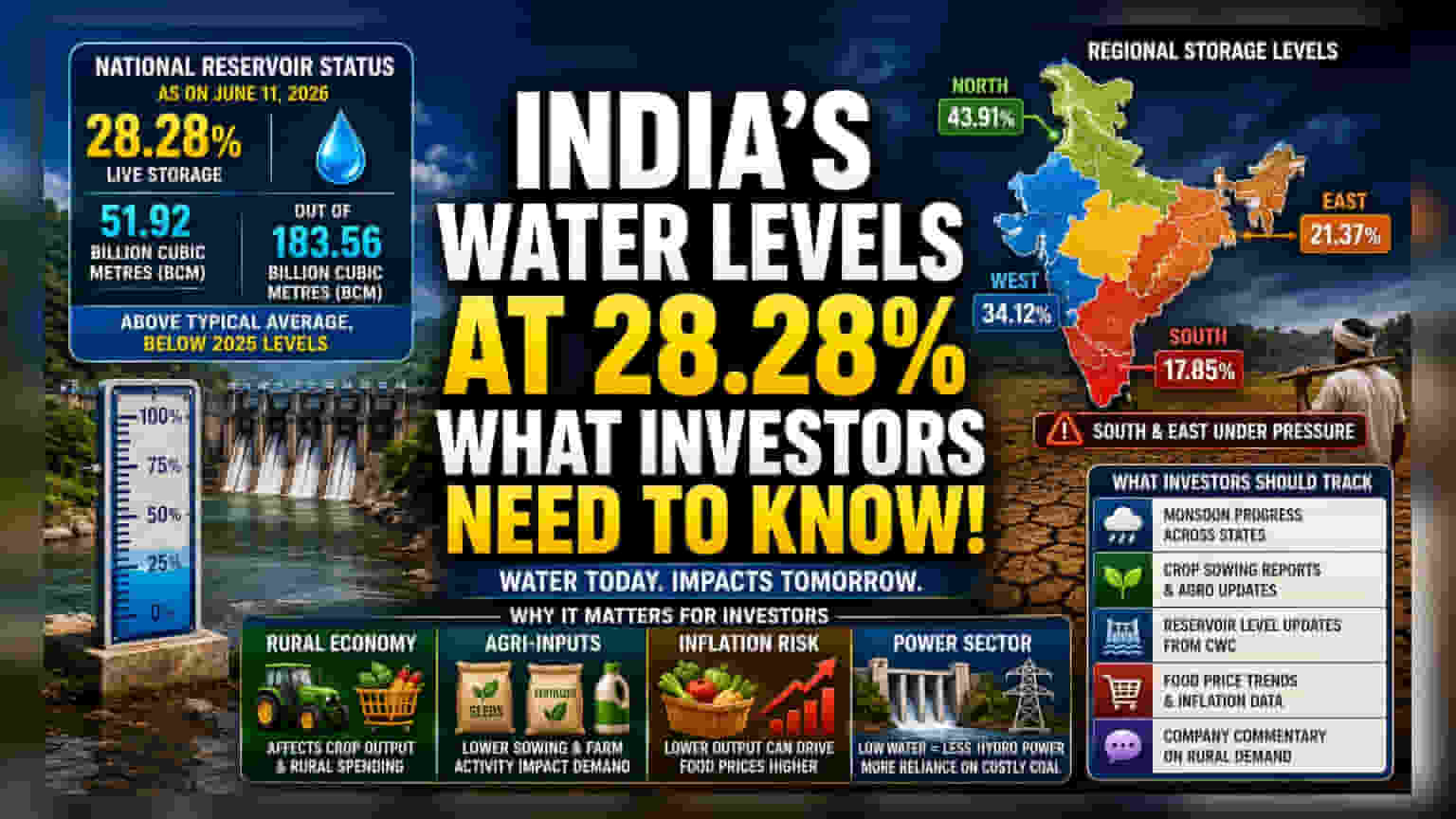


India's major reservoirs are currently at 28.28% capacity, with southern and eastern regions facing the most pressure ahead of the monsoon. This situation impacts agricultural output, food inflation, and hydropower generation, making it a key trend for rural demand and utility sectors to monitor.
What Happened
As of June 11, 2026, data from the Central Water Commission shows that major reservoirs across India are holding 28.28% of their total live storage capacity. This amounts to approximately 51.92 billion cubic metres of water out of a total capacity of 183.56 billion cubic metres. While national storage is above the typical average for this time of year, it remains below the levels recorded at the same time in 2025. The data highlights a concerning disparity, with reservoirs in southern and eastern India facing more pressure than those in the north or west, raising questions about water availability for irrigation, drinking, and power generation as the monsoon season begins.
Why This Matters For Investors
Water levels in reservoirs are a critical health check for the Indian economy, influencing several sectors. For investors, the primary area of focus is the rural economy. Agriculture is heavily dependent on the monsoon and reservoir health. A shortage of water can affect crop cycles, leading to lower agricultural output. Companies that depend on rural demand, such as FMCG (Fast Moving Consumer Goods) businesses, tractor manufacturers, and rural service providers, often see their performance tied to a healthy farming season. If farmers have a difficult year, their spending power may decline, which can impact sales volumes for these companies.
Another significant area is the agri-input sector. Companies involved in seeds, fertilizers, and crop protection chemicals rely on timely planting and healthy crop growth. A moisture deficit or irrigation challenge can force farmers to delay or reduce planting, impacting the demand for these products.
The Inflation and Power Angle
Food inflation is a major macro factor for the Indian market. When water levels are low, agricultural productivity can drop, potentially leading to supply shortages in food grains, vegetables, and other essential crops. If food prices spike, it can increase overall inflation, which influences consumer spending power and the central bank's interest rate policy. Investors generally monitor inflation data closely as it impacts borrowing costs for businesses.
Additionally, the energy sector is affected by water levels. Hydropower is a cost-effective energy source. When reservoir levels are low, power generation companies may need to rely more on thermal power, which involves coal and can be more expensive or increase operational costs. This can impact the profit margins of power utility companies that have a significant reliance on hydropower.
Regional Pressures and Risks
The data indicates that some specific regions are more vulnerable. The eastern and southern regions are currently seeing lower storage levels compared to the national average. States like Karnataka and Tamil Nadu, for example, have reservoirs showing very low levels of their normal capacity. If the monsoon does not replenish these areas adequately, the risk of water stress increases for local industries and farming communities. Investors often look for geographic diversification in company operations to mitigate risks from such localized climate-related issues.
What Investors Should Track
The most important monitorable is the progress of the monsoon across different states, as the distribution of rainfall is just as important as the total volume. Investors may also keep an eye on crop sowing reports released by the government, which provide early signals about the agricultural season. Additionally, periodic reservoir level updates from the Central Water Commission will continue to be a key indicator of water security for the coming months. Trends in food price indices and company management commentary regarding rural demand in quarterly results will also offer insights into how these weather-related risks are affecting businesses.