

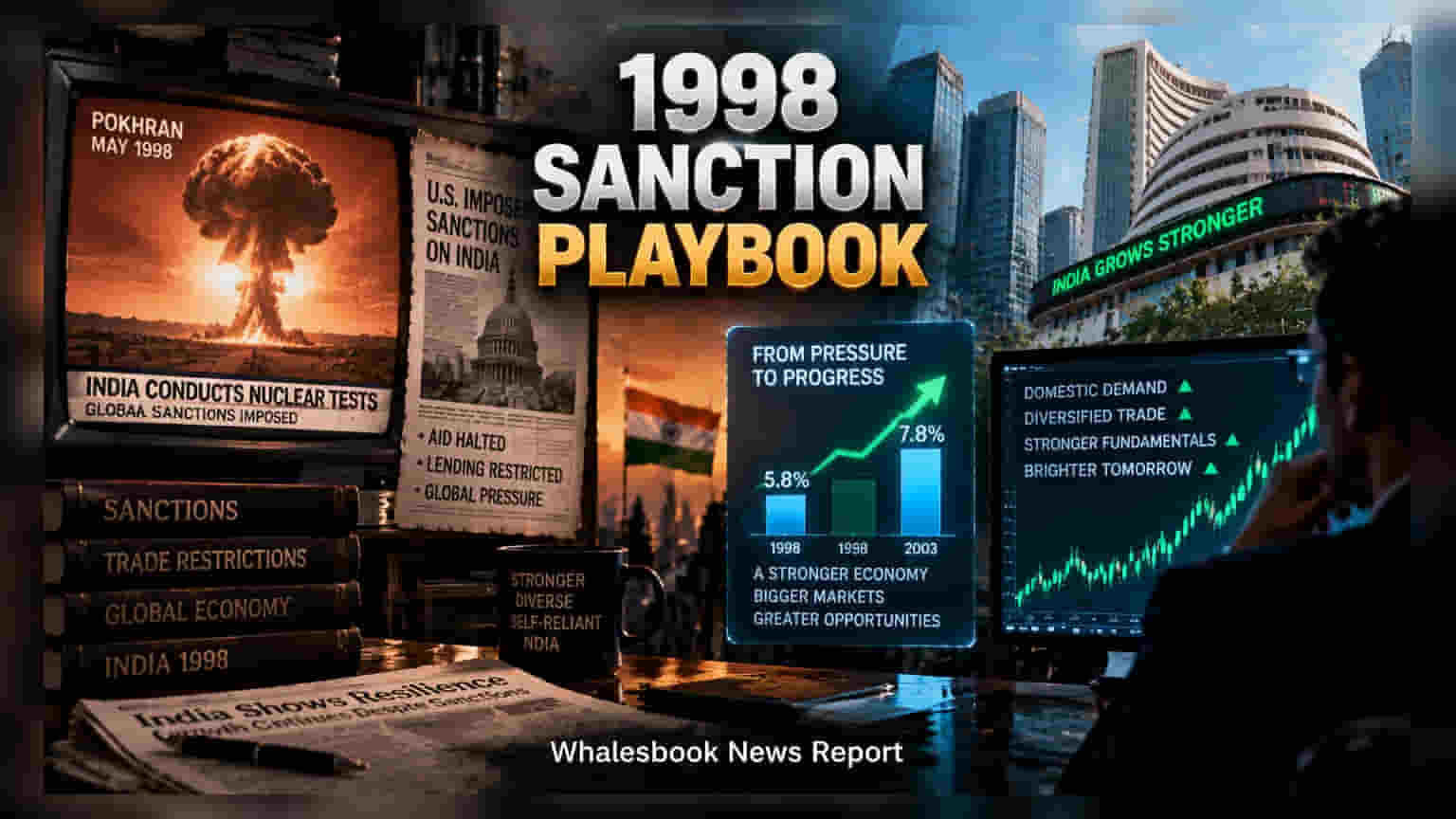
As trade tensions between India and the U.S. rise in 2026, history provides context on how India manages external economic pressure. Unlike 1998, when sanctions tested a smaller economy, today’s larger domestic market and deeper integration offer different risks and buffers for investors.
The current trade uncertainty between India and the U.S. brings into focus the events of 1998. Following the Pokhran nuclear tests that year, the U.S. imposed strict sanctions that cut off foreign aid and restricted lending from global institutions. While that period caused friction for specific projects, the Indian economy remained stable. GDP growth, which was around 5.8% when sanctions started, eventually climbed to 7.8% by 2003, showing that the country could absorb external shocks. Investors may look to this history not to predict a repeat, but to understand how India handles external pressure through economic diversification.
Today, the situation is different. In 1998, India’s trade ties with the U.S. were limited. By 2026, the U.S. has become India’s largest trading partner. This deep connection makes current trade discussions more complex. For Indian investors, this means the risk is no longer about isolation, but about the impact of tariffs on export-heavy sectors. Companies in IT services, pharmaceuticals, and manufacturing that rely heavily on U.S. revenue are more exposed to policy changes than they were decades ago.
The core difference between then and now is the maturity of the Indian economy. In the late 1990s, the country was just beginning its path toward liberalisation. Today, India has significantly higher foreign exchange reserves and a massive domestic consumption market. This local demand acts as a buffer. If export demand slows due to trade tariffs, companies that focus on the Indian consumer are often better positioned to maintain their performance.
When evaluating portfolios in this environment, investors often distinguish between export-dependent companies and those with strong local orders. For example, export-focused sectors like IT may face margin pressure if trade policies turn unfavorable. Conversely, sectors like infrastructure, banking, and domestic manufacturing depend more on local policies and growth than on U.S. trade relations. The historical lesson from the post-1998 era is that India’s resilience was driven by finding new trade partners and relying on domestic strength. Investors may continue to monitor trade policy updates, currency stability, and management commentary from companies with high U.S. revenue exposure to assess how they plan to navigate potential volatility.