

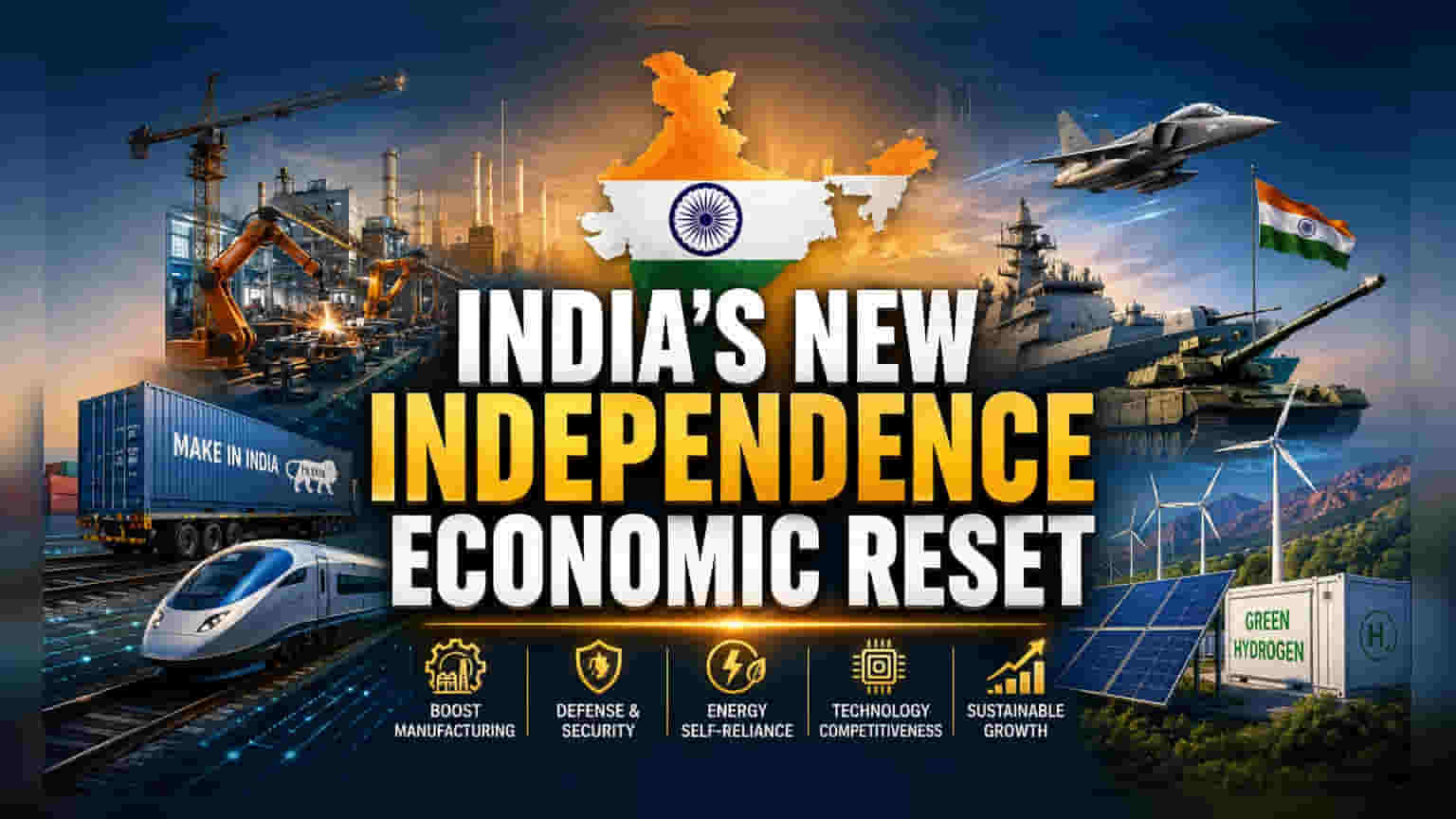
A new Kotak Institutional Equities report identifies an urgent need for India to reduce dependence on foreign capital, energy, and defense imports. The analysis suggests that growing global geopolitical risks make domestic manufacturing and self-sufficiency critical for long-term economic stability. Investors may track sectors like defense, renewable energy, and domestic manufacturing, which could see structural changes as the country looks to localize production and secure supply chains.
What Happened
A recent report from Kotak Institutional Equities calls for a strategic "new independence movement" to reshape India's economic structure. The analysis points to rising global geopolitical tensions and protectionist policies as major reasons for India to accelerate its shift toward self-reliance. The report argues that relying on imports for critical needs like energy, defense, and technology is becoming increasingly risky in a volatile global environment, making domestic manufacturing and localized production an economic necessity rather than just a policy goal.
The Move Toward Domestic Manufacturing
One of the central themes in the report is the need to boost India's manufacturing sector. Currently, manufacturing contributes approximately 13% to India's GDP, a figure that remains low compared to other major global economies. The report highlights that expanding manufacturing capacity and increasing domestic value addition are vital steps to reduce reliance on imported finished goods. For investors, this underscores the importance of the government's ongoing Production Linked Incentive (PLI) schemes, which aim to encourage companies to set up or expand local factories. The success of this transition will depend on how quickly companies can scale operations and manage costs to remain competitive against imported alternatives.
Defense and Energy Security
India’s dependence on external sources for energy and defense remains a significant hurdle. The report notes that India imports nearly 85% of its crude oil and about half of its natural gas, with energy imports consistently accounting for a large portion of the trade deficit. Transitioning to renewable energy is flagged as the most practical long-term strategy to address this energy security gap. In the defense sector, the report highlights that imports accounted for an average of 38% of defense procurement between FY16 and FY24. This suggests a long runway for domestic defense manufacturers to capture market share as the government pushes for greater indigenization of military hardware.
The Technology and Service Sector Risks
While India has traditionally relied on software exports and remittances to manage its trade and current account deficits, the report warns of potential vulnerabilities. The rise of artificial intelligence and automation poses a threat to traditional service models, which could impact the reliability of these sectors as primary economic pillars. This structural challenge reinforces the report's argument that the economy must diversify its strength toward tangible manufacturing and industrial capacity.
What Investors Should Track
Investors looking at these structural shifts may consider monitoring several key areas. First, watch for the execution of large capital projects, as delays can lead to cost overruns and pressure margins. Second, keep track of order books in the defense and capital goods sectors, as these are direct beneficiaries of indigenization policies. Finally, evaluate the progress of the energy transition, particularly for companies investing in green hydrogen, solar, or battery storage, as these directly impact the country's long-term energy import bill.