

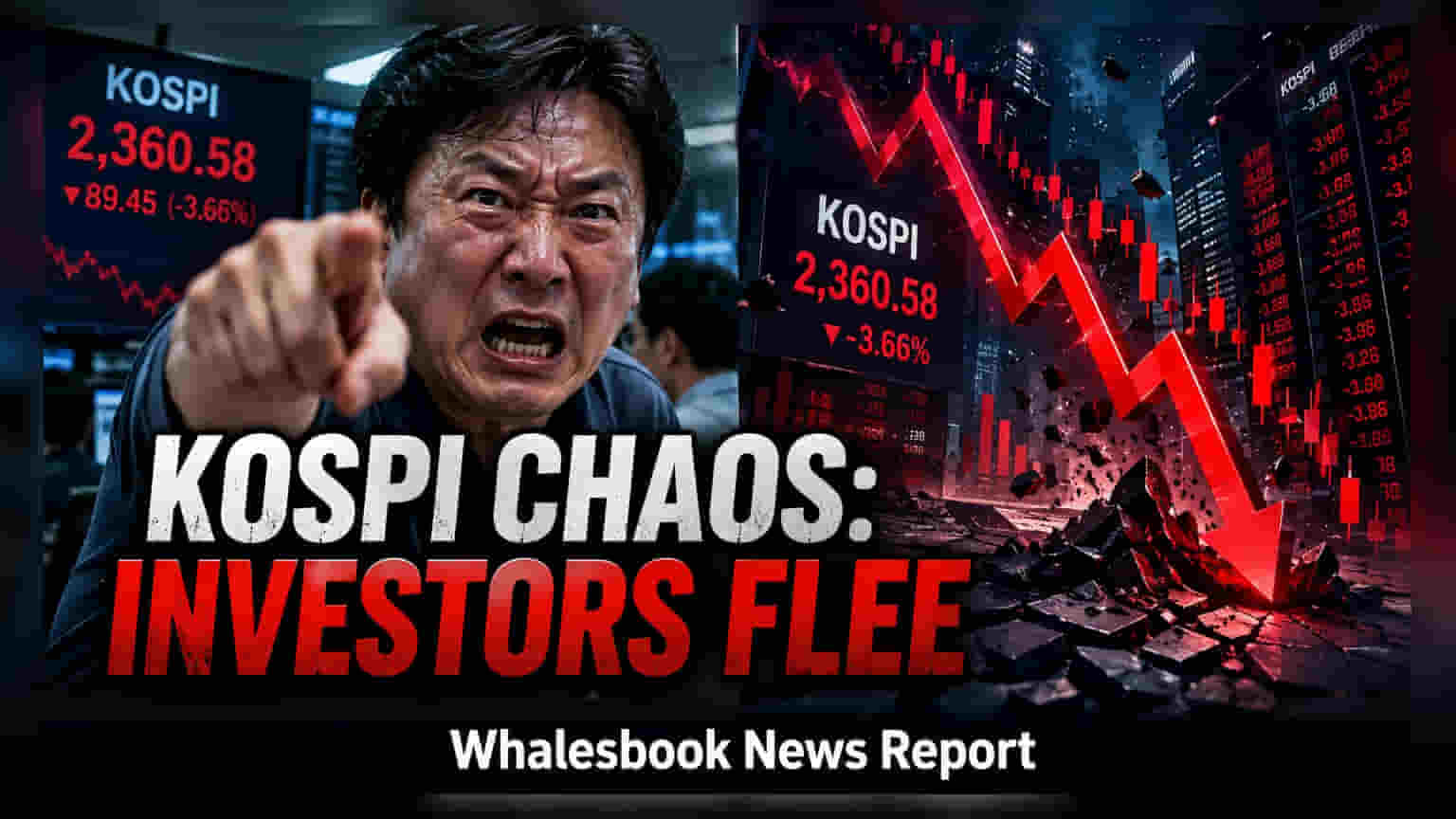
South Korea's Kospi index suffered its worst monthly drop since the 2008 financial crisis in July, wiping out significant gains for retail traders. The market downturn, marked by frequent circuit-breaker halts, has led to intense criticism of government-backed leveraged ETF products. Investors are now questioning the safety of the market as authorities move to restrict high-risk trading instruments.
The South Korean stock market experienced a historic setback in July, with the benchmark Kospi index falling by 22%. This performance represents the index's steepest monthly decline since the global financial crisis of 2008. The volatility was so extreme that trading was interrupted by circuit breakers on four separate occasions throughout the month, a frequency that shocked local market participants.
Impact of Leveraged Instruments and Retail Sentiment
The downturn has hit retail investors particularly hard, many of whom entered the market earlier this year following government-led reforms and the launch of new single-stock leveraged Exchange Traded Funds (ETFs). These financial products allow investors to amplify their exposure to individual stocks, but they also multiply potential losses during market corrections. Data indicates that retail investors had invested approximately 78 trillion won, or about $54.2 billion, into the market during May and June alone. As the index retreated in July, many of these positions faced heavy losses, leading to widespread frustration and a vocal backlash against both current market policies and the availability of high-risk leveraged instruments.
Technology Sector Pullback
The decline was particularly pronounced among the country’s largest technology companies, which dominate the Kospi index. Samsung Electronics saw its stock price drop by 21% in July, while SK Hynix recorded a steeper decline of 35%. These two companies combined account for more than half of the Kospi's total market capitalization. While these firms remain central to the global artificial intelligence supply chain, their sharp retreat illustrates the risks associated with crowded trades in high-growth sectors. The sell-off has highlighted how concentrated index exposure can amplify broad market movements when sentiment shifts.
Regulatory Actions and Future Outlook
In response to the market instability and rising retail investor anger, South Korean financial authorities have taken steps to curb excessive speculation. The government has announced a temporary suspension of new listings for single-stock leveraged ETFs and is evaluating further restrictions on how retail traders access such complex products. However, industry representatives suggest that the path to restoring investor confidence will be difficult given the scale of the losses incurred. Moving forward, market participants will be watching for potential changes in capital market regulations, the effectiveness of the current circuit-breaker measures, and whether large-cap technology stocks can stabilize amid ongoing global semiconductor demand fluctuations.