

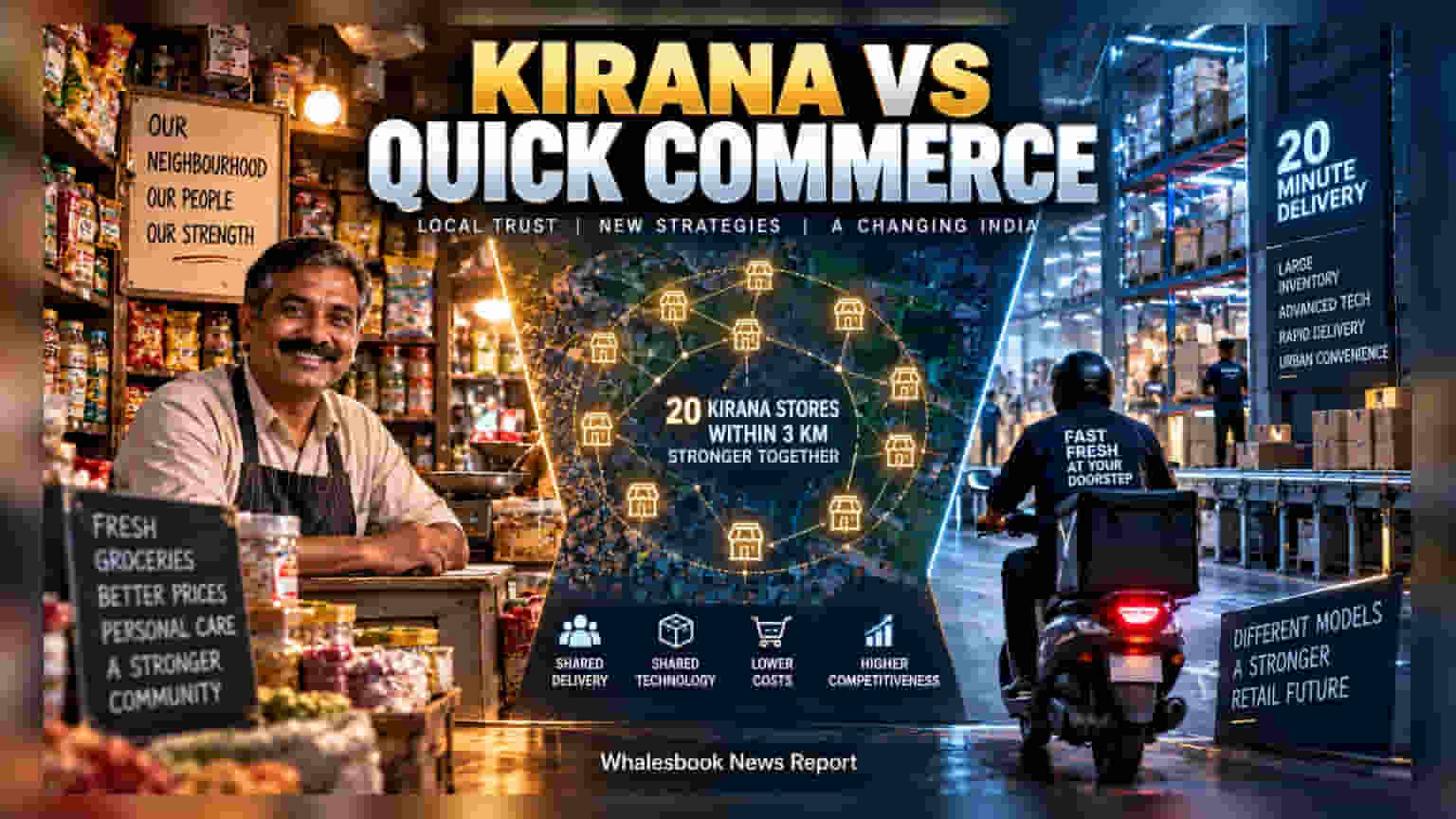
Kirana stores are evaluating cooperative cluster models to pool logistics and compete with the rapid delivery times of quick commerce platforms. This strategy, potentially supported by the proposed National Co-operative Development Corporation (Amendment) Bill, 2026, seeks to preserve local retail dominance amid intensifying competition and regulatory scrutiny in urban markets.
The rise of quick commerce is forcing a rethink in India's unorganized retail sector. Traditional kirana stores are facing a direct challenge from platforms promising delivery in under 20 minutes, which is changing how urban consumers shop. This shift has not gone unnoticed by local authorities; for instance, the Khasi Hills Autonomous District Council recently denied a trading license to a major quick commerce player, highlighting the growing tension between neighborhood retail and rapid-delivery models.
To stay competitive, a new cooperative model is being proposed. Known as 'coopetition,' this approach involves small groups of kirana stores forming clusters to share logistical costs and technology. Under this system, roughly 20 stores in a 3-kilometer radius could pool their resources, including delivery personnel and vehicles, while maintaining their independent ownership and local pricing strategies. The goal is to match the fast delivery speeds of venture-backed platforms without losing the personal relationships that kirana owners have built over years.
The success of this model depends heavily on overcoming significant hurdles. Tech adoption is the most critical; while many stores already use digital payments, a shared platform for inventory management and order routing remains a challenge. Governance is another concern—fairly sharing revenue and orders among independent owners will require clear rules. Historically, cluster models in other industrial sectors have succeeded by centralizing procurement, but applying this to thousands of independent grocery stores is a much more complex task.
Legislative support could play a vital role in these efforts. The proposed National Co-operative Development Corporation (Amendment) Bill, 2026, is viewed by some as a potential source of funding to help upgrade the technological infrastructure needed for these cooperatives. Investors are also monitoring how these digital commerce ecosystems can integrate with local stores, potentially providing the necessary scale to compete with well-funded rivals.
Ultimately, the strength of the kirana store remains the 'human element'—the deep, personalized knowledge owners have of their customer base. While quick commerce excels in speed, it often lacks this local intimacy. The future of this retail segment will likely depend on whether kirana stores can effectively blend this traditional advantage with the operational efficiency and technology offered by the new cluster models.