

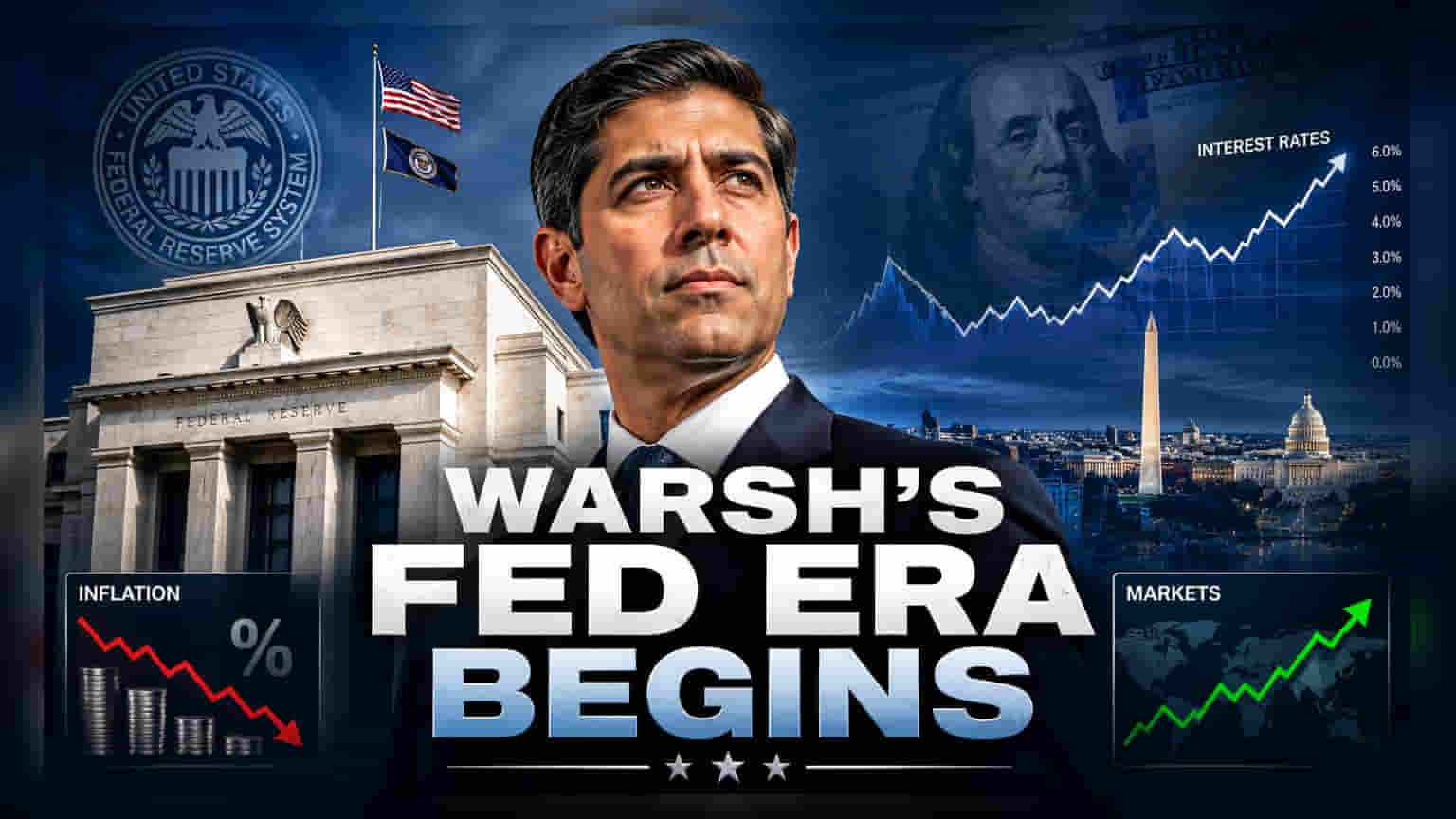
Kevin Warsh has been sworn in as the new Chair of the US Federal Reserve, marking a significant change at the world’s most influential central bank. Investors are watching his strict stance on inflation and views on market intervention, which could influence global interest rates and capital flows into emerging markets like India.
What Happened
Kevin Warsh has officially taken charge as the new Chair of the US Federal Reserve, following his swearing-in on May 22, 2026. His appointment concludes a contentious confirmation process in the US Senate. Unlike his predecessors, who frequently had backgrounds in academia or long-term government service, Warsh brings substantial private-sector experience as a former Wall Street mergers-and-acquisitions banker. He is one of the wealthiest individuals to ever hold this position, a fact that drew significant attention during his confirmation.
Why Policy Changes Matter for Investors
For global investors, including those in India, the Federal Reserve Chair is a critical figure because US monetary policy directly impacts global liquidity. Warsh has historically been a critic of aggressive monetary stimulus programs, such as quantitative easing. His past comments suggest he favors a more conservative approach that prioritizes inflation control over broad economic interventions. If the new leadership maintains a stricter stance on inflation, it could lead to higher-for-longer interest rates in the US. This scenario often influences institutional investment flows, as capital tends to move toward the US dollar during periods of high US rates, which can sometimes create pressure on the Indian Rupee and emerging market equities.
The Wealth and Ethics Scrutiny
Warsh’s path to the position was not without controversy. During his confirmation, lawmakers and ethics experts raised questions regarding his personal wealth, which is estimated to be between $131 million and $209 million. The primary concern was the potential for conflict of interest given his extensive private investments and historical ties to Wall Street. To comply with ethical guidelines, Warsh has agreed to sell specific assets and recuse himself from matters where a conflict might arise. While these measures were taken to satisfy regulatory requirements, the scale of his financial background remains a topic of public discussion regarding public trust and independence.
Looking Ahead
Warsh has indicated a desire to reshape the Federal Reserve’s communication strategy and reduce its influence on financial markets. He has also expressed interest in how artificial intelligence might affect long-term productivity and inflation.
What Investors Should Track
Market participants will be closely analyzing his upcoming policy statements, speeches, and voting records in Federal Open Market Committee (FOMC) meetings. Key monitorables include his tolerance for market volatility, his specific approach to the Fed’s dual mandate of managing inflation and supporting employment, and any changes in how the central bank signals future interest rate adjustments.