

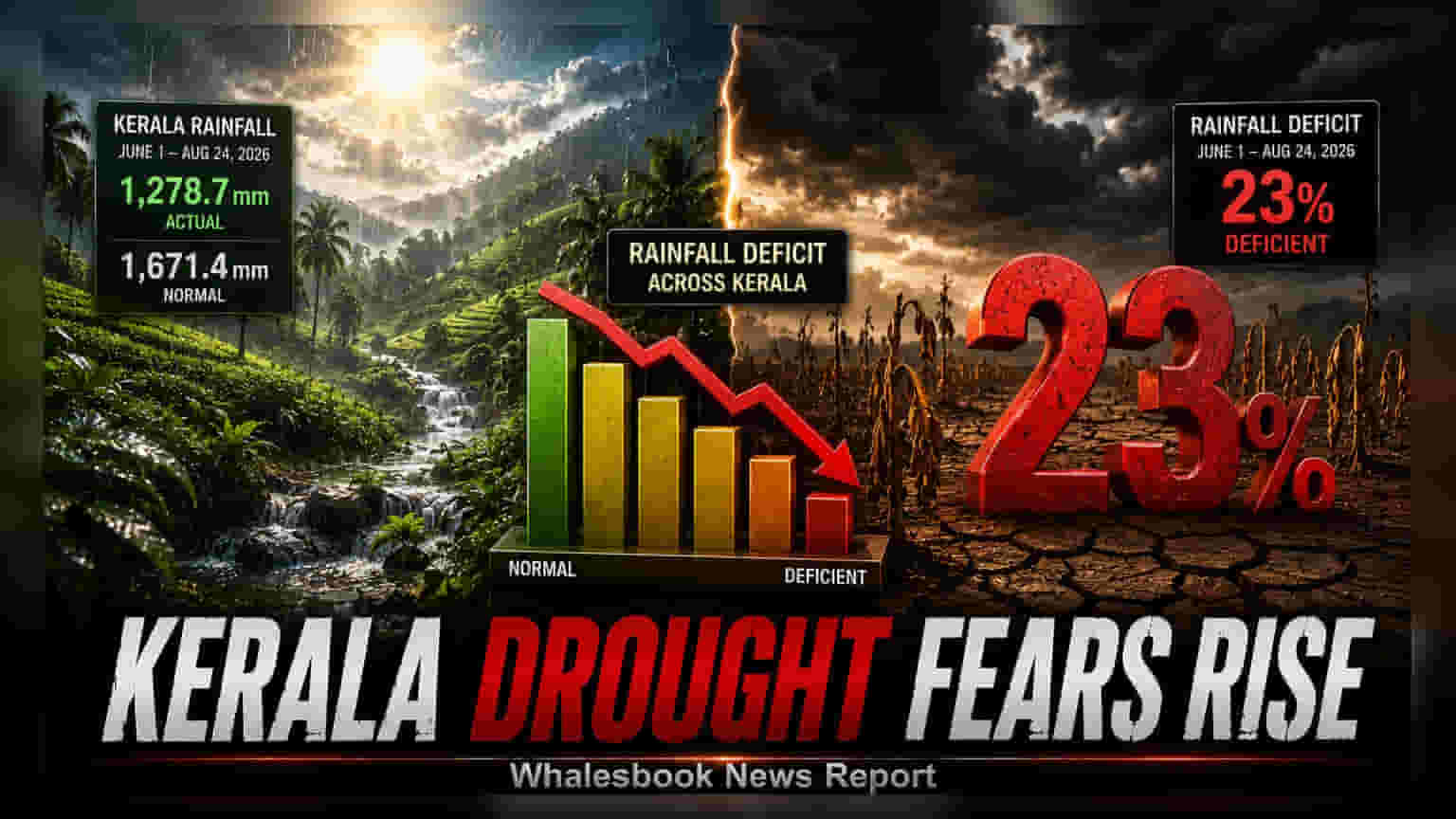
Kerala’s monsoon rainfall has fallen 23% below normal as of August 24, 2026. The India Meteorological Department has classified the state’s rainfall as 'deficient,' a trend that may impact agricultural yields, rural income, and hydropower reservoir levels in the coming months.
The monsoon season in Kerala has turned notably dry, with the state recording 1,278.7 mm of rainfall against a normal expectation of 1,671.4 mm for the period between June 1 and August 24, 2026. The India Meteorological Department (IMD) has officially categorized this rainfall as 'deficient,' marking a significant deviation from long-period averages.
Impact on Plantation Economy and Rural Demand
For investors, this rainfall deficit carries implications for the state’s agrarian economy, which is a key contributor to India’s plantation output. Kerala is a major producer of tea, coffee, rubber, cardamom, and pepper. A sustained shortfall in monsoon rains can reduce crop yields and impact the quality of produce, potentially affecting the revenue and profit margins of companies involved in plantation and agricultural processing.
Beyond production, the rural economy in Kerala relies heavily on agricultural income. A poor harvest cycle often leads to lower disposable income in rural areas, which can dampen consumer demand. Companies in the Fast-Moving Consumer Goods (FMCG) and two-wheeler sectors, which monitor rural spending closely, may see this as a pressure point if the deficit continues to drag on agricultural output.
Power Generation and Regional Risks
Water management is another area of concern. The most severe deficits were recorded in Wayanad at 51% and Idukki at 45%. Idukki is home to a critical reservoir system for the state’s hydropower generation. Lower water levels can potentially limit hydroelectric power output, forcing the state to rely on costlier power sources or manage potential energy supply issues. If prolonged, this could influence operational costs for power-intensive industries in the region.
What Investors Should Track
While six districts—Kannur, Kasaragod, Kottayam, Kozhikode, Pathanamthitta, and Thiruvananthapuram—have managed to stay within normal rainfall parameters, the widespread deficit across the majority of the state highlights a broader climate risk.
Investors may keep an eye on upcoming state-level agricultural reports, as these will provide more clarity on the actual impact on crop output. Additionally, updates from the IMD on monsoon recovery in September and weekly reservoir level reports from the state government will be essential in gauging whether the water stress eases or persists into the post-monsoon period.