 Whalesbook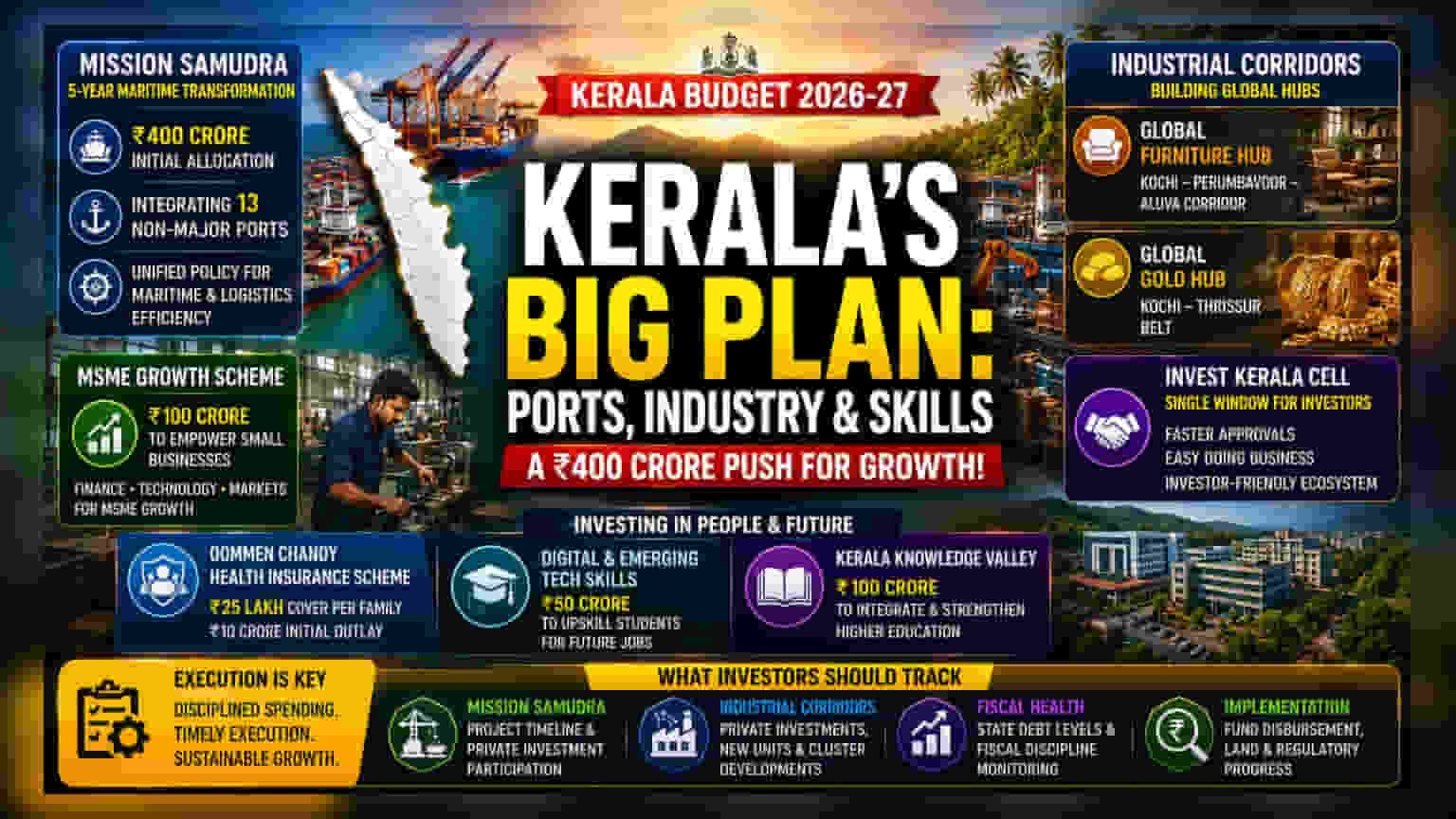
Kerala's latest budget focuses on a port-led economy, new industrial hubs, and infrastructure upgrades. With a ₹400 crore maritime push and specific corridors for furniture and gold manufacturing, the state aims to attract private investment. Investors should watch how these policies influence regional logistics, infrastructure, and small business growth while monitoring the state's execution capabilities and fiscal health.
What Happened
The Kerala state government has unveiled its budget for the upcoming year, focusing on transforming the state into a global hub for maritime, manufacturing, and education. A core pillar of this strategy is 'Mission Samudra,' a five-year project with an initial allocation of ₹400 crore. The plan aims to integrate the state’s 13 non-major ports into a unified policy framework to improve maritime and logistics efficiency. Other notable measures include a ₹100 crore MSME Growth Scheme to support small businesses and a dedicated 'Invest Kerala Cell' designed to simplify the investment process for private companies. The government also announced plans for two industrial corridors: a Global Furniture Hub in the Kochi-Perumbavoor-Aluva region and a Global Gold Hub within the Kochi-Thrissur belt.
The Maritime and Logistics Angle
The focus on integrating non-major ports is a significant shift for the state’s infrastructure strategy. By consolidating these ports under a new maritime policy, the government hopes to reduce operational bottlenecks and improve the handling of cargo and trade. For investors, this shift is relevant as it may open opportunities in port-related infrastructure, local logistics, and regional supply chain services. However, the eventual success of these plans depends on whether the government can effectively attract private investment and ensure these ports become commercially viable compared to larger, established ports in the region.
Industrial Hubs and Supply Chains
The creation of designated industrial corridors for furniture and gold manufacturing represents an attempt to create industrial clusters. By concentrating these sectors into specific zones, the state aims to improve supply chain efficiencies, create a skilled talent pool, and attract larger manufacturers to set up units in these corridors. If these hubs succeed, they could improve the business environment for local manufacturing. Investors may look for signs of increased capital expenditure by private firms in these regions, which could signal confidence in the state’s industrial incentives.
Healthcare and Future Skills
Beyond industrial infrastructure, the budget includes social and human capital initiatives. The 'Oommen Chandy Health Insurance Scheme' has been introduced with a coverage limit of ₹25 lakh per family, supported by an initial ₹10 crore outlay. Additionally, the budget allocates ₹50 crore for digital and emerging technology skills for students and establishes a 'Kerala Knowledge Valley' project with ₹100 crore to consolidate higher education institutions. While these social initiatives are important for long-term development, they also represent a recurring expenditure that is part of the state's broader fiscal commitments.
The Fiscal and Execution Reality
For investors assessing the long-term impact of these announcements, the primary concern often lies in implementation and fiscal management. State governments typically face challenges in managing high debt levels, which can influence how quickly infrastructure projects are funded and completed. While the proposed initiatives for port modernization and industrial zones are ambitious, the pace of land acquisition, regulatory approvals, and the actual disbursement of funds remain key variables. Investors often monitor whether such spending plans lead to a sustainable increase in economic activity or if they face delays due to budgetary constraints.
What Investors Should Track
Investors may keep an eye on several monitorables following this budget announcement. The first is the timeline for the 'Mission Samudra' infrastructure projects and whether they secure private sector participation. Second, the progress of the industrial corridors in the Kochi-Thrissur and Kochi-Aluva belts will be important, specifically looking for reports on corporate investment or new unit setups. Finally, observing the state's overall fiscal position in future reviews will help understand if the government has the financial flexibility to sustain these projects without significant delays.