

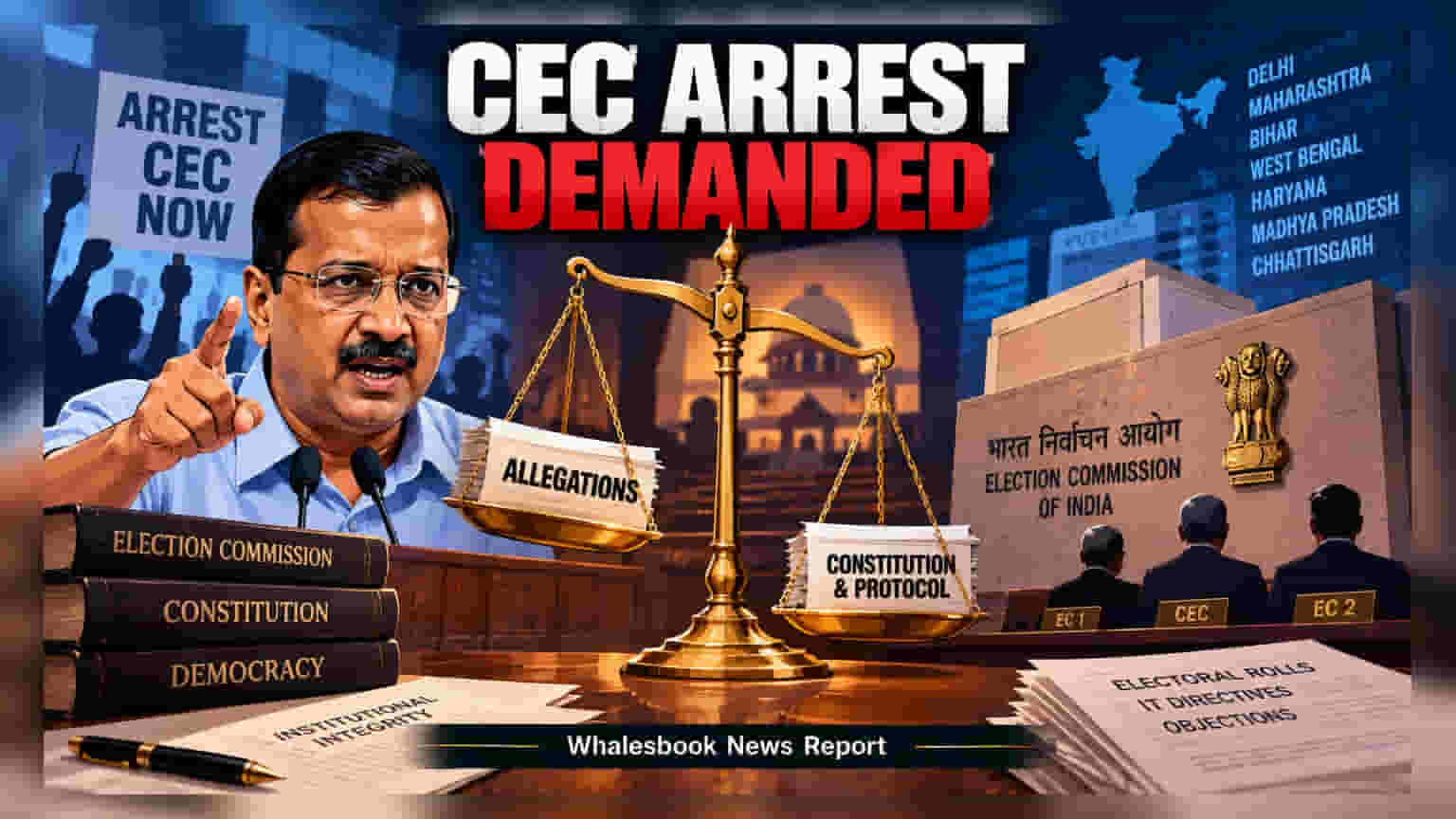
Arvind Kejriwal has demanded the arrest of Chief Election Commissioner Gyanesh Kumar, alleging unilateral decision-making that bypassed fellow commissioners. The controversy regarding the Election Commission of India's internal governance raises questions about institutional stability, a factor investors typically monitor for long-term economic and political predictability.
Arvind Kejriwal, leader of the Aam Aadmi Party, has publicly demanded the arrest of Chief Election Commissioner (CEC) Gyanesh Kumar. The demand follows allegations that the CEC bypassed established constitutional protocols to issue unilateral directives without the required consensus from the other two Election Commissioners, Sukhbir Singh Sandhu and Vivek Joshi.
The controversy centers on claims that the ECI, which operates as a three-member constitutional body, has seen a breakdown in its deliberative process. According to the claims presented by Kejriwal, fellow commissioners Sandhu and Joshi have formally registered objections at least 14 times over the past 10 months. These objections allegedly pertain to the Special Intensive Revision of electoral rolls and the distribution of directives regarding information technology modules, which were reportedly finalized without collective authorization.
Kejriwal argued that the Election Commission operates under a 'first among equals' framework mandated by Supreme Court precedent, asserting that any decision made by the CEC without the agreement of his peers constitutes a violation of the body's institutional integrity. Beyond the demand for legal action against the CEC, the AAP leadership has called for the nullification of recent elections held across several states, including Delhi, Maharashtra, Bihar, West Bengal, Haryana, Madhya Pradesh, and Chhattisgarh.
From an investor and market perspective, the health and stability of key constitutional and regulatory institutions are critical components of a stable economic environment. Markets generally favor clear, transparent, and consensus-based governance frameworks, as they provide the predictability needed for long-term economic planning and foreign direct investment. Any perceived friction or governance breakdown within core public institutions can lead to concerns about institutional reliability, which may influence investor sentiment regarding the stability of the rule of law in India.
Investors typically view the Election Commission as a pillar of political stability, given that fair and transparent election processes are essential for economic policy continuity. While political disputes are common, a sustained controversy involving the leadership of a major constitutional body can create uncertainty in the broader business landscape. At this stage, the Election Commission of India has not issued a formal rebuttal to these allegations of internal dissent.
For investors and market observers, the next important development will be how the Election Commission or the relevant legal authorities respond to these specific allegations. Any official clarification regarding the decision-making process within the ECI, or any potential legal outcomes stemming from these demands, will be critical to understanding whether this institutional conflict remains a localized governance dispute or whether it indicates broader risks to administrative stability.