

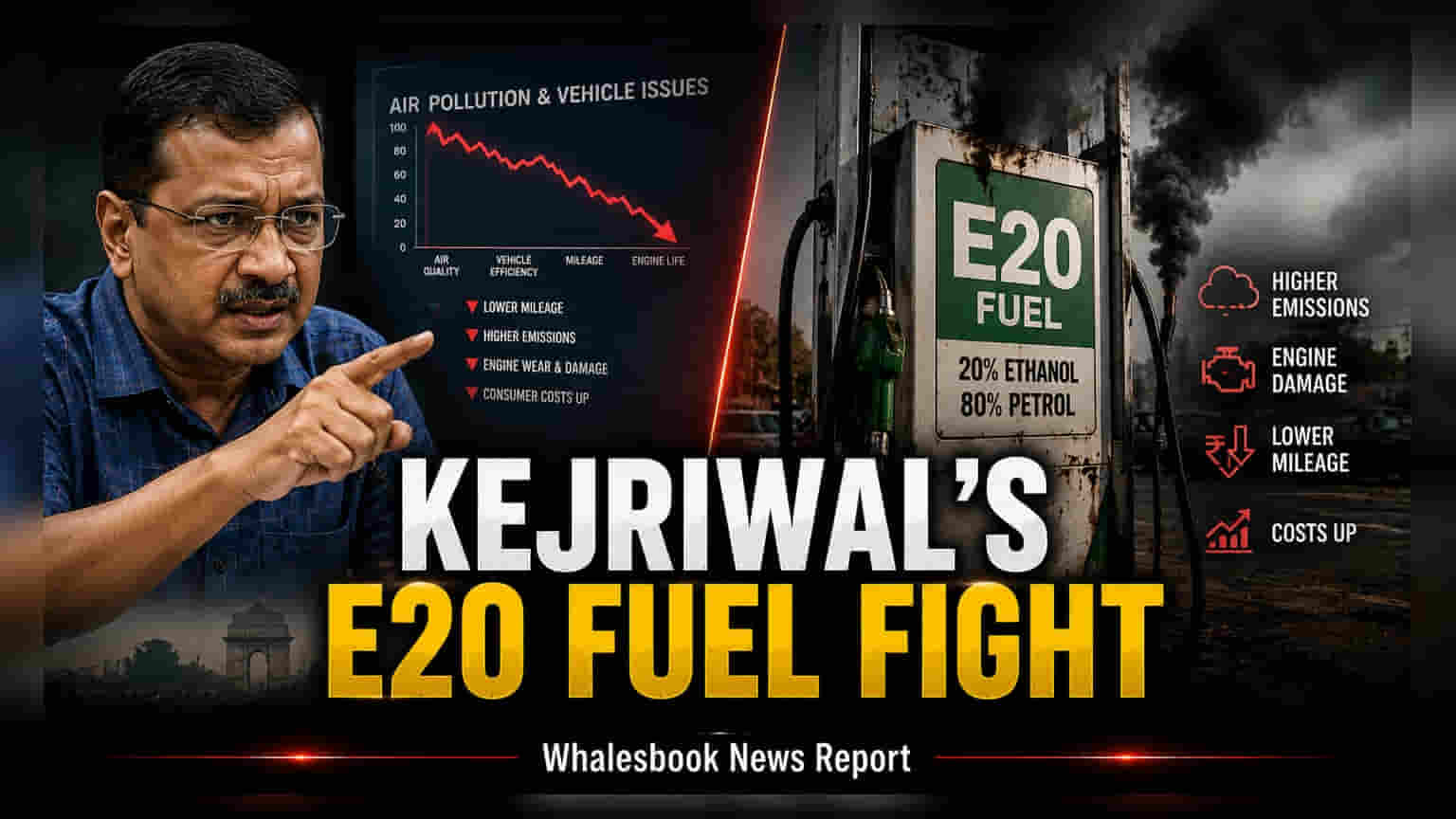
AAP leader Arvind Kejriwal is campaigning against E20 ethanol-blended petrol, citing concerns over reduced fuel efficiency and potential engine damage. He is calling for an official choice between pure petrol and blended fuel at pump stations. This debate highlights the ongoing friction between consumer vehicle performance concerns and the government's long-term ethanol blending strategy.
Aam Aadmi Party leader Arvind Kejriwal has launched a campaign challenging the government's E20 fuel policy, which mandates the blending of 20% ethanol into petrol. The former Delhi Chief Minister is encouraging vehicle owners to document and share experiences regarding mileage and engine performance on social media to highlight potential issues. His core demand is for fuel stations to provide a clear choice, allowing consumers to select between pure petrol and the E20 blend.
Impact on Vehicle Performance and Costs
The central concern raised involves the impact of ethanol on internal combustion engines. Ethanol has a lower energy density than pure petrol, which can lead to a slight reduction in overall fuel efficiency. Additionally, older vehicle engines not specifically calibrated for higher ethanol blends may face challenges with fuel system components over time. Kejriwal has argued that if the efficiency of E20 fuel is indeed lower, the government should provide price relief to consumers to compensate for the additional cost per kilometer driven.
Government Strategy and Ethanol Blending
The Indian government has aggressively pursued its ethanol blending program as a major economic and agricultural policy. The initiative is designed to reduce the country’s massive import bill for crude oil, thereby saving foreign exchange. Furthermore, it creates a dedicated market for surplus sugarcane and grain production, which directly supports farmer incomes. Since the launch of the program in 2014-15, the government has reached significant blending milestones, moving toward its national target of 20% ethanol blending by 2025-26.
Challenges and Monitoring
For the average vehicle owner, the primary monitorable remains the compatibility of their specific vehicle model with E20 fuel. While manufacturers have been rolling out E20-compliant vehicles, millions of older vehicles currently on the road may experience variations in performance. Investors in the automotive and energy sectors continue to track how policy changes or public sentiment might influence future fuel mandates. The success of this transition depends on maintaining a balance between the national goal of reducing oil imports and ensuring that vehicle reliability and consumer affordability remain protected. As this issue develops, the government's willingness to provide consumer transparency at fuel pumps will be the key factor determining whether the current policy friction subsides.