

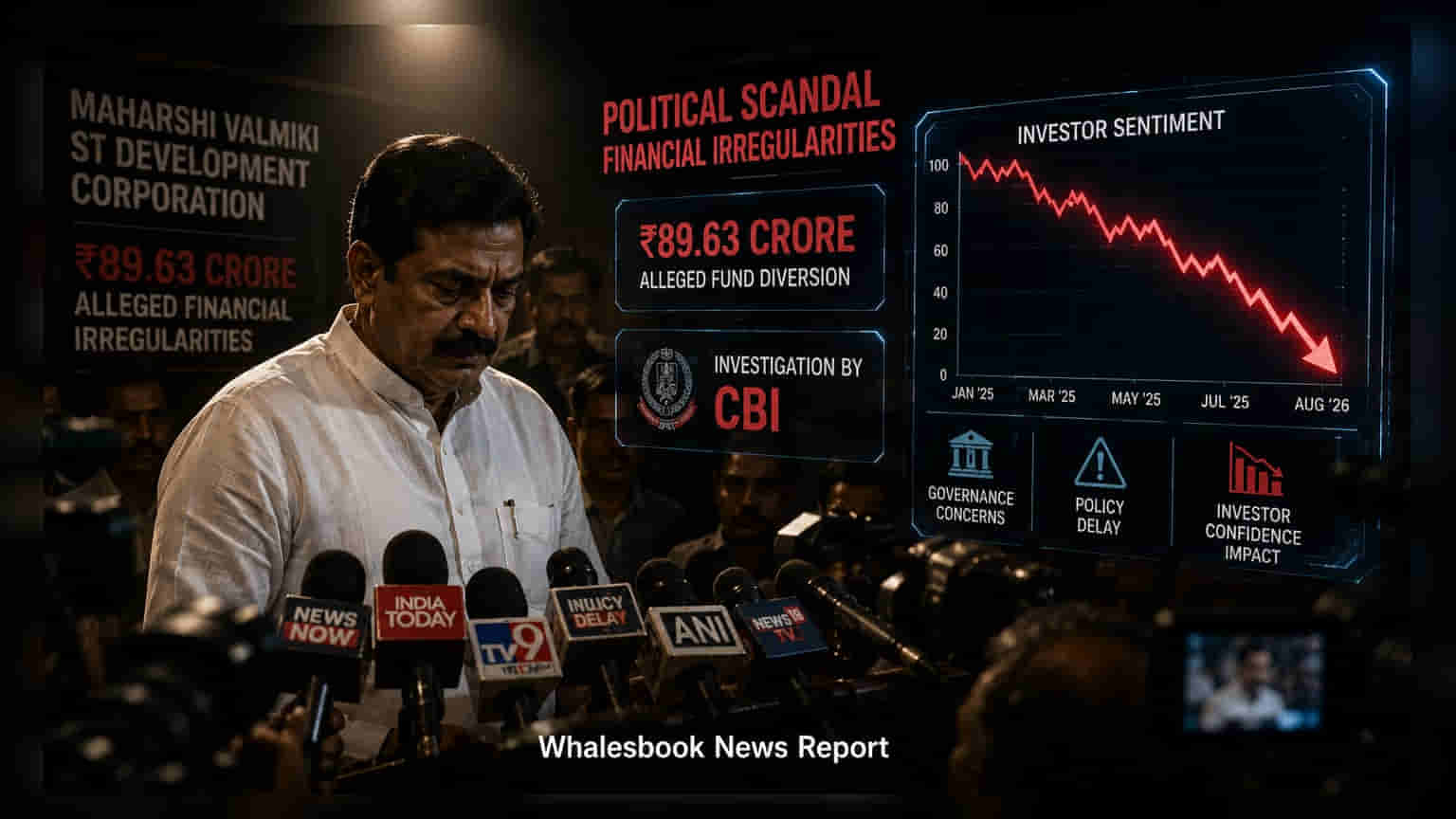
Karnataka Cabinet Minister B. Nagendra has resigned from his position and as an MLA following intense pressure regarding his alleged role in the misappropriation of funds from the Maharshi Valmiki Scheduled Tribes Development Corporation. The controversy, involving an estimated ₹89.63 crore, has led to significant political unrest in the state. This marks his second resignation related to the case since it first surfaced in 2024.
Karnataka Minister B. Nagendra officially stepped down from his ministerial duties and his role as an MLA on Friday, August 28, 2026. This decision follows mounting pressure from opposition parties, specifically the Bharatiya Janata Party and the Janata Dal (Secular), regarding his alleged involvement in financial irregularities at the state-run Maharshi Valmiki Scheduled Tribes Development Corporation.
The resignation follows a recent, controversial re-induction of the minister into the state Cabinet. B. Nagendra had initially stepped down in June 2024 when the scandal surrounding the alleged diversion of ₹89.63 crore first emerged. He was brought back into the Cabinet on August 3, 2026, as the Minister for Planning and Statistics. His return sparked renewed protests, with opposition leaders planning a 10-day protest march from Raichur to Ballari to highlight the alleged misuse of public funds meant for tribal development.
While the minister has consistently maintained his innocence, claiming that the accusations are politically motivated and linked to his social background, the incident has highlighted concerns regarding financial oversight within state-run corporations. The investigation into the matter gained momentum after the death of P. Chandrasekharan, an accounts superintendent at the corporation, whose notes pointed toward unauthorized financial transfers. The funds were allegedly moved through various external accounts, leading to a wider investigation by agencies including the Central Bureau of Investigation.
For the broader business environment, frequent political instability and controversies involving state-run financial bodies can influence investor sentiment. When government focus shifts toward managing public outcry and political disputes, decision-making on policy or infrastructure projects may slow down. Additionally, the case raises questions about governance standards and the safety of funds managed by state development corporations.
Investors typically watch such political developments in a state as they can affect the stability of the local government, which in turn impacts policy implementation and project execution for companies operating in the region. The immediate future of the state's governance and the progress of the ongoing investigations will be the primary monitorables as the administration manages the fallout from this resignation.