

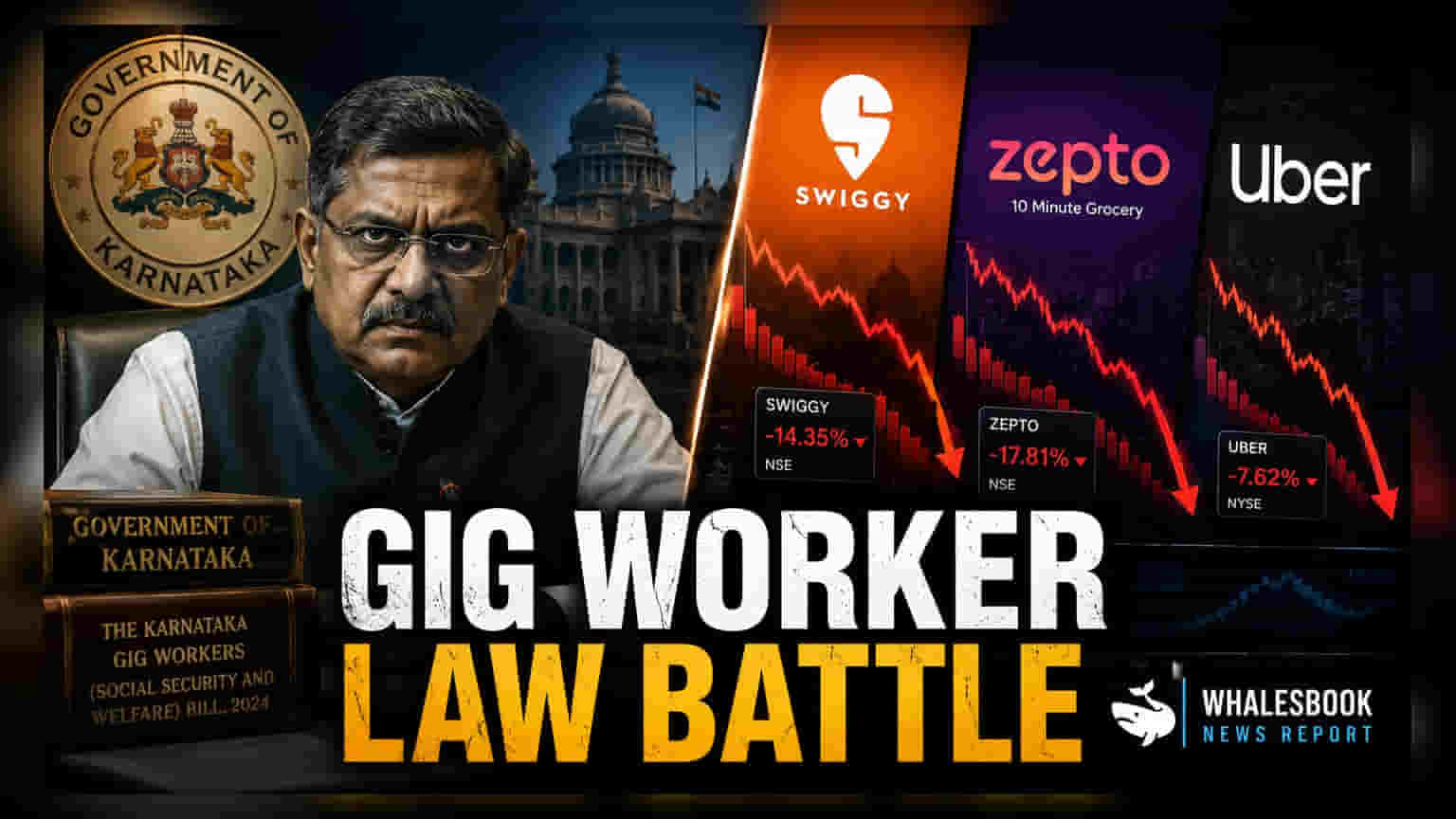
Major delivery and ride-hailing platforms have challenged Karnataka's 2025 Gig Workers Act in the High Court. The companies argue the state law conflicts with central regulations, potentially leading to duplicate compliance costs and legal uncertainty.
The Karnataka Platform-Based Gig Workers (Social Security and Welfare) Act, 2025, is facing a significant legal challenge as several major aggregators seek to block its implementation. Companies including Swiggy, Zepto, and Uber, supported by the Internet and Mobile Association of India, have filed petitions in the Karnataka High Court, arguing that the state-level legislation overlaps with the central government’s Code on Social Security, 2020.
Conflict Over Regulatory Jurisdiction
The central point of contention is whether a state government has the authority to mandate welfare contributions and registration processes that may already be covered by national laws. Under the Constitution, when state laws contradict central statutes on subjects like social security, the central law typically holds precedence. The companies are concerned that the Karnataka act creates a fragmented regulatory environment, forcing them to navigate two sets of compliance requirements. This could lead to increased operational costs and administrative complexity for platforms that operate across multiple states.
Financial Impact of the Welfare Fee
Under the new Karnataka law, aggregators are required to pay a 1% welfare fee on all food and grocery delivery transactions, along with a tiered fee structure for ride-hailing services. While the High Court has allowed the law to proceed for now, it has ordered that these welfare contributions be deposited with the court registry rather than directly into the state's welfare fund while the legal review is ongoing. For investors, this represents a temporary financial obligation that could turn into a permanent expense if the court upholds the legislation, potentially impacting the operating margins of these platforms.
Potential Legal and Operational Risks
The legal battle highlights the broader uncertainty regarding gig economy regulations in India. While the act aims to provide social security, grievance redressal, and transparency for gig workers, the legal challenge questions the validity of specific mandates such as the welfare fee and compulsory worker registration. Legal experts are closely watching the proceedings, as the court's interpretation of Article 254 of the Constitution could determine whether other states can implement similar laws or if the industry must wait for the full implementation of the central government’s 2020 code.
The outcome of this case will be a key monitorable for the industry, as it may set a national precedent. Investors will likely look for updates regarding the final judgment, the implementation status of the central Code on Social Security, and any potential changes to the cost structure of gig platforms depending on whether they are eventually required to contribute to state-specific welfare funds.