

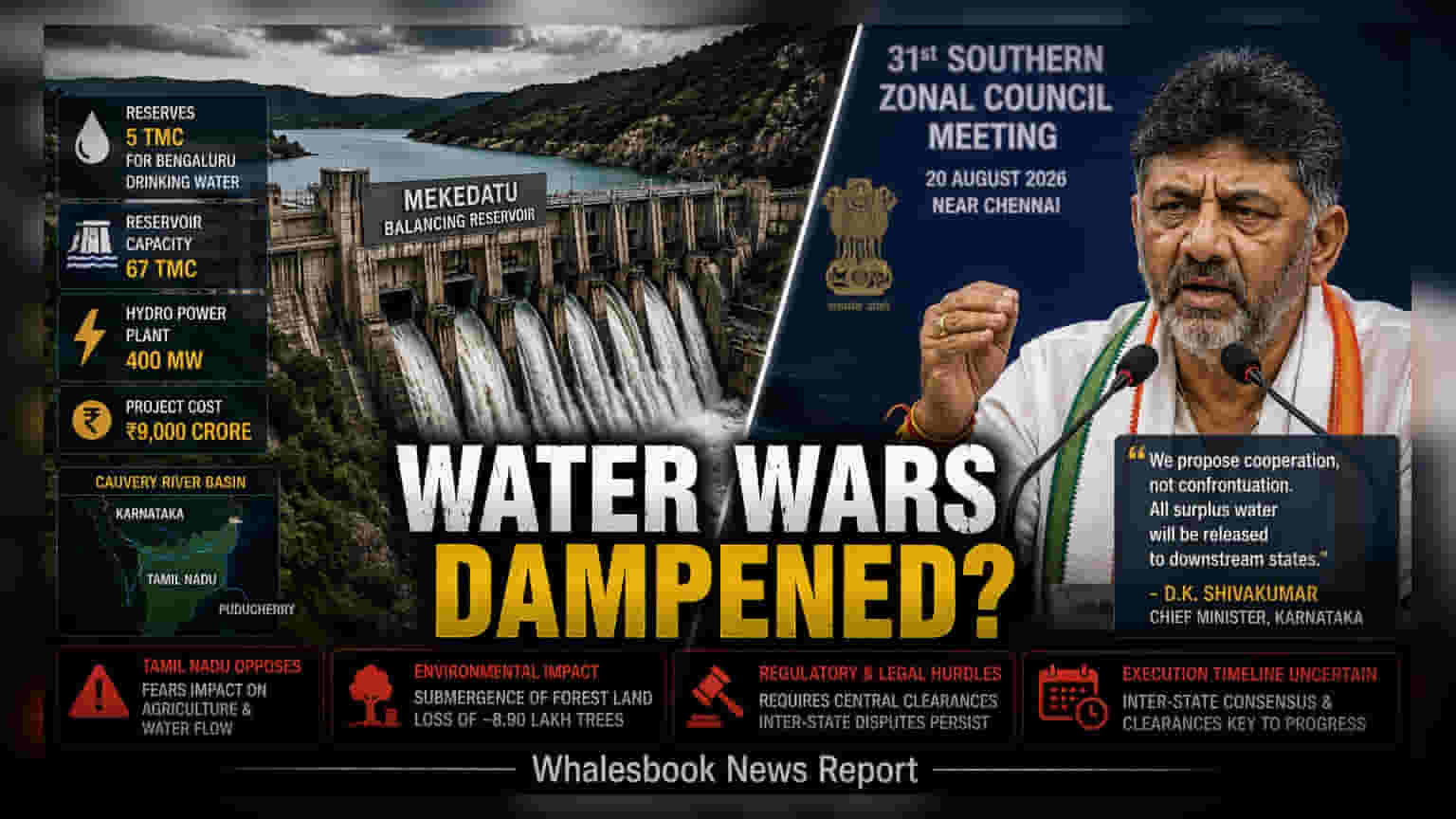
Karnataka CM D.K. Shivakumar has promised to share surplus water from the proposed Rs 9,000 crore Mekedatu dam with Tamil Nadu and Puducherry. While the project aims to support Bengaluru’s water needs and 400 MW of power generation, it faces severe delays due to political opposition and environmental concerns. Investors should note the significant execution risk tied to this infrastructure project.
Karnataka Chief Minister D.K. Shivakumar has offered fresh assurances to the governments of Tamil Nadu and Puducherry regarding the proposed Mekedatu dam project. During the 31st Southern Zonal Council meeting held near Chennai on August 20, 2026, the Chief Minister proposed a shift in approach, moving from traditional water-sharing disputes to a framework of cooperation. He stated that the project, intended to reserve 5 TMC of water for Bengaluru’s drinking water needs, would allow for the release of all remaining water to downstream states.
Project Scale and Objectives
The Mekedatu balancing reservoir project is estimated to cost approximately Rs 9,000 crore. The plan includes a reservoir with a 67-TMC capacity and a 400 MW hydroelectric power plant. For infrastructure and utility sector participants, the project represents a significant potential capital expenditure. However, the timeline for any meaningful construction activity remains uncertain due to the complex political and legal landscape surrounding the Cauvery river basin.
Execution and Regulatory Risks
While the Karnataka government is pushing for the project, the risk of delay remains high. The Tamil Nadu Legislative Assembly recently passed a resolution opposing the construction, citing concerns that the dam would restrict the natural flow of the Cauvery river and negatively impact downstream agriculture. This political deadlock is a primary hurdle for the project’s execution.
Beyond the political opposition, the project faces environmental and regulatory challenges. Technical reports have flagged that the dam would lead to the submergence of a large area of forest land, involving the loss of approximately 8.90 lakh trees. These environmental hurdles necessitate significant clearances from central authorities, which have historically been slow for projects facing interstate disputes.
The most important update for stakeholders will be whether the Karnataka government can secure the necessary inter-state consensus and environmental clearances to move from the planning stage to active development. Until these regulatory and political bottlenecks are cleared, the financial impact on any associated contractors or equipment suppliers remains theoretical.