

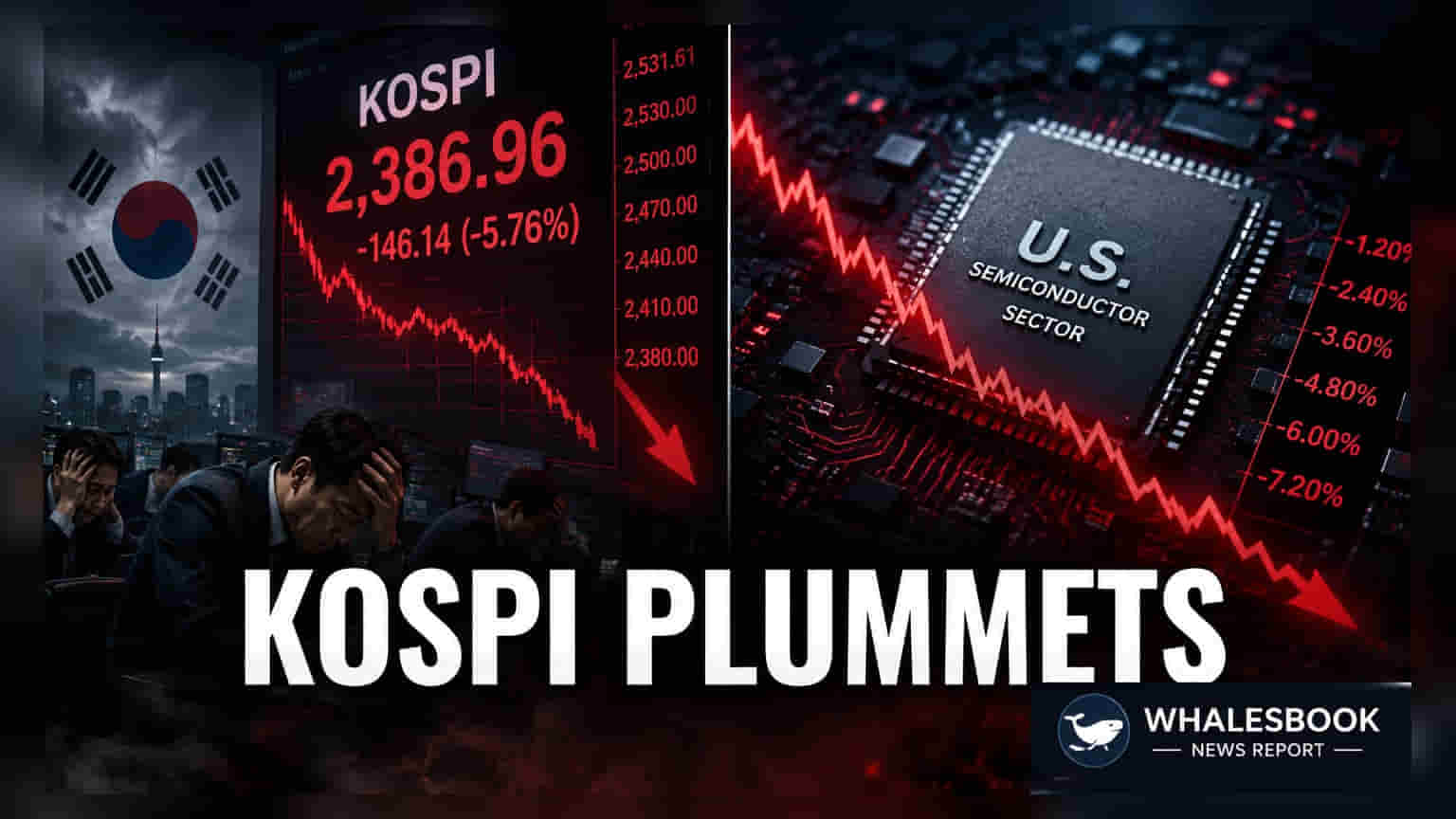
South Korea's KOSPI index declined following a sharp drop in US semiconductor stocks. The sell-off reflects high investor sensitivity to global technology sector trends, impacting broader Asian market sentiment.
What Happened
South Korea's benchmark KOSPI index recorded a sharp decline during Friday's trading session. This movement followed a significant sell-off in US semiconductor stocks that occurred during the previous overnight trading session. The drop in American technology shares triggered a wave of cautious sentiment among investors across Asia, leading to widespread losses in major indices, including Seoul's KOSPI.
Why This Matters For Investors
Investors often view the semiconductor industry as a barometer for global economic health because chips are essential components in products ranging from smartphones to automobiles and industrial machinery. When major technology stocks face pressure in the US, it often ripples through international markets that supply these components or rely on them for downstream manufacturing. For Indian investors, this trend highlights how global technology sector volatility can influence foreign capital flows and sentiment in emerging markets.
The Global Technology Connection
South Korea is home to major global memory chip manufacturers, which makes the KOSPI index particularly sensitive to developments in the global technology and chip sectors. When stock prices for global chip giants decline, it often leads to concern about future demand, pricing power, and inventory levels. This pressure can cause investors to reduce their exposure to technology-heavy indices to manage risk.
Risks And Market Impact
Broad sell-offs in technology stocks can lead to increased volatility and liquidity concerns in equity markets. If investor apprehension persists, it may result in wider fluctuations across indices, as participants move toward safer assets or reduce leverage. For companies within the semiconductor and broader electronics manufacturing space, such sell-offs often test investor confidence regarding short-term growth and margin stability in a high-cost environment.
What Investors Should Track
Market participants may track US overnight movements in key semiconductor indices and tech-heavy benchmarks, as these often set the tone for Asian trading sessions. Additionally, monitoring inventory levels, global demand forecasts for consumer electronics, and any updates on supply chain costs will provide deeper insight into whether this decline reflects a temporary correction or a more sustained shift in investor outlook for the technology sector.