

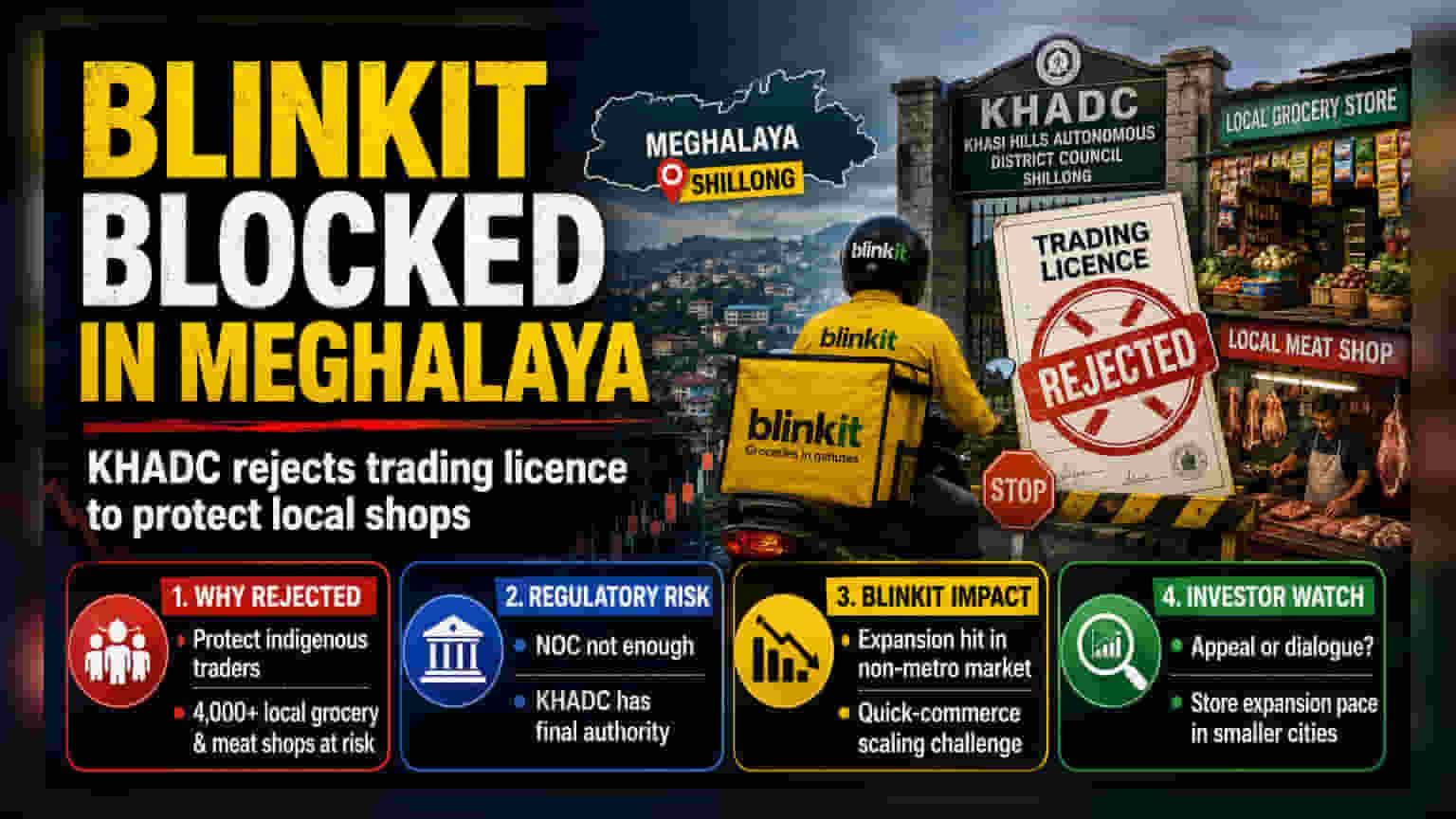
The Khasi Hills Autonomous District Council (KHADC) has rejected a trading license for Blinkit, citing potential harm to over 4,000 local grocery stores in Shillong. The decision poses a direct regulatory hurdle for the Zomato-owned quick-commerce platform's expansion plans in the region, forcing the company to suspend operations.
What Happened
The Khasi Hills Autonomous District Council (KHADC) in Meghalaya has officially refused to grant a trading license to Blinkit, the quick-commerce division of Zomato. KHADC Chief Executive Member Winston Tony Lyngdoh stated that the decision was taken to protect indigenous traders and the local retail economy.
According to the council, the platform's business model—which relies on deep discounts and doorstep delivery—poses a significant livelihood risk to over 4,000 grocery and meat shops operating within its jurisdiction. While Blinkit had reportedly obtained a No Objection Certificate (NOC) from a local body in Nongrim Hills, the KHADC, which holds the final authority over such trading licenses, rejected the application. The company had initially launched operations in Shillong but has since suspended them due to the lack of necessary permits.
Why It Matters For Blinkit's Expansion
Blinkit is a critical growth pillar for Zomato, with the company aggressively expanding its dark store network across India to capture the rising demand for 10-minute grocery delivery. Scaling this model requires a high density of orders and wide penetration into both metro and non-metro markets.
This regulatory roadblock highlights a specific challenge: operational friction in regions with strong local retail protectionism. While quick-commerce companies often scale rapidly by partnering with local entities, they must navigate complex regional regulations, particularly in areas governed by autonomous district councils that prioritize the interests of traditional local businesses.
The Regulatory Context
The KHADC recently passed the Khasi Hills Autonomous District (Trading by Non-Tribals) (Amendment) Bill, 2026, reflecting the council's focus on regulating trade and employment within its jurisdiction. This regulation mandates specific licenses for non-tribal employees and businesses, aimed at safeguarding the local economic landscape.
The council has maintained a consistent stance, noting that it had previously denied entry to other quick-commerce ventures like Swiggy Instamart for similar reasons. For companies like Blinkit, this confirms that securing local support at the grassroots level does not automatically guarantee regulatory clearance at the council level.
What This Means For Investors
Investors in Zomato view Blinkit as the primary engine for future growth, given the slowing pace of expansion in the core food delivery sector. While a single regional rejection does not threaten the company’s nationwide business model, it introduces an operational risk factor regarding expansion into tier-2, tier-3, and smaller, highly regulated markets.
Quick-commerce companies face a dual challenge: managing high operational costs in lower-density areas and navigating potential pushback from traditional retail lobbies. If similar regulatory resistance appears in other states or autonomous regions, it could slow down the intended pace of store network expansion, which is a key metric analysts monitor for Blinkit's profitability.
What To Track Next
Investors should monitor how the company adjusts its expansion strategy in the Northeast and other similarly regulated regions. Key monitorables include:
- Management commentary on regional regulatory risks in future earnings calls.
- Whether the company chooses to appeal the decision or engage in dialogue with the council to find a compliant operational model.
- The pace of Blinkit’s store expansion in other non-metro markets, which will indicate if this is an isolated incident or a broader scaling challenge.