

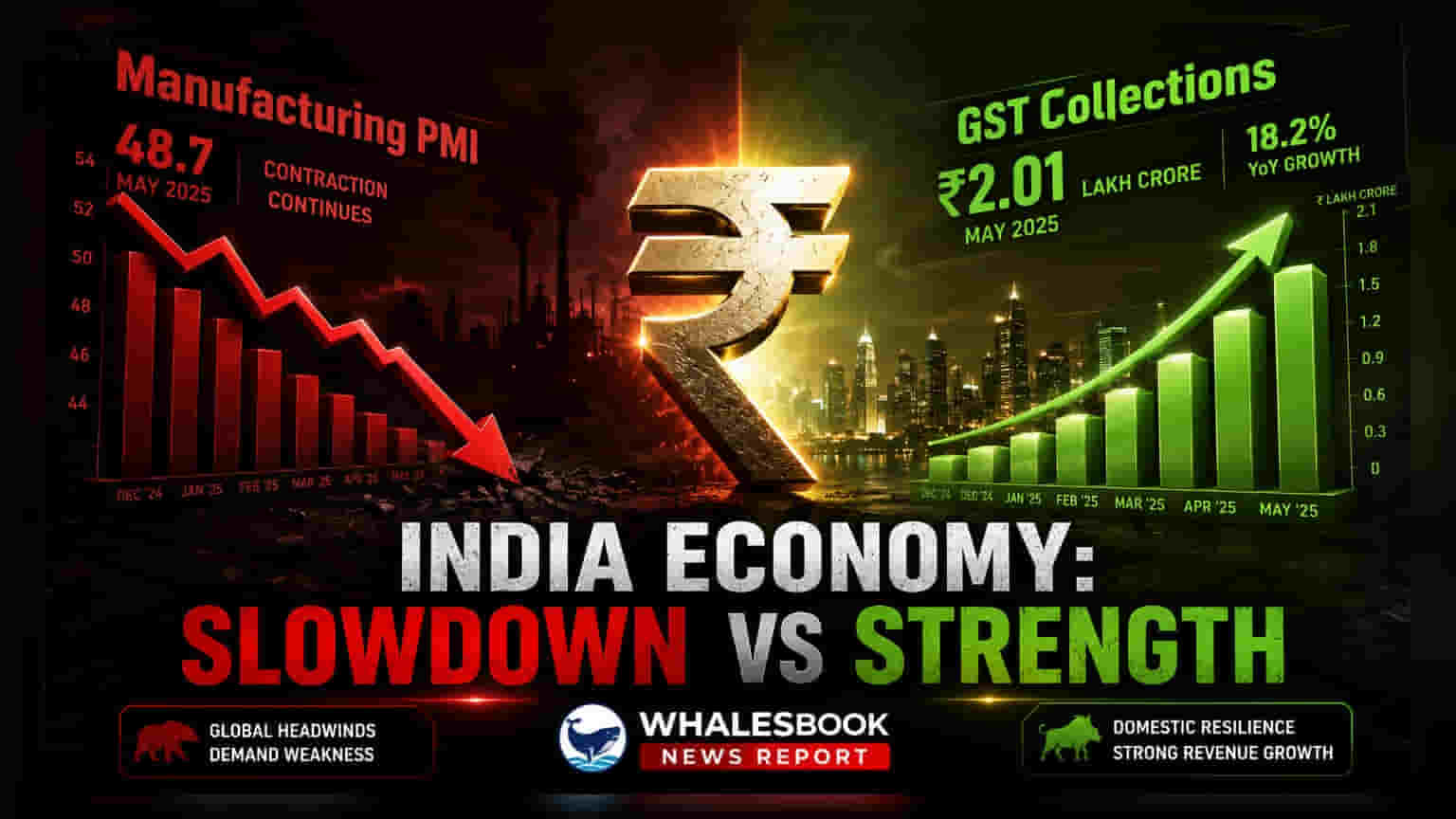
India’s manufacturing sector growth eased in June, with the PMI dropping to 54.2, a three-month low. Despite this factory-level slowdown, domestic demand remains strong, evidenced by a 13.9% rise in GST collections to ₹1.9 trillion and higher electricity consumption. Investors should distinguish between this moderate manufacturing pace and the resilient consumption patterns driven by seasonal factors.
What Happened
India's manufacturing activity showed signs of moderation in June 2026. The Purchasing Managers' Index (PMI)—a key indicator used to track factory-level health—fell to 54.2, reaching a three-month low. While the index indicates that the sector is still growing, the pace of that growth has slowed compared to earlier months. This dip is linked to a deceleration in international sales, hiring, and overall output. Despite the cooling factory activity, government tax revenue data suggests that internal consumption remains healthy.
The Consumption And Revenue Picture
Contrasting the factory-level slowdown, the Goods and Services Tax (GST) collections rose 13.9% year-on-year, reaching ₹1.9 trillion in June. This revenue collection is a proxy for domestic spending and trade activity. Financial analysts have noted that a significant portion of this growth was driven by import tax collections. For investors, this provides a nuanced view: while manufacturing output for domestic use or export might be facing hurdles, the actual transaction of goods and taxable services continues to generate substantial revenue for the government.
Understanding The Power Surge
Electricity consumption, often treated as a reliable proxy for broad economic health, increased by 11.6% year-on-year in June. While high power demand is usually a positive signal of industrial activity, current data suggests the surge was largely seasonal. The combined impact of heatwave conditions and a delayed monsoon forced a spike in the use of cooling appliances like air conditioners. This provides a specific insight for investors: the power consumption rise is likely more reflective of consumer durables usage and residential demand rather than a sudden boost in heavy industrial production.
Global Context And Manufacturing Trends
Manufacturing slowdowns are not limited to India. Global data suggests a cooling trend across several major economies. In the Eurozone, inflation data has eased to 2.8% in June, while the US ISM Manufacturing PMI has declined to 53.3. In the UK, the S&P Global Manufacturing PMI recorded 52.5. This synchronization of manufacturing moderation across major global economies suggests that companies with heavy export exposure may face headwinds in international demand, which aligns with the reported slowdown in India's international sales.
What Investors Should Track Next
Investors may want to observe how these trends evolve in the coming quarter. The first monitorable is the monsoon’s progress; a sustained delay could keep power demand high but potentially hurt rural income and agricultural output, which would eventually impact demand for consumer goods. Second, watch for the next round of corporate earnings to see if the manufacturing moderation mentioned in PMI reports translates into tighter margins or volume pressure for mid-sized industrial firms. Finally, observe if the strength in GST collections remains consistent or if it was partially a result of one-time import factors.