

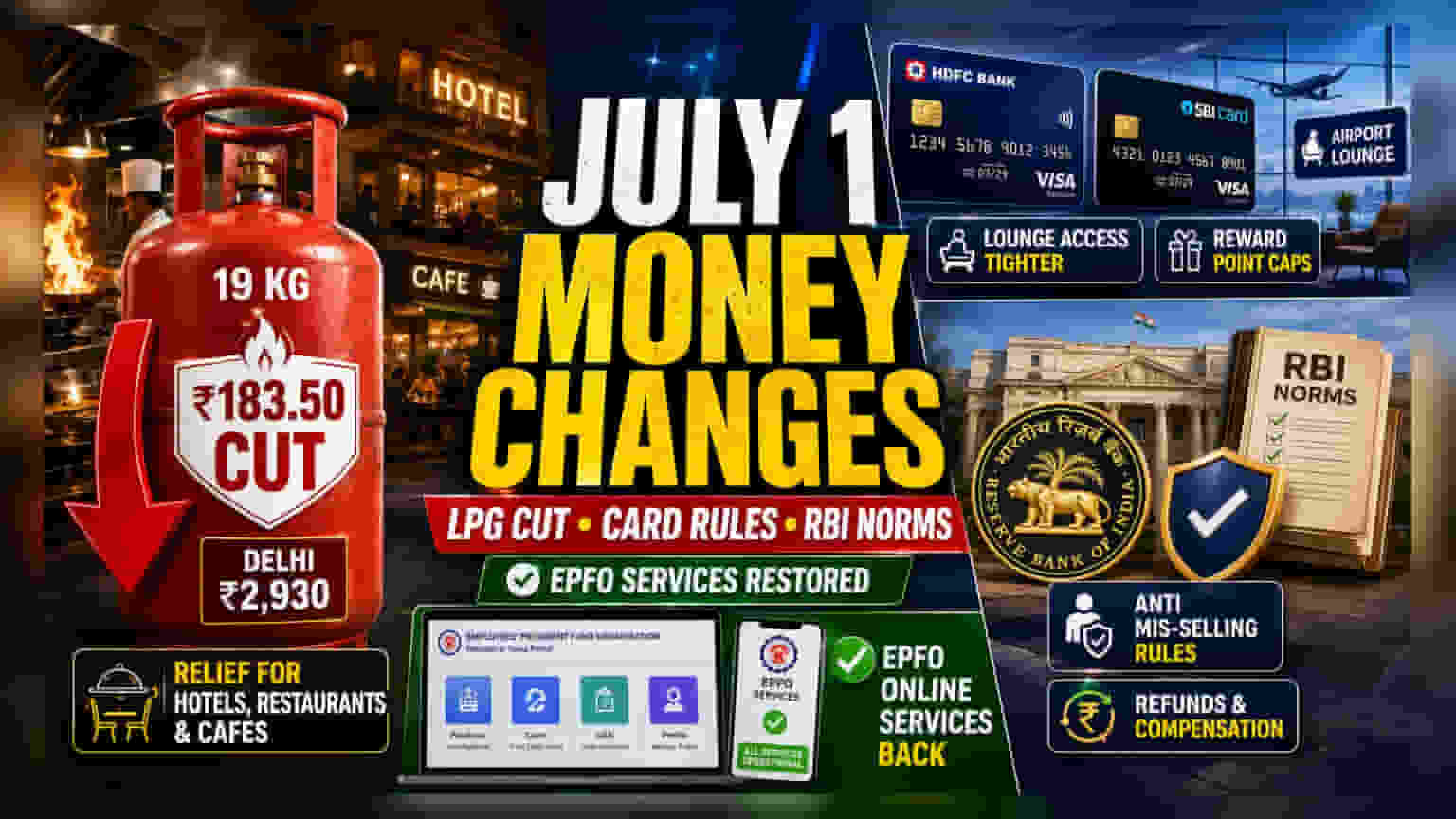
Commercial LPG prices dropped by ₹183.50, offering relief to the hospitality sector. Meanwhile, banks like HDFC Bank and SBI Card introduced tighter credit card reward and lounge access rules. New RBI regulations also came into effect, restricting telemarketing hours and strengthening anti-mis-selling norms for financial products.
Commercial LPG Price Relief
Effective July 1, 2026, the price of a 19-kg commercial Liquefied Petroleum Gas (LPG) cylinder has been reduced by ₹183.50. In Delhi, the rate now stands at ₹2,930. While domestic LPG prices remain unchanged, this reduction provides a operational cost relief to businesses in the hospitality sector, including hotels, restaurants, and cafes. Investors tracking stocks in the food services and hotel industries may monitor whether this cost reduction translates into margin stability or improvements for these companies in the coming quarter.
Banking and Credit Card Adjustments
Banks are shifting their focus toward customer spending habits. HDFC Bank has revised its credit card lounge access policy, requiring a minimum quarterly spend of ₹60,000 to qualify for three complimentary domestic airport lounge visits in the subsequent quarter. Similarly, SBI Card has updated its reward point structure for select co-branded cards, which includes placing monthly caps on points and refining the list of eligible transactions. These changes reflect an industry-wide push to manage the rising costs associated with premium credit card benefits and reward programs.
RBI’s Stricter Rules on Mis-selling
The Reserve Bank of India (RBI) has implemented stricter regulations to protect customers from the mis-selling of financial products. Under the new framework, customers are entitled to refunds and compensation if products are sold without informed consent or through deceptive practices. Additionally, the RBI has mandated that banks and financial institutions restrict promotional and telemarketing calls to the 9 am to 6 pm window.
For banking and finance stocks, these rules are relevant because they may impact the 'fee-based income' derived from cross-selling insurance or investment products. Increased compliance requirements and tighter control over sales processes are standard operational adjustments, but they also necessitate a more transparent approach to product distribution, which could slightly alter the sales volume of third-party financial products for banks.
EPFO Services
The Employee Provident Fund Organisation (EPFO) has restored all online services as of July 1, 2026. Services were temporarily offline between June 26 and June 30 due to a system migration and database consolidation. Business operations and compliance reporting, which often depend on these portals, are now fully functional.
What Investors Should Track
Investors may look for the following updates in upcoming quarterly reports:
- Margin impact: Whether hospitality and food service companies show improved operating margins due to the lower commercial LPG costs.
- Fee income trends: Whether the new RBI mis-selling norms lead to a slowdown in third-party product distribution income for banks.
- Customer behavior: If the stricter spending thresholds for credit card benefits like lounge access affect card usage volumes or customer retention for major credit card issuers.