

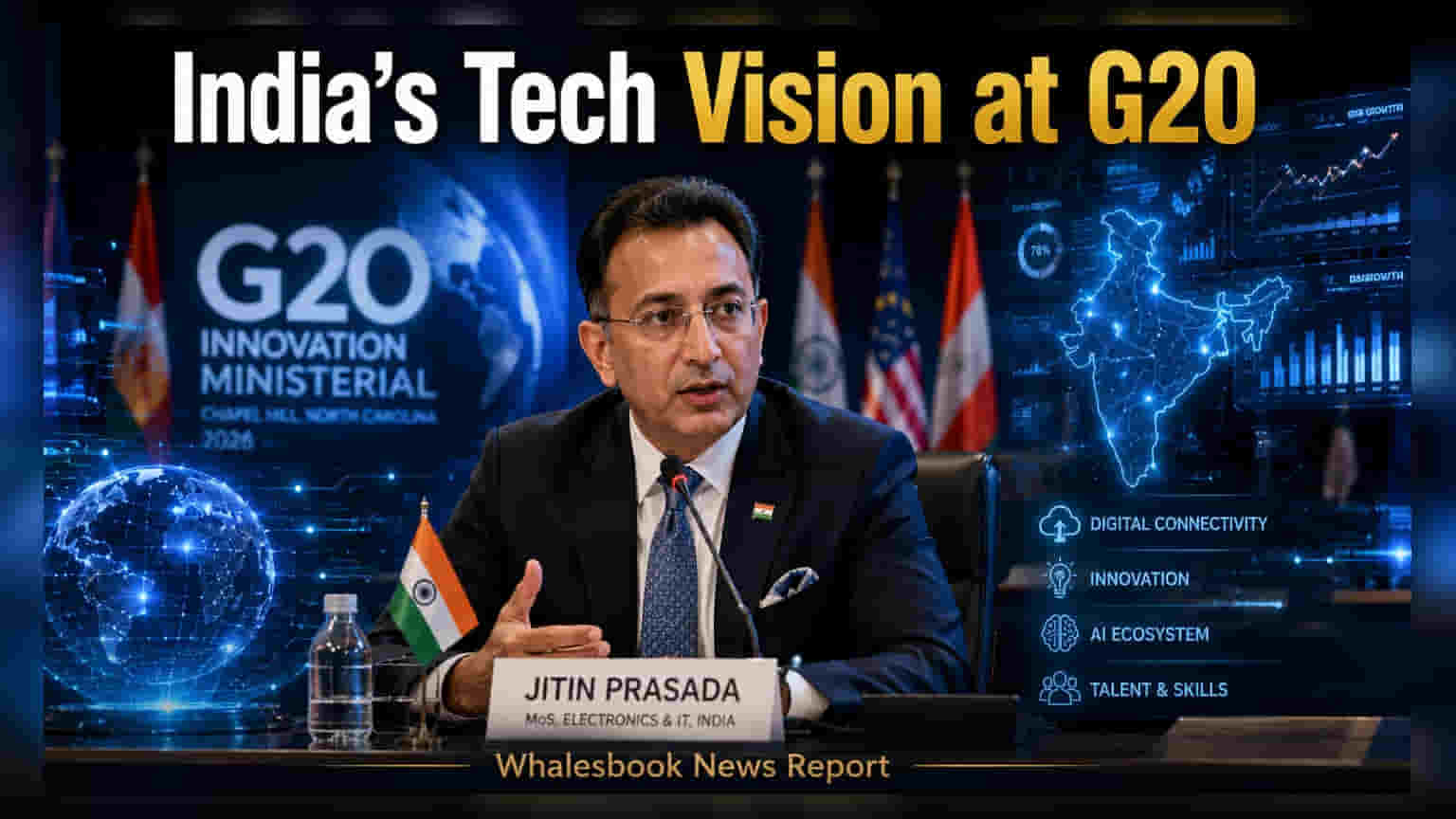
Minister Jitin Prasada represented India at the G20 Innovation Ministerial in North Carolina, focusing on digital infrastructure and AI. The event aimed to strengthen international cooperation on technology policies and workforce development. These initiatives are important as they could improve India’s digital trade ties and support long-term growth in the technology sector.
Jitin Prasada, Union Minister of State for Electronics and Information Technology, participated in the G20 Innovation Ministerial held in Chapel Hill, North Carolina. The discussions focused on developing robust policy frameworks to support technology-driven economic growth and the need for a highly skilled technical workforce.
The ministerial sessions centered on how countries can better scale their digital infrastructure to drive prosperity. Minister Prasada emphasized the link between national economic output and a country's ability to develop talent in emerging technologies like Artificial Intelligence. For India, these discussions are part of a broader strategy to position the country as a central hub for global technology research and talent.
Beyond the main sessions, the Minister held several high-level meetings to strengthen international partnerships. His dialogue with European Commission Executive Vice-President Henna Virkkunen was aimed at creating trusted digital frameworks to facilitate cooperation between India and the European Union. Similar discussions regarding collaborative efforts in Artificial Intelligence and emerging digital tools were held with French Minister Delegate for Artificial Intelligence and Digital Affairs, Anne Le Henanff.
Prasada also engaged with the African Union Commissioner for Education, Science, Technology and Innovation, Gaspard Banyankimbona, to explore long-term cooperation in skill-based training. Furthermore, discussions with German Parliamentary State Secretaries Thomas Jarzombek and Silke Launert focused on deepening research ties between New Delhi and Berlin.
For the Indian economy, these diplomatic efforts serve as a signal of the government's focus on the digital and tech sectors. While these meetings take place at the policy level, they are often the first step toward agreements that can simplify cross-border business for technology firms and expand the global market for Indian digital services. Investors and market participants typically monitor these developments as they can influence long-term policy decisions regarding digital trade, data standards, and technology research funding.
The real impact of these discussions will depend on how quickly they translate into formal agreements and tangible policy implementations. As the global digital ecosystem evolves, the focus will remain on how India aligns its national technology policies with these international partnerships to maintain a competitive edge.