

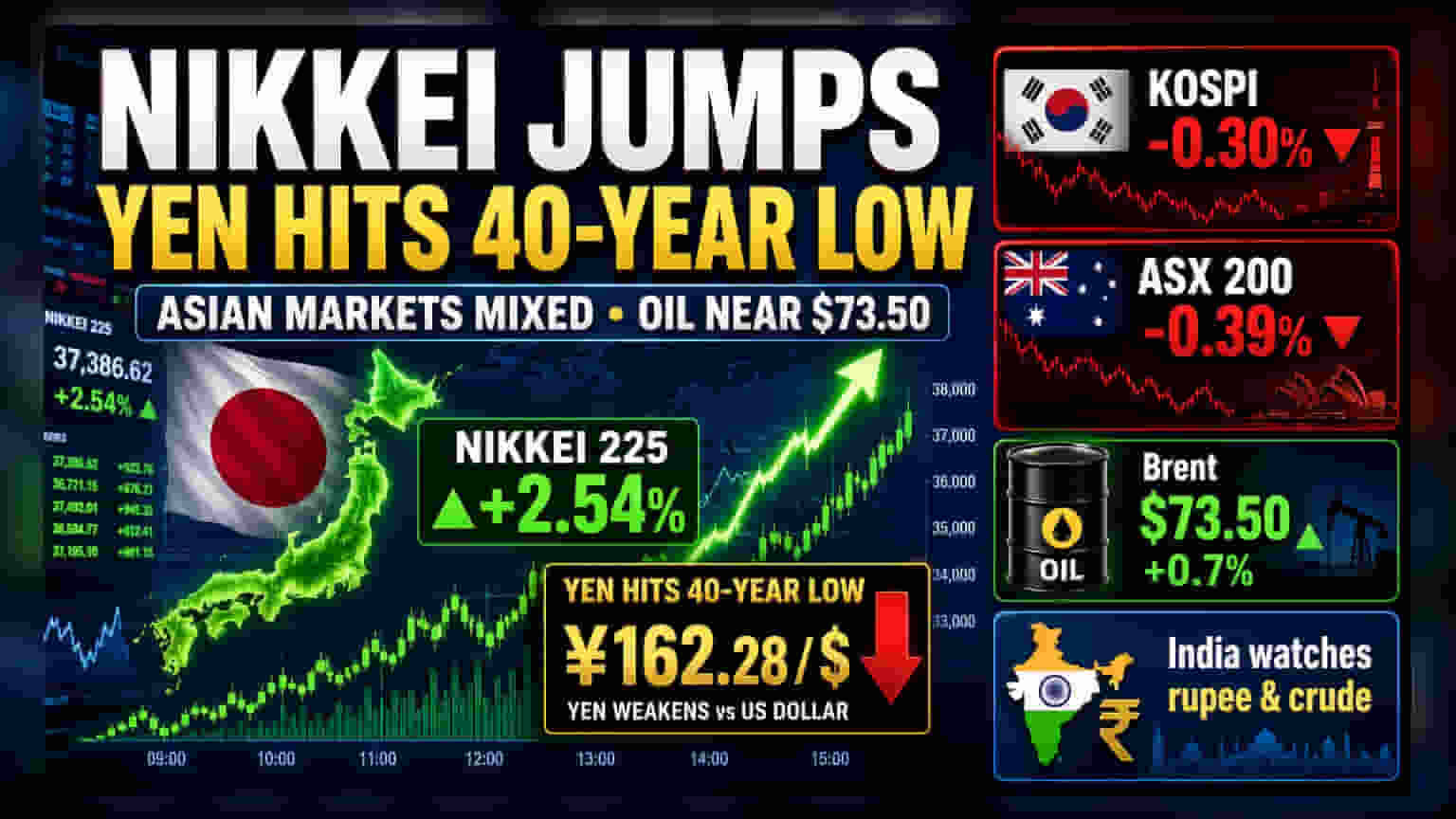
Japan’s Nikkei 225 surged 2.54% as the Yen touched a 40-year low against the dollar, benefiting export-oriented companies. Meanwhile, other Asian markets like the Kospi and ASX 200 faced minor pressure. For Indian investors, the rise in Brent crude prices due to Middle East supply concerns remains a key factor to watch, as it impacts import costs and inflation.
What Happened
Asian markets showed a split performance on Wednesday, July 1, 2026. Japan's Nikkei 225 index saw a strong rally, climbing 2.54%. This move was largely driven by a sharp drop in the value of the Japanese Yen, which hit a 40-year low against the U.S. Dollar, trading near 162.28. In contrast, other regional indices were more cautious, with South Korea’s Kospi falling 0.30% and Australia’s ASX 200 declining 0.39%. Markets in Hong Kong and Shanghai were closed for the day, which kept trading volumes in the broader region relatively low.
Why the Yen’s Weakness Matters
The surge in the Japanese stock market is a classic reaction to currency depreciation. In Japan, many large companies in the Nikkei index are global exporters, such as automakers and technology firms. When the Yen becomes cheaper relative to the U.S. Dollar, the products these companies sell in overseas markets become more profitable when converted back into Yen. This boosts the expected earnings of these firms, often leading to a rise in their share prices. However, while a weak Yen helps exporters, it can also make imports—such as energy and food—more expensive for the domestic economy.
Impact of Oil and Geopolitics
Investors across Asia are also keeping a close watch on commodity prices. Brent crude oil prices showed a rise of approximately 0.7%, trading around $73.50 a barrel. This increase follows recent diplomatic discussions in the Middle East and ongoing tensions in the Strait of Hormuz. For Indian investors, the price of oil is a critical factor. India is a major importer of crude oil, so a sustained rise in prices often leads to concerns about higher import bills, a wider trade deficit, and potential pressure on inflation.
How Investors May Read This
Market participants often look at these regional trends to gauge global investor sentiment. When the Yen drops sharply, it can sometimes signal that capital is moving away from Asian markets and toward the U.S. Dollar, which creates volatility. While the Nikkei’s rally is specific to Japan’s export-heavy structure, the broader regional dip suggests a sense of caution among traders.
What Investors Should Track Next
Indian investors should monitor two main things following these developments. First, watch the movement of the Indian Rupee against the U.S. Dollar, as global currency volatility often influences the Rupee. Second, keep an eye on oil prices. If the price of crude continues to climb due to Middle East tensions, it could create pressure on sectors like aviation, paints, and oil marketing companies in India. Furthermore, any official commentary from Japanese monetary authorities regarding potential intervention to support the Yen could lead to sudden shifts in market sentiment.