

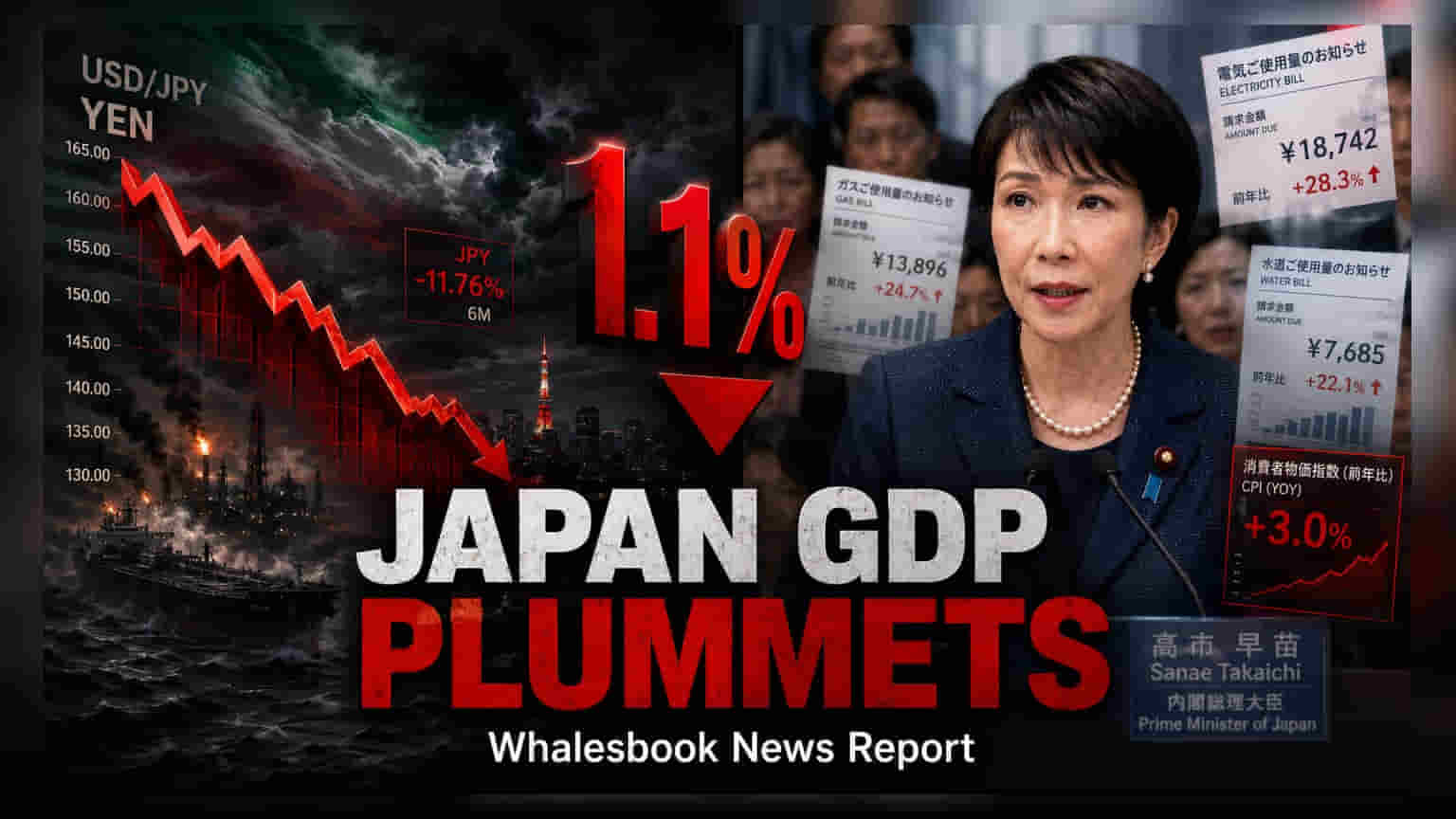
Japan's economy underperformed in the second quarter of 2026, growing just 1.1% against a 2% forecast. High energy prices caused by the U.S.-Iran conflict stalled consumer spending and business investment. While exports remain a bright spot, the Bank of Japan faces increasing pressure to raise interest rates, which could influence global liquidity and market sentiment.
Japan's economic momentum cooled significantly in the second quarter of 2026, with GDP growing by an annualized 1.1%. This result missed the 2% growth anticipated by economists and marked a slowdown from the revised 1.9% pace seen in the previous quarter. On a quarterly basis, the economy expanded by only 0.3%, failing to meet the expected 0.5% growth.
The primary driver of this deceleration is the ongoing U.S.-Iran conflict, which escalated earlier this year. The closure of the Strait of Hormuz has disrupted energy supply chains, causing a spike in fuel and electricity costs. These higher expenses have squeezed household budgets, leading to stagnant private consumption—which accounts for more than half of Japan's economic output. Simultaneously, business investment contracted by 1.2% as companies held back on expansion plans, likely due to the uncertainty surrounding energy costs and global demand.
Despite the domestic weakness, exports provided a significant boost to the economy, contributing 0.5 percentage points to the growth figure. Japanese companies benefited from strong U.S. demand for hybrid vehicles and the global push for artificial intelligence, which has driven sales of semiconductor equipment. A weaker yen has also helped boost the value of these exports, partially cushioning the impact of the domestic slowdown.
The economic data presents a difficult situation for the Bank of Japan ahead of its September 18 policy meeting. Market data indicates an 80% chance of an interest rate hike, as the central bank looks to address currency depreciation. However, raising rates while domestic consumption is flat creates a risk of further suppressing economic activity. This potential rate hike is being watched by global investors, as any change in Japanese interest rates often influences the 'yen carry trade'—a strategy where investors borrow in yen to invest in higher-yielding assets worldwide.
Political leaders are also reacting to the economic strain. Prime Minister Sanae Takaichi, whose approval ratings have softened, has introduced measures like utility bill subsidies and a proposed cut in the food sales tax to 1% by April to support consumer spending.
For investors globally, the next few weeks will be critical. The market will closely track the Bank of Japan’s decision on interest rates, as it will signal how the central bank plans to balance currency stability against the risk of slowing growth. Additionally, any changes in the geopolitical situation in the Middle East, particularly regarding energy shipping lanes, will remain a key monitorable for global supply chain costs.