

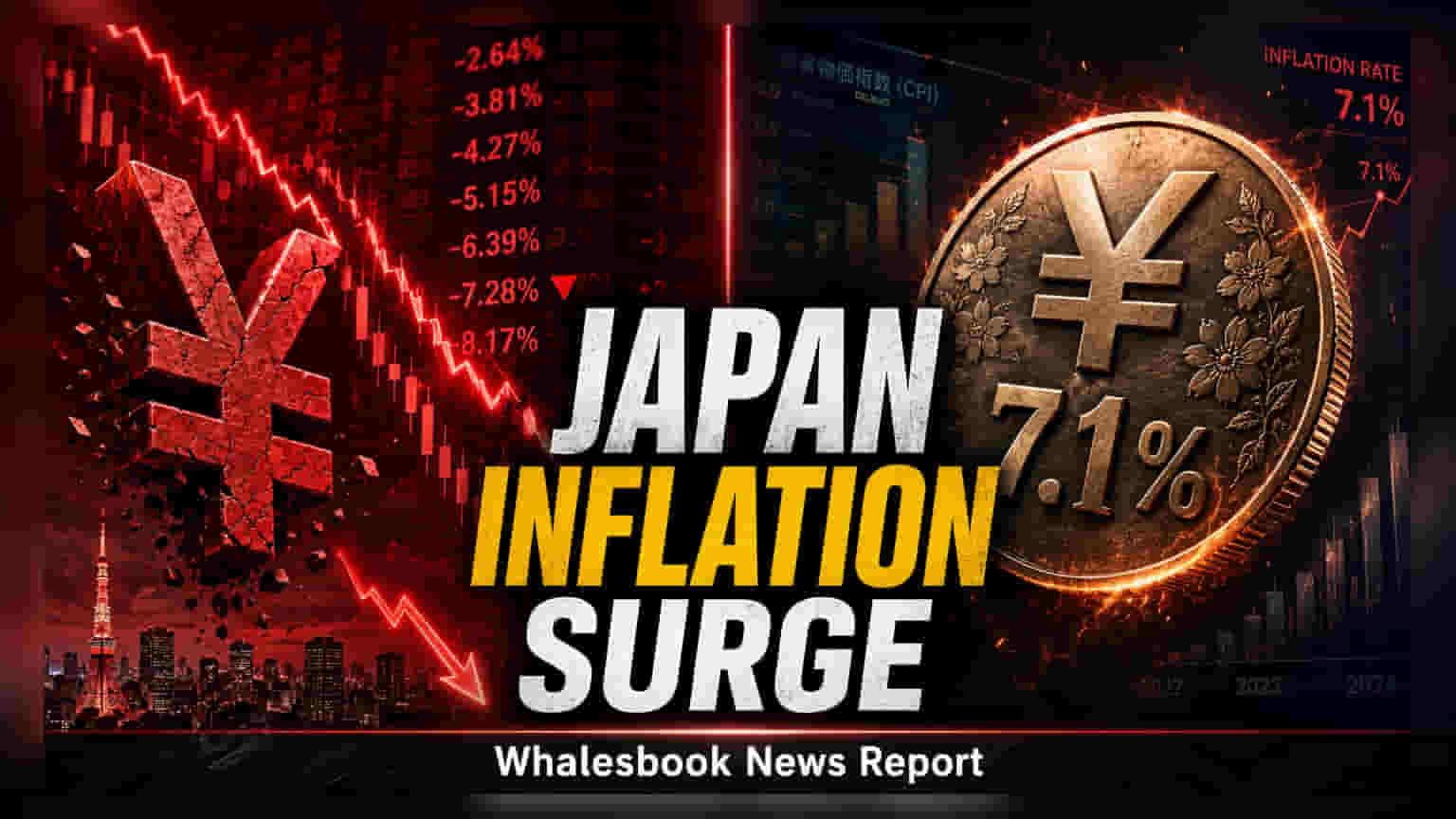
Japan’s producer prices climbed 7.1% year-on-year in June, driven by energy costs and rising wages. This inflationary trend strengthens the case for the Bank of Japan to pursue further interest rate hikes. Investors are tracking how these rising costs will impact consumer spending and the value of the Japanese yen.
Japan's corporate goods prices, known as the producer price index, rose by 7.1% in June compared to the same period last year. This increase marks the fastest growth since early 2023, signaling that companies are facing higher operational costs. The monthly increase for June was recorded at 0.4%, following upward revisions to figures from May. This continued upward trend provides the Bank of Japan with more evidence to support its move toward tighter monetary policy.
Impact on Monetary Policy and Currency
The rising producer price data has increased market expectations that the Bank of Japan could raise interest rates again before the end of the year. Some market speculation suggests a possible hike as early as October. Amid these developments, the Japanese yen has remained under pressure, recently trading around 162.36 against the US dollar. This level is near a four-decade low, reflecting the ongoing contrast between Japan’s interest rate environment and higher rates in other major global economies.
Inflation Drivers and Wage Growth
The rise in producer prices is largely attributed to higher costs for energy-related items, including oil, gasoline, and electricity, alongside plastic products. These cost pressures have prompted the Japanese government to evaluate potential subsidies to help households cope with the financial burden of these price increases. A significant factor supporting this trend is the recent outcome of annual wage negotiations, where workers secured average pay increases of over 5%. This is the third consecutive year of such gains, a level of wage growth not seen in Japan since the early 1990s. When combined with the producer price data, it suggests that inflation is becoming a more permanent feature of the Japanese economy as firms pass their increased costs on to consumers.
Investors will continue to monitor the Bank of Japan’s upcoming policy meetings and commentary regarding the path of interest rates. The next key monitorable is whether the combination of higher producer prices and persistent wage growth leads to a sustained increase in consumer inflation, which would provide further justification for the central bank to shift away from its historical stance of ultra-low interest rates.