 Whalesbook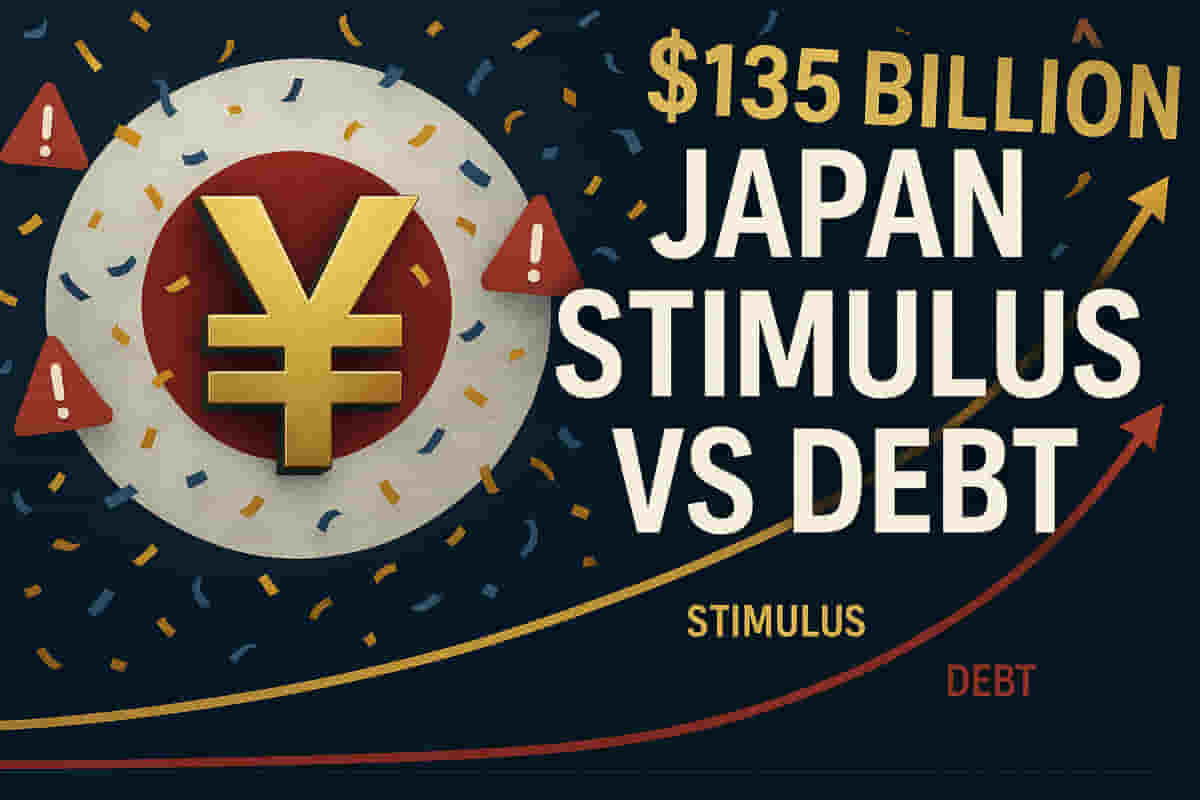
Japan's government, led by Prime Minister Sanae Takaichi, has announced a significant economic stimulus package valued at $135 billion. This move is intended to provide a much-needed boost to the world's fourth-largest economy, which has faced ongoing challenges.
Stimulus Measures Detailed
- The package includes a range of relief efforts designed to support households and businesses.
- Key measures include energy subsidies to combat rising costs.
- A direct cash handout of 20,000 yen (approximately $128.73) per child is planned to stimulate consumption.
- Longer-term initiatives involve raising the income tax threshold and abolishing a provisional gasoline duty.
- The government plans to finance approximately 60% of this package through bond markets.
Concerns Over Rising Debt
- A major point of contention is Japan's substantial national debt, which is already one of the largest globally, standing at more than double the size of its economy.
- Recent market movements, including benchmark 10-year government bond yields reaching a 18-year high of 1.965%, have heightened anxieties.
- Fitch Ratings has identified Japan's high government debt as a significant weakness, coupled with a subdued growth outlook and an aging population.
Economic Perspectives
- Many economists argue that fears of a fiscal crisis are exaggerated, pointing out that the package's size relative to Japan's economy is similar to previous years.
- They suggest that Japan's fiscal framework, where revenues tied to nominal yen amounts automatically increase with inflation, helps manage spending.
- However, opposition parties and some analysts warn of potential risks, citing the UK's 2022 market reaction under Liz Truss as a cautionary tale.
- These critics suggest that relying on supplementary budgets for such significant spending could signal a departure from fiscal consolidation efforts.
Market Reactions and Outlook
- The yen has shown volatility, weakening against the dollar in recent weeks before a partial recovery.
- Analysts are divided on whether the rise in bond yields reflects market anxiety about inflation or simply expectations of higher interest rates.
- The core debate revolves around the sustainability of Japan's debt given its economic trajectory and the potential impact of continuous government spending on its sovereign credit rating.
Impact
- This stimulus package could provide short-term relief to the Japanese economy, potentially boosting consumer spending and business activity.
- However, the sustained high level of government debt raises long-term concerns about fiscal stability and Japan's creditworthiness.
- Global markets may react to increased Japanese bond yields and potential shifts in monetary policy, influencing international investment flows.
- Impact Rating: 7/10
Difficult Terms Explained
- Stimulus Package: A set of government measures, often involving increased spending or tax cuts, designed to boost economic activity.
- Debt Pile: A large accumulation of national debt owed by a government.
- Fiscal Unraveling: A situation where a government's financial situation deteriorates significantly due to unsustainable spending and debt levels.
- Bond Markets: Markets where government and corporate debt (bonds) are bought and sold.
- Yield: The annual return an investor receives on a bond, usually expressed as a percentage of the bond's price.
- Gross Domestic Product (GDP): The total monetary value of all the finished goods and services produced within a country's borders in a specific time period.
- Fiscal Contraction: A reduction in government spending or an increase in taxes, aimed at reducing a budget deficit.
- Sovereign Credit Score: An assessment of a country's creditworthiness, indicating its ability to repay its debts.