

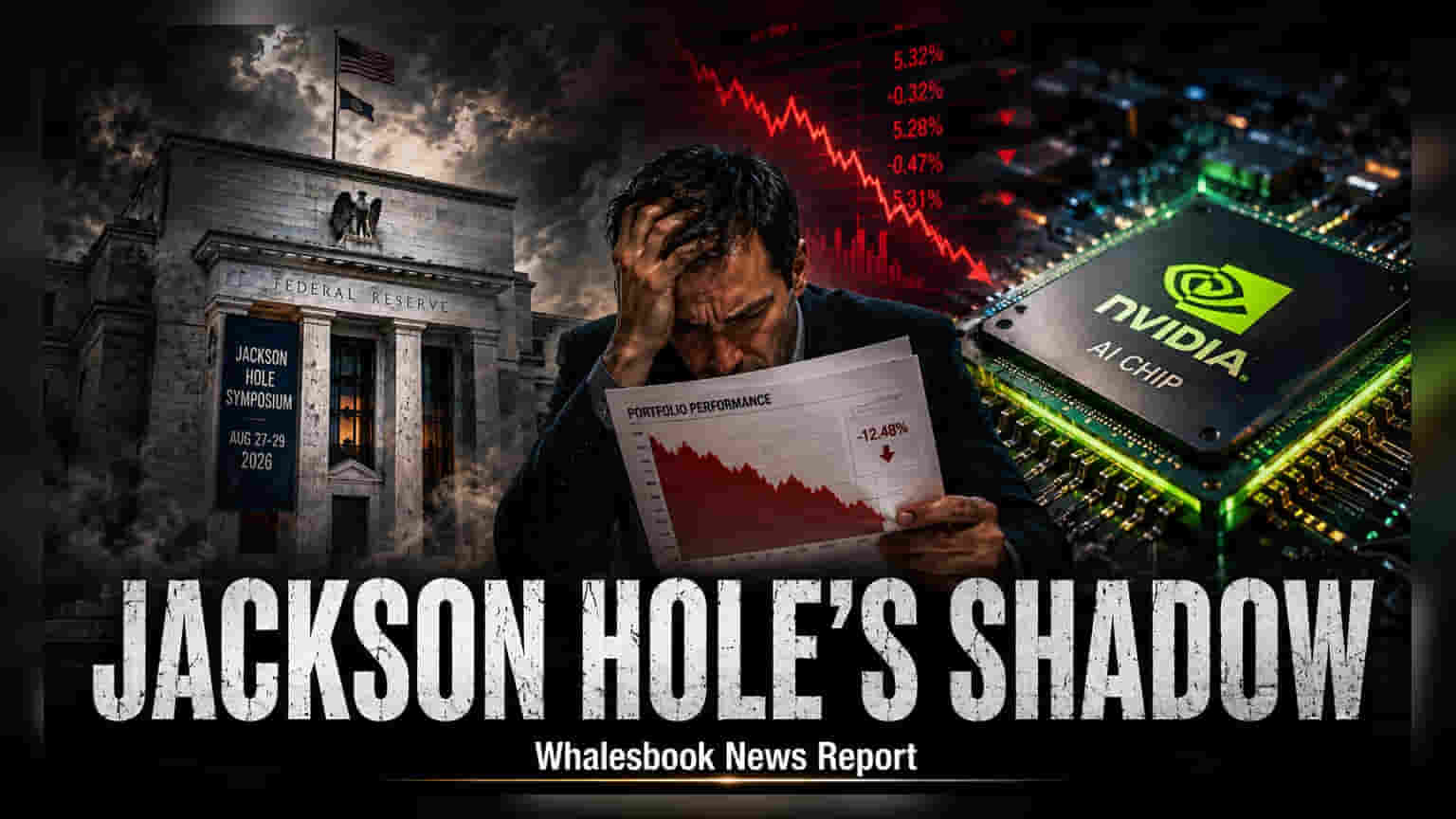
Allspring Global Investments warns that the upcoming Jackson Hole Economic Symposium carries more market uncertainty than Nvidia's earnings report. Rising corporate borrowing costs are tightening financial conditions, leading experts to favor companies with stronger balance sheets.
Investors are shifting their focus to next week's major economic events, with Allspring Global Investments cautioning that the Federal Reserve’s Jackson Hole Symposium may present a greater challenge for the stock market than the highly anticipated earnings report from Nvidia.
Nvidia is scheduled to announce its quarterly results on August 26, 2026, a report that typically drives significant movement in the technology sector. However, Ann Miletti, head of equity investments at Allspring, suggests that the Federal Reserve's gathering, scheduled for August 27-29, 2026, carries deeper implications for the broader economy. While Nvidia’s performance provides insight into demand for artificial intelligence, the Jackson Hole event acts as a system-wide anchor, setting the tone for interest rate policy and future economic conditions.
The core of this concern lies in the recent shift in the bond market. Yields on 30-year U.S. Treasury bonds have climbed past 5.3%, a level not seen since 2007, reflecting investor anxiety about inflation and government debt. This trend has pushed corporate borrowing costs above 5.5%, a sharp increase from the sub-5% levels seen at the start of the year. For many companies, especially those with aggressive expansion plans, higher interest rates mean higher debt servicing costs, which can directly reduce profit margins.
Miletti noted that this environment warrants a defensive strategy. Rather than betting on broad sector rallies, she advises investors to conduct a thorough analysis of individual companies, specifically looking for businesses with healthy balance sheets and low debt. A balance sheet with significant cash reserves acts as a safety net when the cost of borrowing capital rises.
Regarding sector preferences, the firm sees potential in healthcare and small-cap industrial companies. While healthcare stocks have recently lagged behind high-flying tech names, some investors are beginning to rotate into the sector, eyeing its potential for innovation. This strategy emphasizes value and stability over the high-growth, high-valuation stocks that have dominated the market narrative for much of the year.
The most important update investors will follow next week is the inaugural keynote address by Federal Reserve Chair Kevin Warsh on August 28. His commentary on inflation and future monetary policy will be the primary factor determining whether the market faces continued volatility or finds a stable path forward for the rest of the year.