

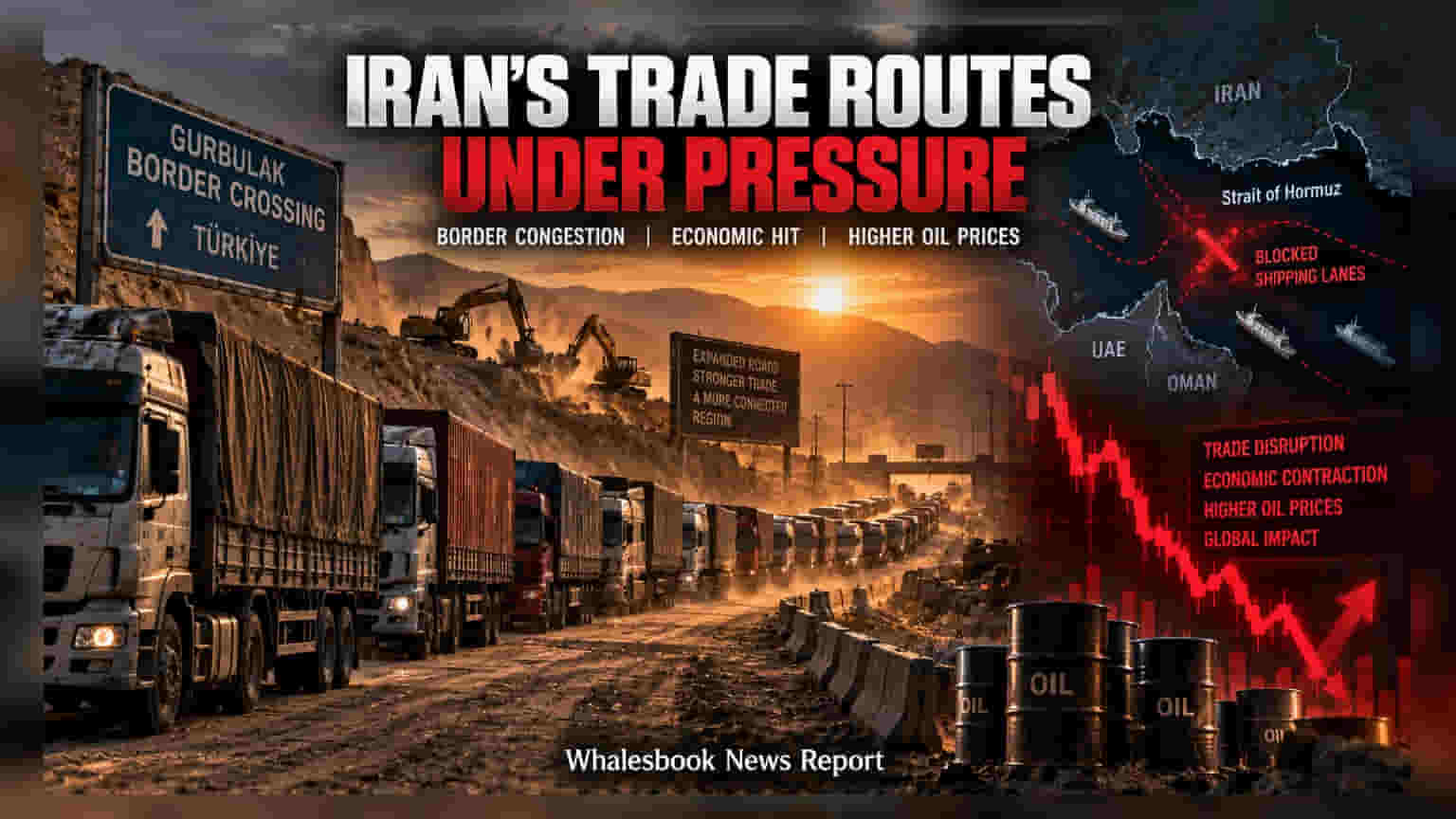
Iran is forced to rely on land routes through Turkiye and Pakistan after a naval blockade disrupted its maritime trade. This logistical shift is causing record delays and economic strain, potentially impacting global supply chains and commodity prices.
Iran’s economy is undergoing a forced logistical transformation as an international naval blockade has severely restricted its maritime trade routes. With over 80 percent of its trade historically relying on the Persian Gulf, the nation is now attempting to redirect commercial flows through land borders, primarily with Turkiye and Pakistan. This rapid transition is creating severe bottlenecks, as existing infrastructure is struggling to manage the sudden, massive surge in vehicle traffic.
At the Gurbulak border crossing with Turkiye, congestion has reached critical levels, with reports indicating that truck volumes have surged by 500 percent. The current infrastructure is insufficient to handle this shift, leading to severe delays that now average 12 to 25 days. For transport operators, this means a sharp increase in maintenance costs and a decrease in cargo efficiency, forcing many independent players toward financial distress.
The macroeconomic impact of these disruptions is significant. Official data shows a contraction of more than 10 percent in the Iranian economy during the three months following March 2026. Furthermore, the non-oil sector, which is essential for manufacturing and petrochemical production, has shrunk by 4.6 percent. While the government is attempting to keep these land borders operational 24/7 to mitigate the damage, the fundamental inefficiency of replacing high-capacity maritime shipping with land transport remains a persistent challenge for the nation's industrial output.
For global markets and Indian investors, this situation carries important implications for commodity and energy price stability. Iran remains a player in the global energy market, and any restriction on its export capacity can contribute to volatility in crude oil prices. Higher oil prices generally increase inflationary pressure for net energy-importing nations like India, which can subsequently influence the rupee and manufacturing input costs. Investors may monitor global oil price trends and supply chain reports from the Middle East to gauge the broader impact of this ongoing trade isolation on global inflation.