

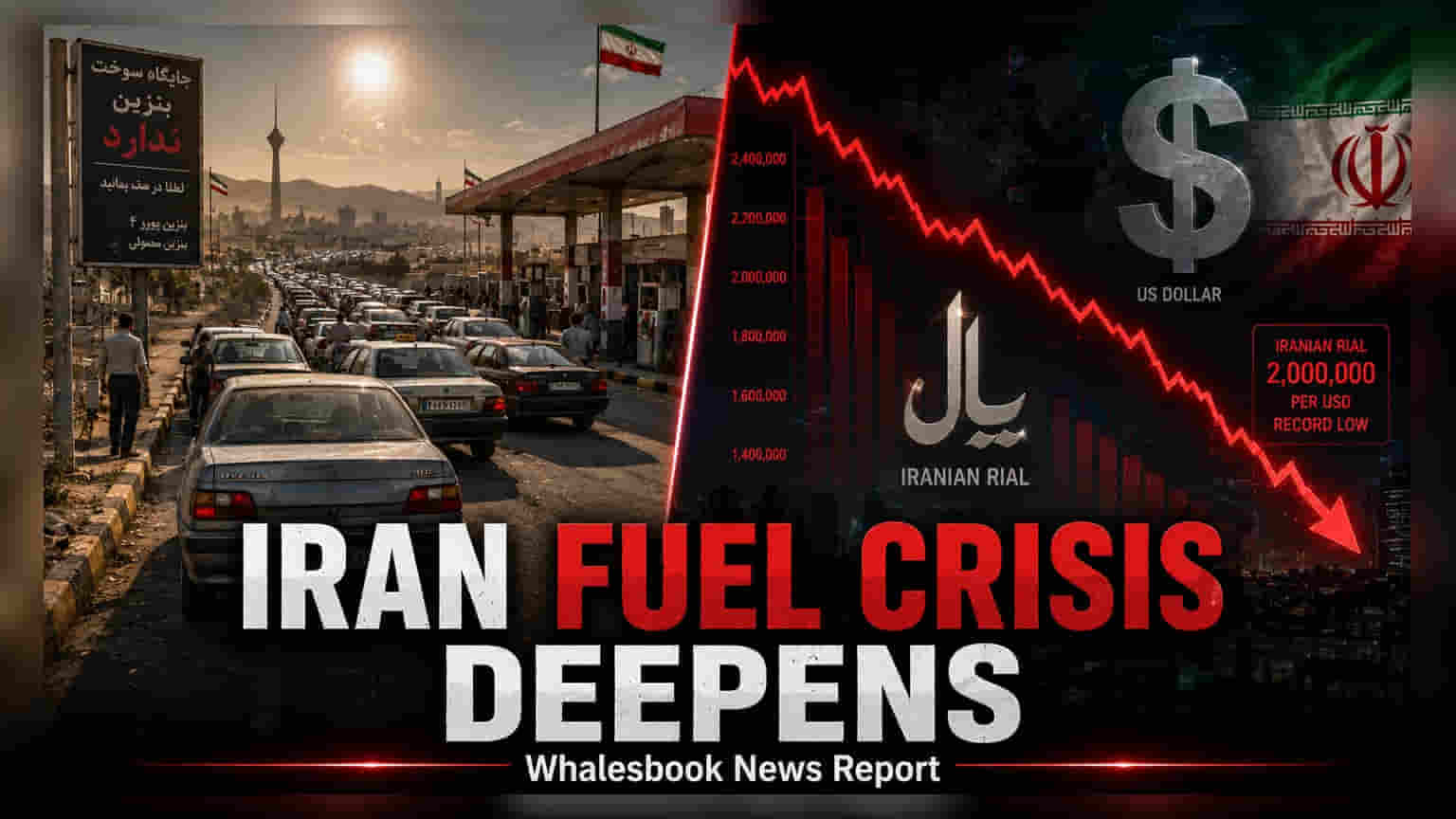
Iran is grappling with a daily fuel deficit of 14-15 million liters, leading to long queues at petrol stations and increasing political risks. New, severe US sanctions and a collapsing currency are straining the economy, creating significant uncertainty for the global energy market.
Drivers across major Iranian cities, including Tehran, are facing long waits at fuel stations as the country struggles with a deepening supply crisis. The government is currently managing a daily fuel deficit of 14-15 million liters, a situation caused by a mix of surging domestic demand, damage to energy infrastructure, and a tightening blockade on imports.
The crisis has intensified as the United States rolls out a new series of economic sanctions. US Treasury Secretary Scott Bessent has described this as a major financial offensive aimed at isolating the country’s economy. These measures, combined with existing logistical hurdles, have made it increasingly difficult for the nation to import necessary supplies to bridge the gap between domestic production and consumer demand.
Economic Pressure and Currency Crisis
The fuel shortage is unfolding against a backdrop of severe economic instability. The Iranian rial has hit a record low of approximately 2 million per US dollar, making imports prohibitively expensive. International financial institutions, including the IMF, have signaled caution, with projections suggesting a potential 5.4% decline in the country’s GDP for 2026. This economic contraction is limiting the government's ability to maintain the subsidies that have historically kept fuel prices among the lowest in the world.
Policy Dilemma and Public Risk
Gasoline pricing remains one of the most sensitive topics in Iran. The government is under pressure to either raise prices or implement strict rationing to bring consumption in line with production. However, officials are proceeding with extreme caution. Past attempts to remove subsidies or hike prices have led to widespread public anger and, in the case of 2019, large-scale protests. The government is currently debating strategies like tiered pricing or individual quotas, but memories of past unrest are tempering their policy responses.
Impact on Global Energy Markets
For international observers and investors, this situation highlights the growing geopolitical volatility in the Middle East. Any escalation in the conflict or a failure to manage the internal fuel crisis could have ripple effects on oil shipping routes, particularly through the Strait of Hormuz. While the immediate issue is internal to Iran, the global energy sector remains sensitive to any disruption in the region.
The most important factor for investors to monitor in the coming weeks will be the Iranian government’s policy decisions regarding fuel quotas. Any move to significantly raise prices or change supply mechanisms will be a key indicator of how the authorities plan to manage public sentiment amidst a shrinking economy. Investors and analysts will also watch global oil price volatility and any further shifts in geopolitical tensions that could impact energy supply chains.