 Whalesbook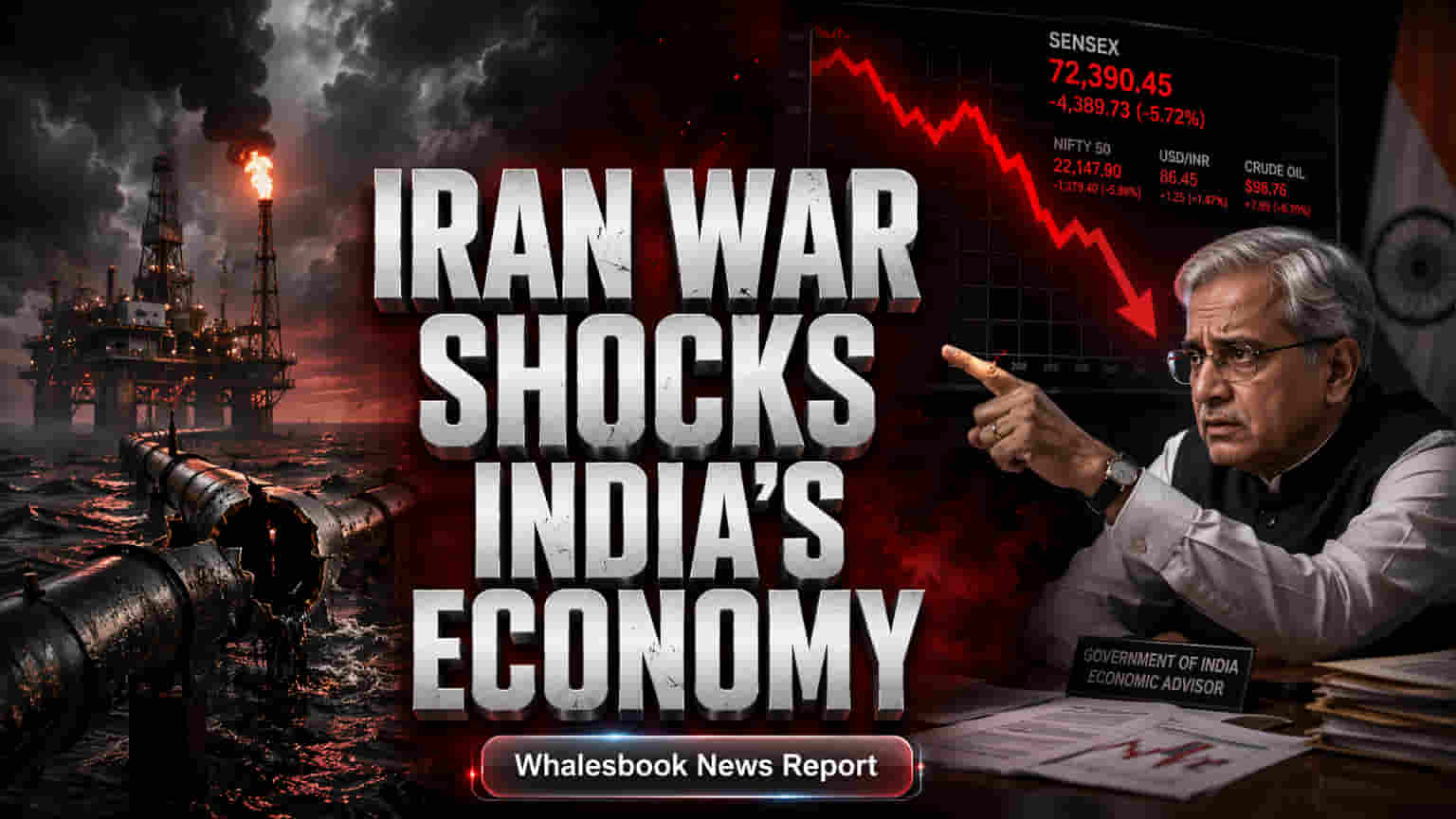


Geopolitical Tension and Supply Chain Strain
This mix of geopolitical tension and major supply chain problems is more than just a temporary economic slowdown; it raises questions about India's long-term growth prospects. While the government is deploying strategies used in past crises, the sheer scale of this energy shock and its possible duration make it a more complex challenge. India's economic strength is being tested by outside pressures and existing vulnerabilities, calling for a greater focus on stability.
Oil Price Shock and Currency Impact
Closing the Strait of Hormuz is causing the largest supply disruption in global oil market history, directly impacting India. Brent crude oil prices hover around $94.60 per barrel as of April 16, 2026, with WTI near $90.69. While a recent ceasefire may have eased immediate fears, the strait remains largely blocked. Prices could surge if the conflict re-escalates, potentially reaching $120 a barrel or higher. This energy price volatility directly threatens India's economy, which imports about 90% of its gas from the Middle East. The upward pressure on imported fuel costs has already caused the Indian Rupee to weaken significantly. The rate against the US dollar reached an all-time high of nearly 99.82 in March 2026 before trading around 93.39. This currency weakness, combined with geopolitical worries, has triggered substantial capital outflows. Foreign portfolio investors have withdrawn approximately ₹1.8 lakh crore ($26.8 billion) from Indian equities year-to-date in 2026, surpassing 2025's total. March alone saw a record ₹1.14 lakh crore outflow.
Economic Growth Forecasts Under Pressure
India's position as the world's fastest-growing major economy faces major challenges. While the government maintains its fiscal year 2027 growth forecast at 6.8%-7.2%, economists are revising projections downward. Goldman Sachs anticipates 5.9% growth for 2026, and Oxford Economics forecasts 6.2%. The International Monetary Fund (IMF) has revised its FY27 growth forecast to 6.5%, expecting it to hold steady in FY28, acknowledging the adverse impact of the Middle East conflict. The Reserve Bank of India (RBI) projects a slightly more optimistic 6.9% for FY27, supported by domestic demand and government measures. However, Alexandra Hermann of Oxford Economics warns that persistent high energy costs and subsidy pressures could harm economic growth over the long term.
The threat of a below-normal monsoon for 2026 also looms, potentially worsening food price inflation.
Government's Fiscal Response and Worries
In response to the economic strain, the government is considering measures similar to its COVID-19 response, including a proposed credit guarantee scheme for small and medium enterprises valued at ₹2-2.5 trillion ($26.8 billion). This would offer collateral-free loans, like pandemic-era support. The government targets a fiscal deficit of 4.3% of GDP for FY27, down from 4.4% in FY26, but economists predict this figure could widen by 0.7 to 0.9 percentage points. This is due to a surging energy import bill, the cost of maintaining stable fuel prices through excise duty cuts, and potentially higher subsidy outlays. The central government's outstanding liabilities are projected at 55.6% of GDP in 2026-27.
The RBI has maintained its policy repo rate at 5.25% with a neutral stance, signaling a cautious approach amidst global uncertainty and rising inflation concerns, with FY27 inflation projected at 4.6%.
Long-Term Growth Risks Mount
Despite claims that the current shock is primarily cyclical, the depth and duration of the Strait of Hormuz disruption introduce significant risk of structural damage. Persistent high energy costs, combined with increased subsidy burdens and potential delays in private capital expenditure, could dampen India's long-term growth potential. The sustained depreciation of the rupee, exceeding an all-time low in March 2026, and record FPI outflows totaling ₹1.8 lakh crore year-to-date, highlight investor concerns. This capital flight, driven by geopolitical tensions and a global risk-off sentiment, puts further pressure on the currency and financial markets. The March 2026 data revealed a record single-month outflow of ₹1.14 lakh crore.
Furthermore, inflation, though currently around 3.4%, carries upward risks from energy prices, potentially making it harder for the RBI to keep prices stable. While the government's fiscal response mirrors its COVID-era strategy, the current crisis's scale and its impact on global supply chains for not only energy but also essential commodities like fertilizers suggest that familiar remedies might prove insufficient without leading to unsustainable debt accumulation or worsening inflationary pressures.
Outlook Depends on Geopolitics
Looking ahead, India's economic outlook remains tied to the geopolitical situation in West Asia and its impact on global energy markets. The IMF projects 6.5% growth for FY27, positioning India as the fastest-growing major economy, yet cautions about global growth being weighed down by conflict. The RBI forecasts 6.9% growth for FY27, but acknowledges the risk of downside pressures. Analysts note that persistent high energy costs could lead to demand destruction, mirroring scenarios seen in 2022. The effectiveness of India's fiscal management and its ability to attract foreign capital will be key factors for its economic path in the coming quarters, especially as the nation navigates a complex global environment.