

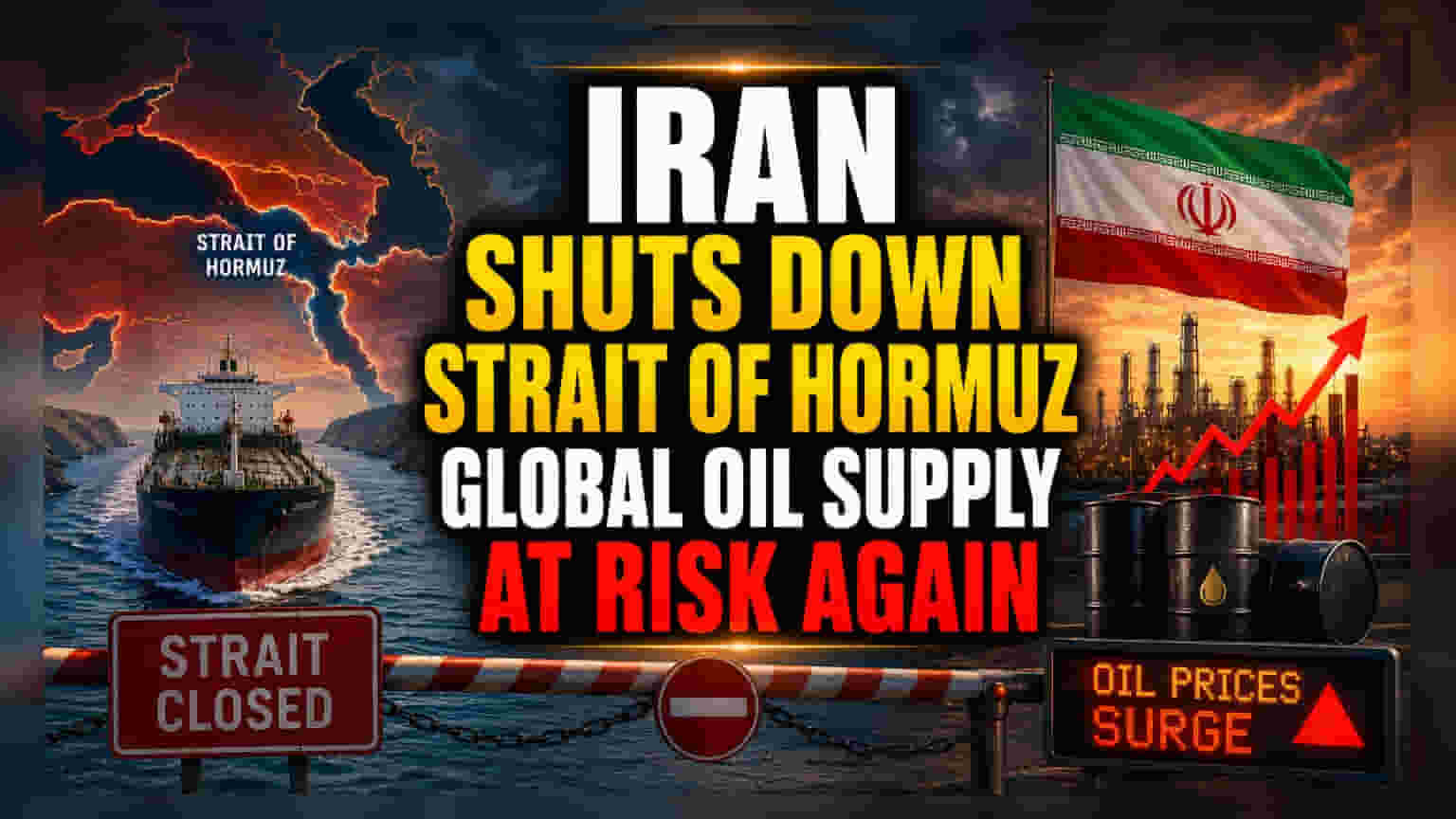
Iran has ordered a fresh closure of the Strait of Hormuz, reversing the tentative resumption of shipping that began earlier this week. This unexpected escalation creates immediate uncertainty for global oil prices, which directly affects India’s import costs, inflation outlook, and energy-sensitive stock sectors. Investors should monitor Brent crude price volatility as market sentiment shifts back to supply-risk concerns.
What Happened
Iran’s military command announced the closure of the Strait of Hormuz on Saturday, June 20, 2026, marking a sharp reversal of the fragile reopening that had commenced earlier this week. Tehran cited what it described as breaches of the recent memorandum of understanding by the U.S. and alleged violations of the Lebanon ceasefire by Israel. This critical maritime chokepoint, which historically handles nearly 20% of global oil and liquefied natural gas (LNG) shipments, is now facing renewed uncertainty after only a brief period of operational activity.
Why This Matters For Investors
The renewed closure is a significant development for global energy security and Indian markets. India remains one of the world's largest importers of crude oil, with a substantial share of its energy imports historically transiting through this narrow waterway. When the Strait is blocked, the primary investor concern is a potential spike in global crude oil prices, particularly Brent crude. For the Indian economy, higher crude prices are typically seen as a negative factor, as they can lead to a widening trade deficit, increased inflationary pressure, and currency depreciation.
Sectoral Impact And Sensitivity
Investors often view the energy sector through two distinct lenses when oil prices fluctuate.
On one side, sectors that rely heavily on oil and fuel as raw materials or operating inputs often face margin pressure when oil prices spike. This includes aviation, where Aviation Turbine Fuel (ATF) costs can rise, and logistics, which may see increased freight and fuel expenses. Additionally, companies in the paint, chemical, and tyre industries—which use oil-derived products as primary raw materials—may face profitability challenges if they cannot fully pass on cost increases to consumers.
Conversely, upstream oil exploration and production companies are often perceived as potential beneficiaries in a high-price environment, as higher realizations can boost revenue. However, this is not always linear for Indian stocks, as government intervention through taxes or price controls can limit the actual gains retained by these companies.
The Macro Economic Risk
Beyond specific sectors, the broad market sentiment is sensitive to oil-related news due to its influence on India's macroeconomic stability. A sustained disruption in energy flows and the resulting volatility in oil prices can complicate the Reserve Bank of India’s (RBI) inflation management efforts. High energy costs act as a tax on the economy, reducing disposable income for consumers and slowing demand for discretionary goods. Investors often keep a close eye on the fiscal deficit impact, as the government may be forced to manage energy subsidies or adjust excise duties to cushion the impact on retail fuel prices.
What Investors Should Track Next
The most immediate monitorable is the volatility in global Brent crude oil prices and any updates from official diplomatic channels regarding the status of the U.S.-Iran agreement. Additionally, investors should look for management commentary from oil marketing companies (OMCs) and major logistics firms regarding their contingency plans for supply chain disruptions. Market participants will also watch for any government response to potential inflationary pressures or changes in fuel pricing policies, as these factors typically influence investor confidence in the broader Indian equity market.