 Whalesbook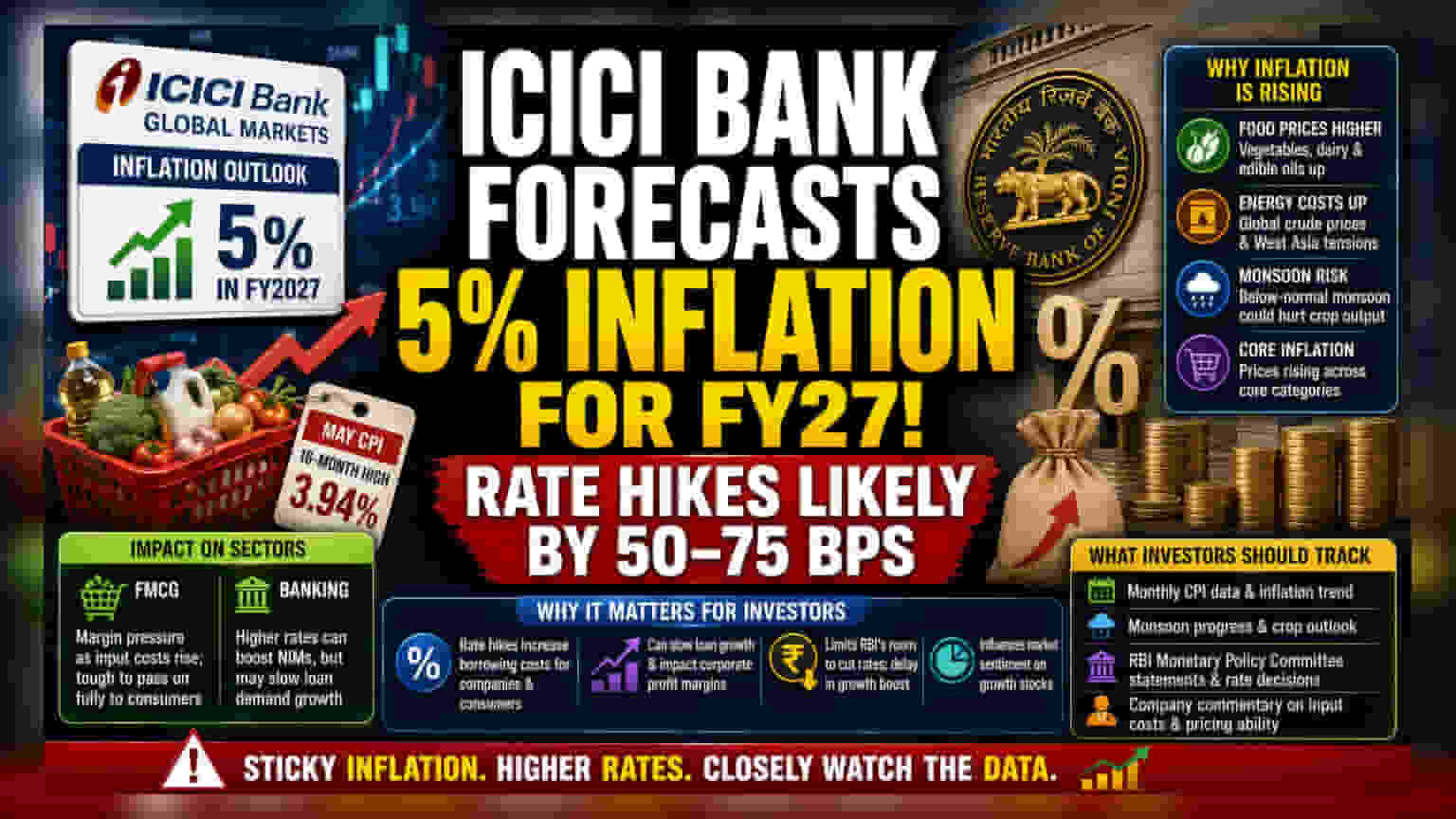


ICICI Bank Global Markets forecasts India’s inflation will reach 5% in FY27, driven by higher food and energy costs along with geopolitical risks. The firm expects the Reserve Bank of India may need to raise interest rates by 50-75 basis points to manage price stability.
What Happened
ICICI Bank Global Markets has updated its outlook on India's inflation, projecting it to reach 5% for the fiscal year 2027. This forecast comes as recent data showed May's consumer price inflation hit a 16-month high of 3.94%. The firm notes that prices are rising across several categories, including food, core items, and energy. To keep inflation under control, the brokerage suggests the Reserve Bank of India (RBI) might implement interest rate hikes totaling 50 to 75 basis points in the coming months.
Why This Matters For Investors
Inflation directly impacts the economy's cost of borrowing. If the central bank raises interest rates to cool down inflation, borrowing becomes more expensive for both companies and individuals. This can slow down loan growth and impact the profit margins of businesses. For stock market investors, this news highlights the need to monitor how different sectors, especially those sensitive to interest rates and consumer spending, manage these rising costs.
Inflation Drivers and Risks
The report points to several factors pushing inflation higher. Food inflation has been a significant contributor, with prices for vegetables, dairy, and edible oils rising. Global energy prices, influenced by geopolitical tensions, particularly in West Asia, are also putting upward pressure on energy costs. Additionally, there is a risk regarding the monsoon season. A projected below-normal monsoon could hurt the production of certain crops like pulses and oilseeds, potentially keeping food prices high.
Impact on Sectors
When inflation and interest rates rise, different parts of the market react differently. Companies in the fast-moving consumer goods (FMCG) sector often face margin pressure if they cannot fully pass on the increased cost of raw materials to customers. On the other hand, the banking sector typically tracks these trends closely. While higher interest rates can sometimes help banks improve their net interest margins, a sharp or sustained increase can also dampen the demand for new loans as borrowing becomes costlier for consumers and businesses.
How Investors May Read This
Investors generally watch these inflation trends to gauge the direction of monetary policy. If inflation remains sticky or trends toward the 5% mark, it limits the RBI's ability to lower interest rates, which the market often hopes for to spur economic growth. The anticipation of a 50-75 basis point hike suggests that the path to lower interest rates may be delayed, which can influence market sentiment regarding growth-oriented stocks.
What Investors Should Track
The most important monitorables in the coming months will be the official monthly consumer price index (CPI) data and the monsoon progress reports. Investors should also pay close attention to statements from the Reserve Bank of India’s Monetary Policy Committee, as these will provide the most direct guidance on whether rate hikes are indeed on the table. Additionally, monitoring management commentary from consumer-facing companies regarding their ability to manage input costs will be useful for understanding the ground-level impact of these inflationary pressures.