

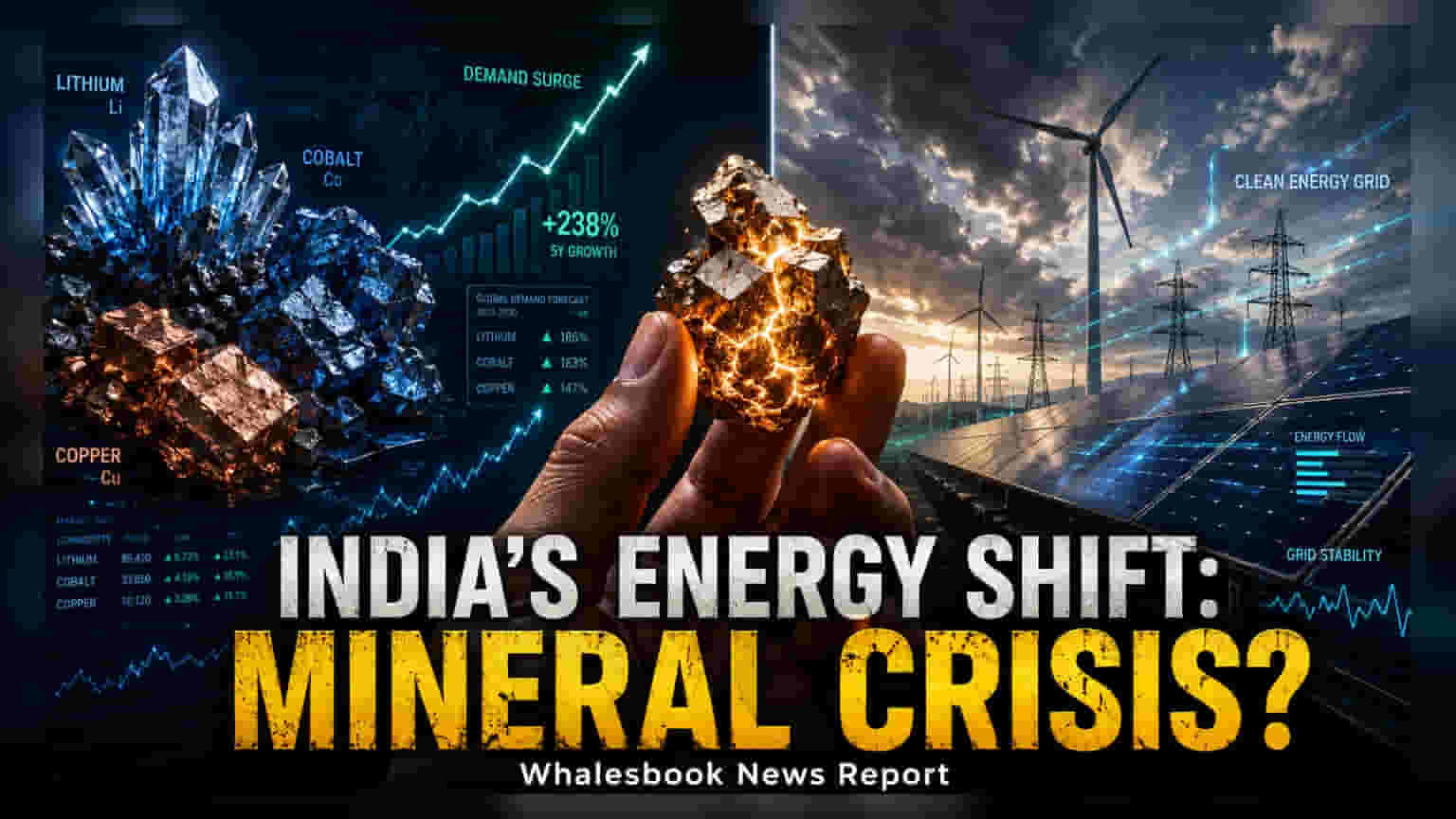
India is rapidly shifting its energy security focus from fossil fuels to critical minerals like lithium and cobalt to support its renewable transition. With a ₹34,300 crore government mission underway, the industry faces both massive infrastructure needs and supply chain risks. For investors, this creates a long-term watch list of companies in battery technology, refining, and mineral recycling, though project timelines remain a critical factor to monitor.
As India accelerates its transition toward renewable energy, the definition of energy security is undergoing a fundamental change. The focus is shifting from traditional fossil fuels like crude oil and natural gas to critical minerals such as lithium, cobalt, nickel, and copper. These materials are the backbone of modern energy storage, electric vehicles (EVs), and advanced power grids, making their secure supply essential for India's industrial future.
The Shift in Energy Strategy
Recent analysis from industry bodies like the Confederation of Indian Industry (CII) and EY India highlights that India’s path to a cleaner energy grid involves more than just installing solar panels or wind turbines. It requires a robust, end-to-end ecosystem. The government has already launched the National Critical Mineral Mission (NCMM) with an outlay of ₹34,300 crore to boost domestic supply chains. This initiative aims to reduce the country’s heavy dependence on imported minerals, where current supply chains are often concentrated in a few foreign markets.
For investors, this policy push signals a long-term strategic opportunity, but it also highlights a shift in risk. Unlike traditional fuel markets, which are established, the critical mineral sector is capital-intensive and requires significant investment in refining, processing, and recycling. Experts suggest that to bridge the gap, the country needs to create a comprehensive value chain, including a recycling economy estimated to be worth billions of dollars annually.
Financial and Operational Realities
While the strategic goal is clear, the financial path is complex. Developing domestic mining and refining capabilities involves high upfront spending and long gestation periods. Companies in this space are likely to face pressure on cash flows as they invest in technology and infrastructure. Projections indicate massive material requirements over the coming decades, including millions of tonnes of copper and graphite, which will necessitate continuous capital spending.
Market performance for green energy and battery-related stocks on August 6, 2026, remained mixed. While some companies in the battery and manufacturing space saw positive movement, others faced profit booking as investors weighed the long-term potential against the immediate challenges of high costs and global price volatility.
Risks and Monitoring Factors
Investors should be aware of the inherent risks in this sector. First is the technical hurdle; building an end-to-end ecosystem requires advanced capabilities that are still developing in India. Second is the risk of price volatility. As global demand for energy transition materials grows, the cost of these minerals can swing sharply, directly impacting the profit margins of battery manufacturers and EV producers.
Furthermore, project delays or cost overruns are common in the mining and refining sector. The primary monitorables for shareholders will be the implementation of the National Critical Mineral Mission, the ability of private firms to secure risk-sharing capital, and the progress in local refining and recycling projects. While the transition is inevitable, the speed and profitability of the companies involved will depend heavily on their execution ability and the regulatory support they receive to lower import reliance.