 Whalesbook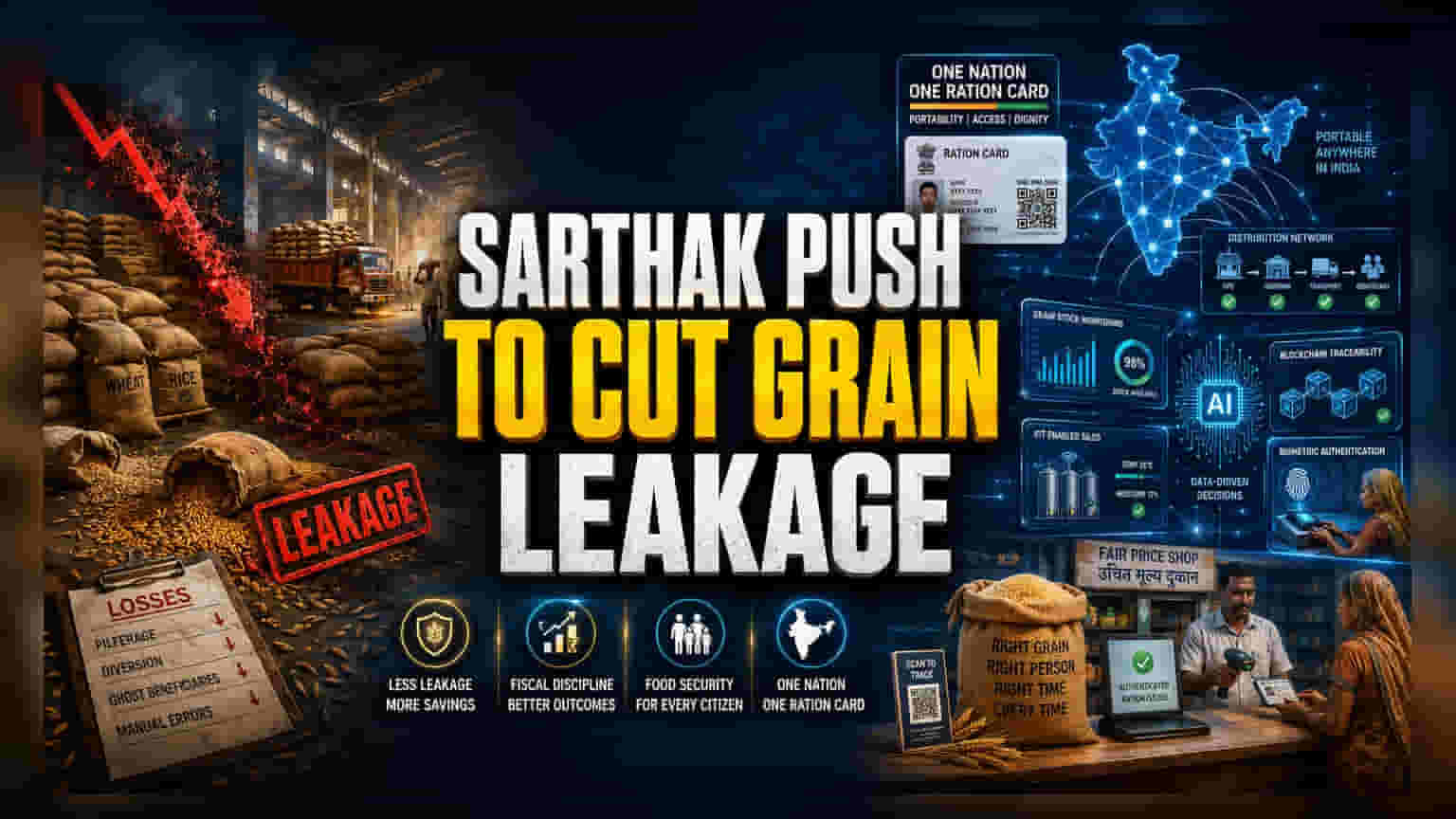


The Fiscal Mechanics of SARTHAK
The launch of the SARTHAK initiative represents more than a digital upgrade; it is a forced correction of a legacy system plagued by significant inventory loss. By allocating ₹25,530 crore over the next five years, the central government is betting that capital expenditure on AI-driven monitoring and command-and-control centers can solve the persistent 28 percent leakage rate in grain distribution. The efficacy of this investment depends on whether the integration of blockchain-based tracking and IoT sensors can bypass the manual, error-prone data entry that has historically facilitated beneficiary duplication and administrative ghost accounts.
The Economic Reality for FPS Dealers
The most significant structural risk lies within the economic viability of Fair Price Shops. Current margins—fixed at ₹90 per quintal for general states and ₹180 for special states—are widely viewed by industry observers as insufficient to cover rising operational costs. The push to rationalize these margins to roughly ₹140 per quintal is not merely an incentive program but a prerequisite for the scheme's survival. Without such adjustment, the digital transition risks accelerating dealer insolvency, which would ironically decrease physical access to food despite the presence of a more transparent digital architecture.
Structural Hurdles and Implementation Risk
Unlike centralized corporate rollouts, SARTHAK faces the chaotic reality of India’s federalized supply chain. State governments operate under wildly divergent procurement models, creating a high probability of friction during the implementation of the unified national database. The transition to 100 percent One Nation One Ration Card portability requires seamless interoperability between state-specific biometric systems and the central command infrastructure. Historically, attempts to standardize this data across states have met with severe technical latency and failures in biometric authentication, which remain the primary friction points for end-users.
The Forensic Bear Case
Critics of the proposed model point to the persistent disconnect between ambitious technology deployment and ground-level execution. The reliance on AI to manage stock levels and monitor transportation assumes that existing warehouse infrastructure is sufficiently digitized to provide accurate, real-time inputs. If the foundational data remains tainted by human error or manual manipulation at the point of storage, the AI will merely automate inefficiencies. Furthermore, there is the risk of fiscal slippage; if the cost of maintaining the new digital infrastructure exceeds the savings recovered from plugging leakage, the net impact on the national food subsidy bill could prove counterproductive. The government’s ability to force states into compliance with these new operational standards, particularly regarding the handling charges shared between federal and state levels, will be the true test of this reform's long-term sustainability.