 Whalesbook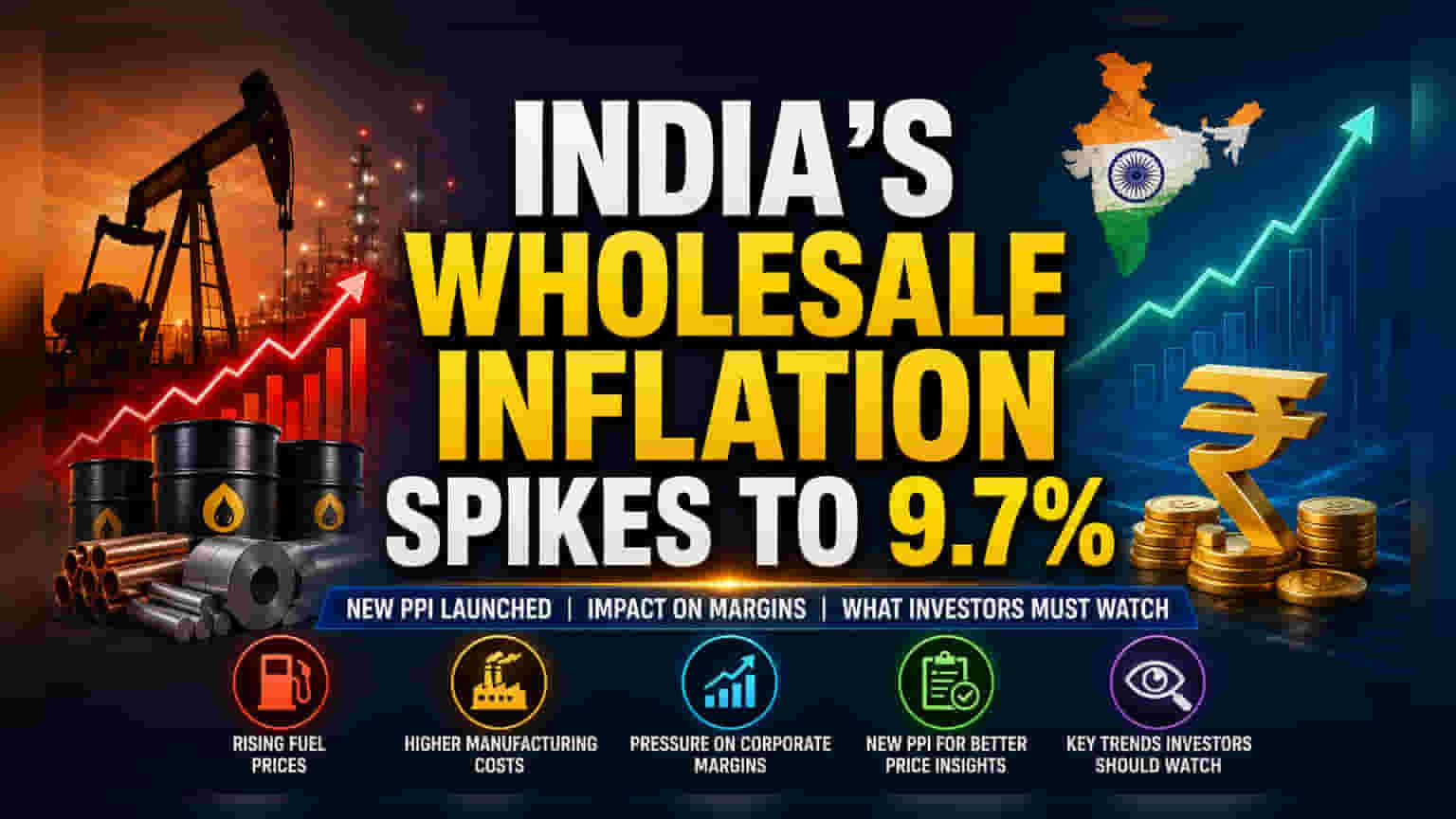


India's wholesale inflation hit 9.7% in May 2026, marking the eighth consecutive monthly increase. Driven by surging fuel and manufacturing costs, the government also introduced the new Producer Price Index (PPI), which will eventually replace the current wholesale series to provide a more detailed view of price pressures.
What Happened
India’s Wholesale Price Index (WPI) inflation rose to approximately 9.7% in May 2026, continuing a trend of rising prices that has persisted for eight straight months. This increase comes on the back of rising costs in key sectors, particularly fuel, power, and manufactured goods. Alongside the release of this wholesale data, the government also debuted the Producer Price Index (PPI) for the first time. The new PPI, which estimated inflation at 9.4% for May, has been introduced as a more modern gauge of price movements, designed to eventually replace the WPI over the next five years. The new WPI series also features an updated methodology with a broader basket of 957 items, incorporating energy sources like solar and wind power.
Understanding the New Producer Price Index
For investors, the shift toward the Producer Price Index is a significant change in how economic data is reported. While the Wholesale Price Index (WPI) has historically tracked the prices of goods at the wholesale level, the PPI is intended to provide a more granular and comprehensive view of price changes from the producer’s perspective. It covers output prices, input prices, and, crucially, services—a segment that the previous wholesale index did not fully capture. This transition aims to bring India’s inflation reporting closer to international standards, helping analysts and businesses better understand the pass-through of costs from inputs to finished outputs. For now, the PPI is running as a complementary data point alongside the WPI.
Why This Matters for Corporate Margins
Rising wholesale inflation is often a leading indicator of pressure on corporate profit margins. When the cost of raw materials—such as mineral oils, chemicals, basic metals, and textiles—rises at the producer level, companies face a difficult choice. They must decide whether to absorb these higher costs, which hits their profit margins, or pass the price increases on to the consumer, which can dampen demand. The data showed a 7.5% rise in factory gate prices for manufactured goods, highlighting that companies in sectors like chemicals, textiles, and metals are currently facing a cost-push environment. If these high input costs persist, investors may see margin compression in the quarterly results of companies that lack the pricing power to pass these costs on to customers.
The Drivers Behind the Inflation
the recent surge in wholesale inflation has been largely fueled by external factors. Prices for crude petroleum, natural gas, and mineral oils have climbed sharply, with reports indicating a significant double-digit percentage increase for these energy products in May. These hikes are largely linked to global supply chain disruptions and geopolitical tensions in West Asia, which have kept energy prices elevated. Additionally, the broader manufacturing sector—which accounts for a large portion of the WPI basket—has seen widespread cost increases, reflecting the impact of these high energy prices on production and logistics costs.
What Investors Should Monitor Next
Investors should look for updates in how these cost pressures evolve in the coming months. A critical monitorable is whether global energy prices, particularly crude oil, begin to moderate, as this would provide relief to both the wholesale inflation numbers and corporate input costs. Additionally, management commentary in upcoming quarterly earnings reports will be vital; investors should watch for how companies in manufacturing, chemicals, and metals sectors plan to manage these elevated input costs. Finally, the introduction of the PPI will be closely watched by analysts to see if it offers a clearer signal of economic trends compared to the traditional WPI, potentially influencing future policy expectations.