

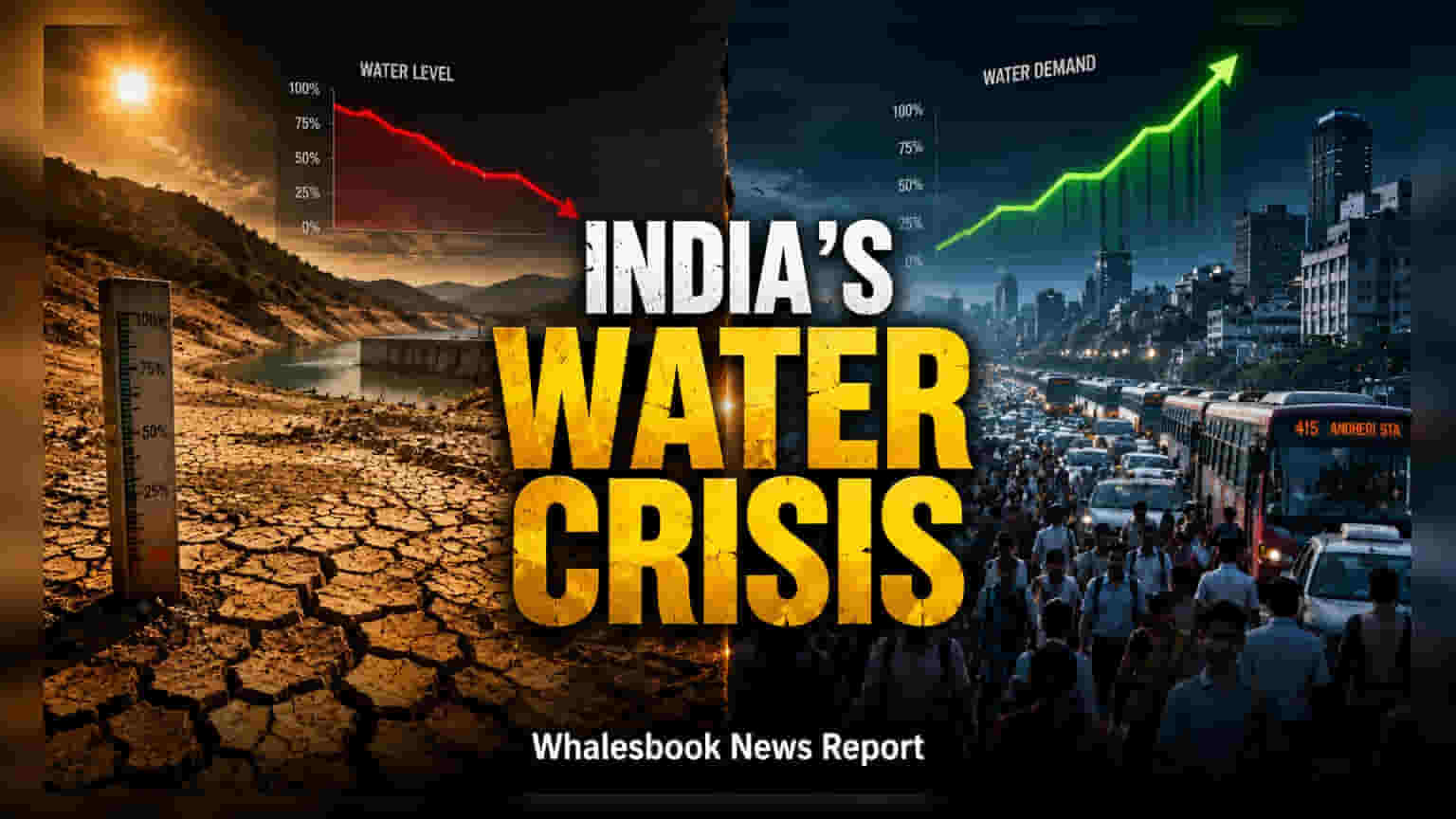
Over 50% of India's major reservoirs are dry despite the ongoing monsoon, heightening risks of water scarcity. Experts warn that current per capita water availability has dropped below the international water-stress threshold, urging a shift toward better demand management and wastewater recycling.
India is grappling with a severe water security challenge as major reservoirs remain critically low, even after the arrival of the monsoon season. With more than half of these storage facilities failing to reach adequate levels, concerns are growing regarding the long-term impact on agriculture, industry, and domestic supply.
Falling Per Capita Availability
The decline in water resources is stark when looking at historical data. According to experts at The Energy and Resources Institute, per capita water availability in India has fallen from roughly 5,000 cubic meters in 1950 to about 1,500 cubic meters today. This level is significant because it sits below the 1,700 cubic meter international benchmark used to define water-stressed regions. If availability dips below 1,000 cubic meters, the nation moves into a category of acute water scarcity.
Growing Demand and Supply Mismatch
The gap between what is available and what is required continues to widen. While the agricultural sector remains the largest consumer of water, industrial and urban domestic demand is rising rapidly. NITI Aayog has projected that by 2050, the country's total water demand could reach double the amount of reliably available supply. This projection highlights the urgent need for a shift in how water is managed, particularly in urban areas where current systems often rely on fresh water for non-potable needs rather than treating and recycling wastewater.
Climate and Infrastructure Challenges
Climate change is adding a layer of complexity by making monsoon rainfall patterns more unpredictable. Erratic cycles of heavy rain followed by prolonged dry spells reduce the effectiveness of traditional storage systems. While the government has launched initiatives like Mission Amrit Sarovar to build and restore decentralized water bodies, experts from organizations like the Centre for Science and Environment suggest that a return to more localized, decentralized management systems—similar to those used before the shift to centralized piped water—could be crucial for resilience.
Investors and policymakers are monitoring these trends as water scarcity increasingly impacts industrial output, construction projects, and agricultural productivity. The critical next monitorables for the sector include the progress of water recycling infrastructure, the success of state-level rainwater harvesting policies, and the speed at which industrial water-use efficiency measures are adopted to offset rising demand.