

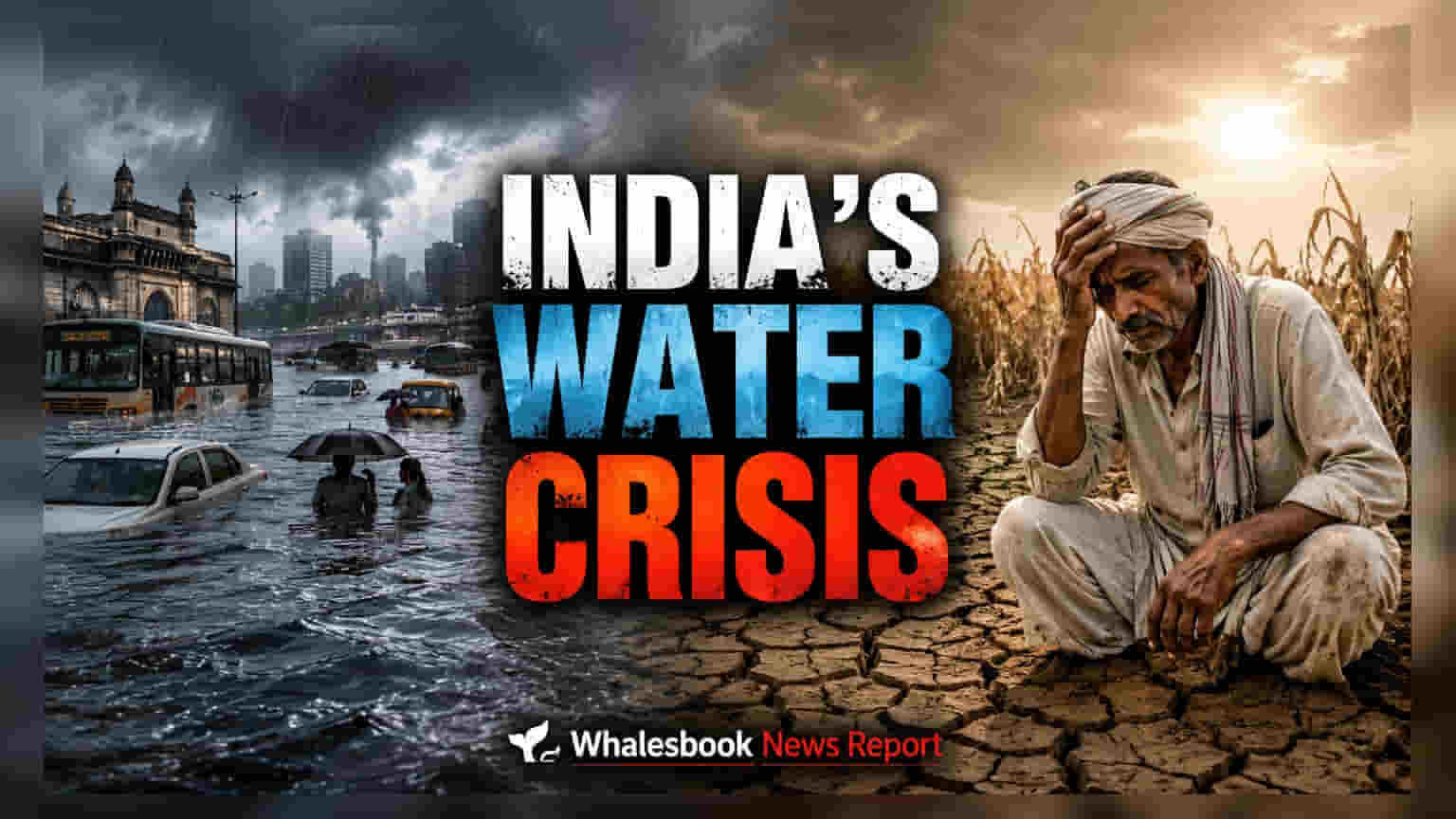
India struggles with a recurring water paradox where heavy monsoon floods coexist with severe regional droughts. With 600 million people facing water stress, the inability to store and manage water effectively poses a significant risk to future economic growth.
India is facing a growing economic and environmental challenge as it navigates the recurring paradox of monsoon floods alongside widespread water scarcity. While urban centers like Mumbai often face disruption from heavy rains and drainage issues, large parts of the country simultaneously contend with depleting groundwater levels and insufficient reservoir storage. This pattern highlights a critical need to transition from focusing solely on increasing water supply to improving how the nation captures, stores, and distributes this essential resource.
Challenges in Water Infrastructure
The central issue lies in the gap between the total water received annually and the amount that is effectively utilized. According to data from the Central Water Commission, while India receives approximately 2116 billion cubic meters (bcm) of water each year, only about 1137 bcm is usable due to limitations in topography and current storage technology. Proactive management of monsoon abundance is essential, as the inability to retain excess water exacerbates shortages during drier months.
This infrastructure deficit is not just an environmental issue but a material risk to the economy. NITI Aayog has indicated that nearly 600 million people in India are currently experiencing moderate to extreme water stress. If these trends continue, the national economy could face significant pressure, with projections suggesting that unbridled scarcity might reduce GDP by as much as six percent by 2030.
Agriculture and Sectoral Demand
Agriculture remains the largest consumer of freshwater in India, accounting for nearly 80 percent of usage. Current government policies, including procurement strategies and market incentives, often influence farmers to prioritize water-intensive crops, which can further strain regional aquifers. Experts suggest that a shift toward water-conserving crops, such as millets, supported by micro-irrigation and improved agricultural services, is necessary to maintain food security while reducing overall water stress.
Beyond agriculture, industrial and urban demand is set to rise sharply. With the World Bank estimating that 40 percent of the Indian population will reside in urban areas by 2036, the pressure on municipal water services and industrial water supply will grow. Companies operating in water-intensive sectors may face rising costs or operational risks if water management systems do not keep pace with this urbanization.
Future Monitorables
For investors and policymakers, the key monitorables moving forward include the progress of large-scale water storage projects, the adoption rates of micro-irrigation technologies, and potential changes to food procurement policies that encourage more sustainable water usage. The effectiveness of community-based groundwater management and the implementation of wastewater reuse initiatives will also play a critical role in determining whether India can successfully mitigate the economic impact of its ongoing water management challenges.