

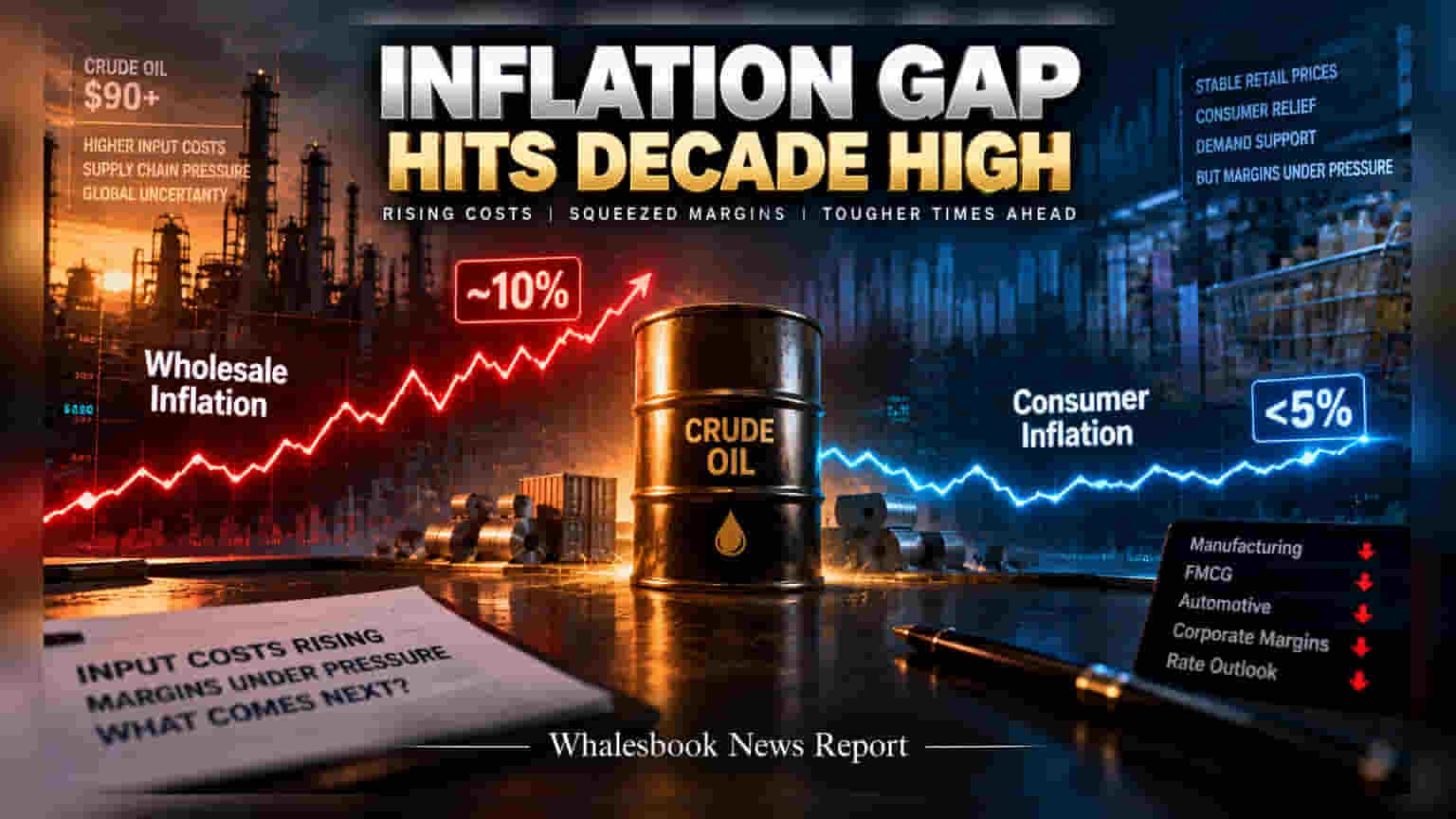
The difference between India's wholesale and retail inflation has reached a ten-year peak. Companies have been absorbing rising input costs, but this strategy may soon end. If firms start passing costs to consumers, retail inflation could rise, potentially pressuring the Reserve Bank of India to tighten monetary policy.
The gap between India's Wholesale Price Index and Consumer Price Index has hit its widest level in a decade. While wholesale inflation has climbed toward 10 percent, retail inflation has remained below 5 percent. This divergence reveals a clear trend in the Indian economy: manufacturers and producers are currently absorbing higher input costs rather than passing them on to buyers.
For several months, companies have kept final product prices steady to maintain sales volumes and protect market share. While this has provided relief to consumers, it has also put significant pressure on corporate profit margins. This strategy is now reaching a breaking point. With global crude oil prices staying high, the cost of raw materials and logistics continues to rise, leaving businesses with less room to protect their profitability.
The critical question for investors is what happens when this buffer disappears. If companies decide they can no longer sacrifice their margins, they will likely raise prices for end products. This shift would cause a direct jump in retail inflation. Because the Reserve Bank of India focuses on retail inflation when setting interest rates, a sudden spike in consumer prices could limit the central bank's ability to keep borrowing costs low. This would eventually increase the cost of debt for many companies.
Sectors that rely heavily on raw materials, such as fast-moving consumer goods, automotive, and manufacturing, are the most exposed to this trend. These companies are currently balancing the risk of thinner profit margins against the risk of losing customers if they hike prices. Investors should look for signs of pricing power in upcoming quarterly results. If a company can increase prices without losing sales volume, it suggests strong demand. However, if profit margins continue to fall, it indicates that the company is struggling to manage these cost pressures.
Going forward, the key indicator to watch is the retail inflation data. Investors should also monitor management commentary on input cost management during earnings calls. The ability of companies to manage this transition between wholesale costs and retail prices will likely be a major factor in determining stock performance in these sectors over the coming quarters.