

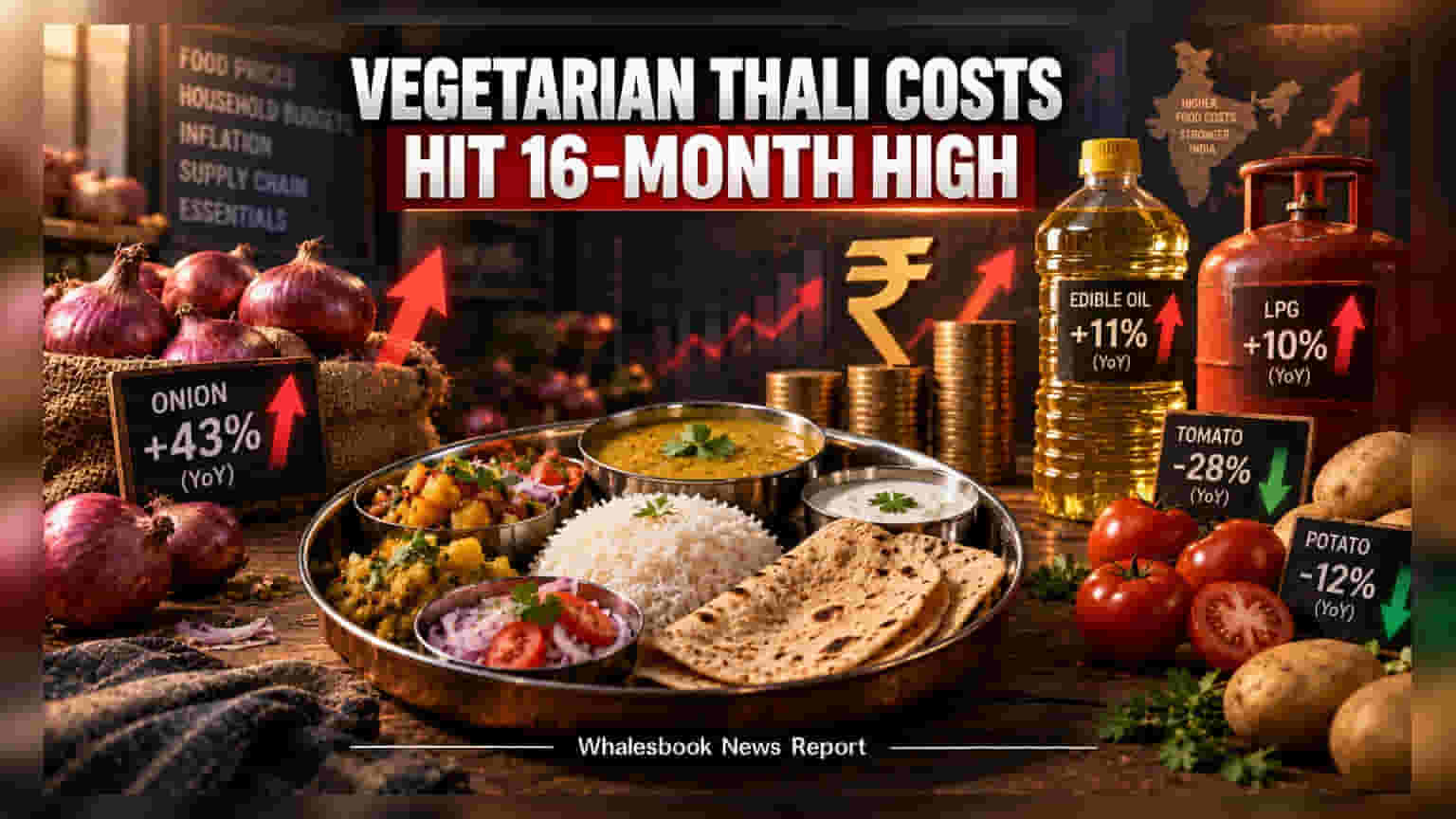
In August 2026, the average cost of a home-cooked vegetarian meal in India climbed to ₹29.5, the highest level since April 2025. This rise is primarily driven by a 43% jump in onion prices, compounded by higher cooking oil and LPG costs, which are pressuring household budgets ahead of the festive season.
The cost of preparing a vegetarian meal at home in India reached a 16-month high in August 2026, as supply chain disruptions pushed staple food prices higher. According to recent data, the average cost of a standard vegetarian thali rose to ₹29.5, reflecting a significant challenge for household budgets across the country.
Onion Supply and Government Intervention
The sharp increase is largely attributed to onion prices, which surged by 43% year-on-year to reach ₹40 per kilogram. This spike is linked to unseasonal rainfall in Maharashtra, which damaged stored inventories and affected crop quality. Furthermore, a 5-6% reduction in rabi season production has tightened supply. In response to these retail price pressures, the government has begun selling subsidized onions at ₹35 per kilogram in 19 cities to manage consumer impact.
Rising Pantry and Energy Costs
Beyond fresh produce, inflationary pressure has expanded into essential pantry items. Edible oil prices rose by 11% compared to the previous year, while the cost of LPG cylinders increased by 10%. These costs are partly driven by global energy prices, which have seen volatility due to the ongoing conflict in West Asia. These overheads add to the strain on household budgets, as they affect not just the cost of food but also the recurring expense of cooking.
Offsetting Factors and Non-Vegetarian Dynamics
Despite the rising costs of onions and cooking fuels, the overall thali index was partially protected by lower prices in other categories. Potato prices declined by 12% due to improved production, and tomato prices fell by 28% as seasonal planting shifts led to higher arrivals in July and August.
The cost of a non-vegetarian thali also remained elevated at ₹57.5, a 5% increase year-on-year. While broiler chicken prices rose by 10% due to higher costs for animal feed, demand for meat-based proteins saw a temporary dip during the Shravan month, providing a slight pause in price acceleration for that segment.
Impact on Household Spending
For investors and market watchers, the sustained rise in food inflation is a key indicator of household spending health. When a larger portion of the monthly budget is allocated to essential food items, consumers typically reduce spending on discretionary goods. As the country enters the peak festive season, the ability of households to maintain spending levels on non-essential products will depend on whether food prices stabilize. Investors may monitor crop arrival data and future government supply interventions, as these will be the primary factors determining if food inflation persists or softens in the coming months.