 Whalesbook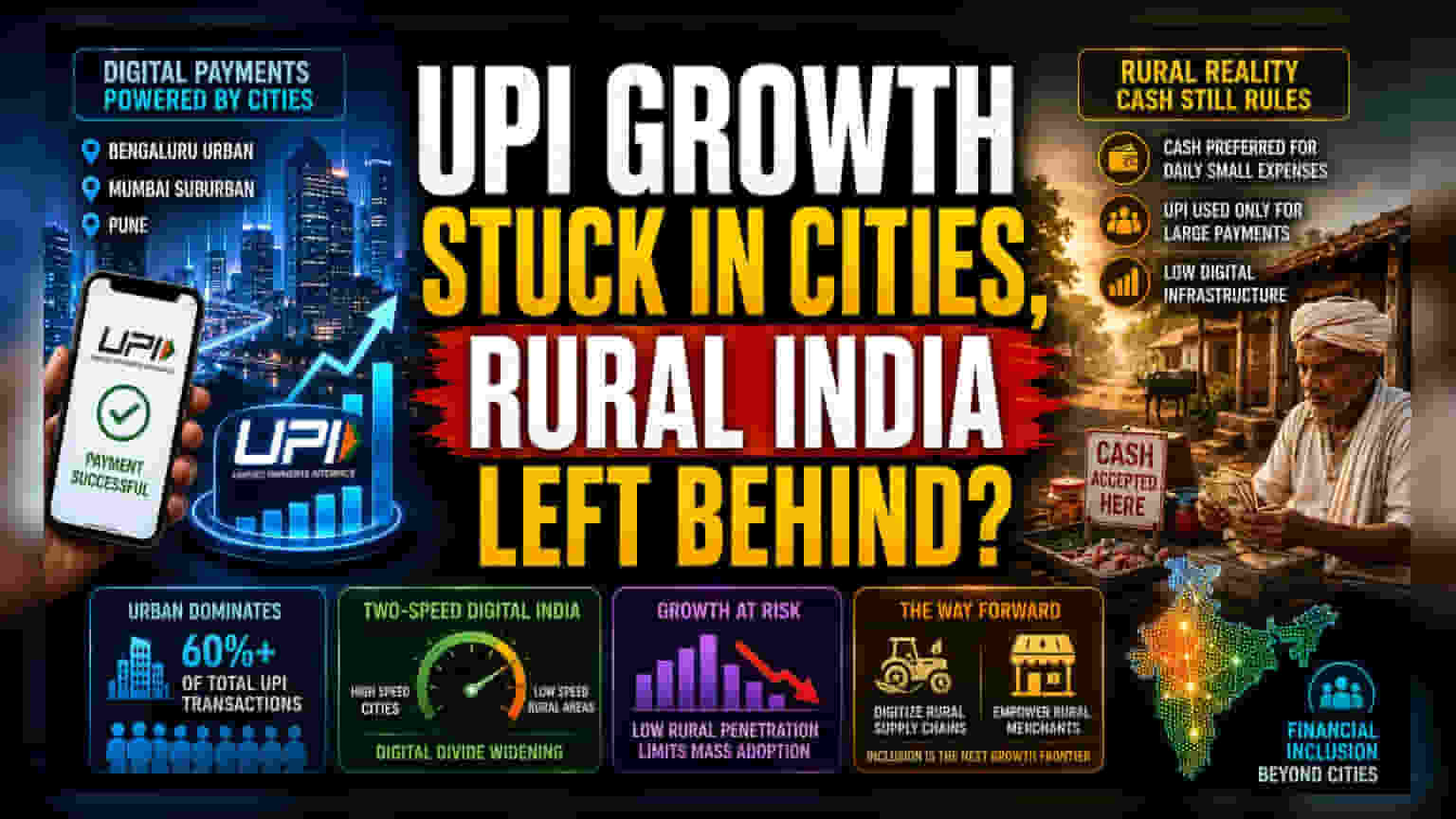


The Urban Saturation Trap
The reliance on metropolitan clusters to drive the Unified Payments Interface (UPI) narrative masks a concerning plateau in market penetration. Data from the National Payments Corporation of India reveals that a handful of districts—specifically Bengaluru Urban, Mumbai Suburban, and Pune—effectively function as the engine room for the nation's digital transaction volume. This hyper-concentration is not merely a demographic byproduct; it indicates that the current UPI framework is optimized for high-velocity, low-ticket urban consumption, which struggles to replicate its utility in agrarian or semi-urban settings where cash remains king for daily operational needs.
The Friction of Economic Velocity
Beyond the raw transaction counts, a subtle shift in user behavior is emerging that challenges the universal adoption thesis. In Tier-1 cities, the high frequency of low-value transactions suggests a culture of digital convenience. In contrast, emerging districts demonstrate a selective application of digital tools, utilizing UPI primarily for larger, high-value transfers while relegating smaller, routine expenses to traditional physical currency. This divergence suggests that the digital payment ecosystem has yet to solve the micro-transaction friction that prevents rural users from abandoning cash for small-scale commerce. The lack of standardized infrastructure and the absence of localized, high-frequency use cases in smaller towns have created a two-speed digital economy.
The Fiscal Efficiency Gap
From a structural standpoint, the failure to penetrate rural segments represents an underutilization of the existing network. Banks and fintech providers, having prioritized the low-hanging fruit of urban migrant populations and tech-savvy student demographics, are now facing the expensive reality of customer acquisition in less dense regions. The current incentive models, which largely favor high-volume, low-margin transactions, are ill-equipped to support the expansion into geographies where the cost per transaction may exceed the yield. Unless the ecosystem pivots toward incentivizing the digitization of agricultural supply chains and small-town merchant networks, the current growth trajectory risks decoupling from the broader Indian economy.
Future Outlook and Regulatory Headwinds
The ongoing reliance on urban hubs invites potential regulatory scrutiny regarding financial inclusion mandates. If the distribution of digital transaction capacity continues to favor industrial corridors, policy makers may move to enforce more aggressive rural rollout requirements on private payment platforms. With transaction concentration remaining high in states like Karnataka and Telangana, the sector is likely to see a shift in focus toward enhancing backend infrastructure in regions that have historically underperformed. Success in this next phase will require moving beyond volume-based metrics to focus on depth of integration within the rural commerce lifecycle.