 Whalesbook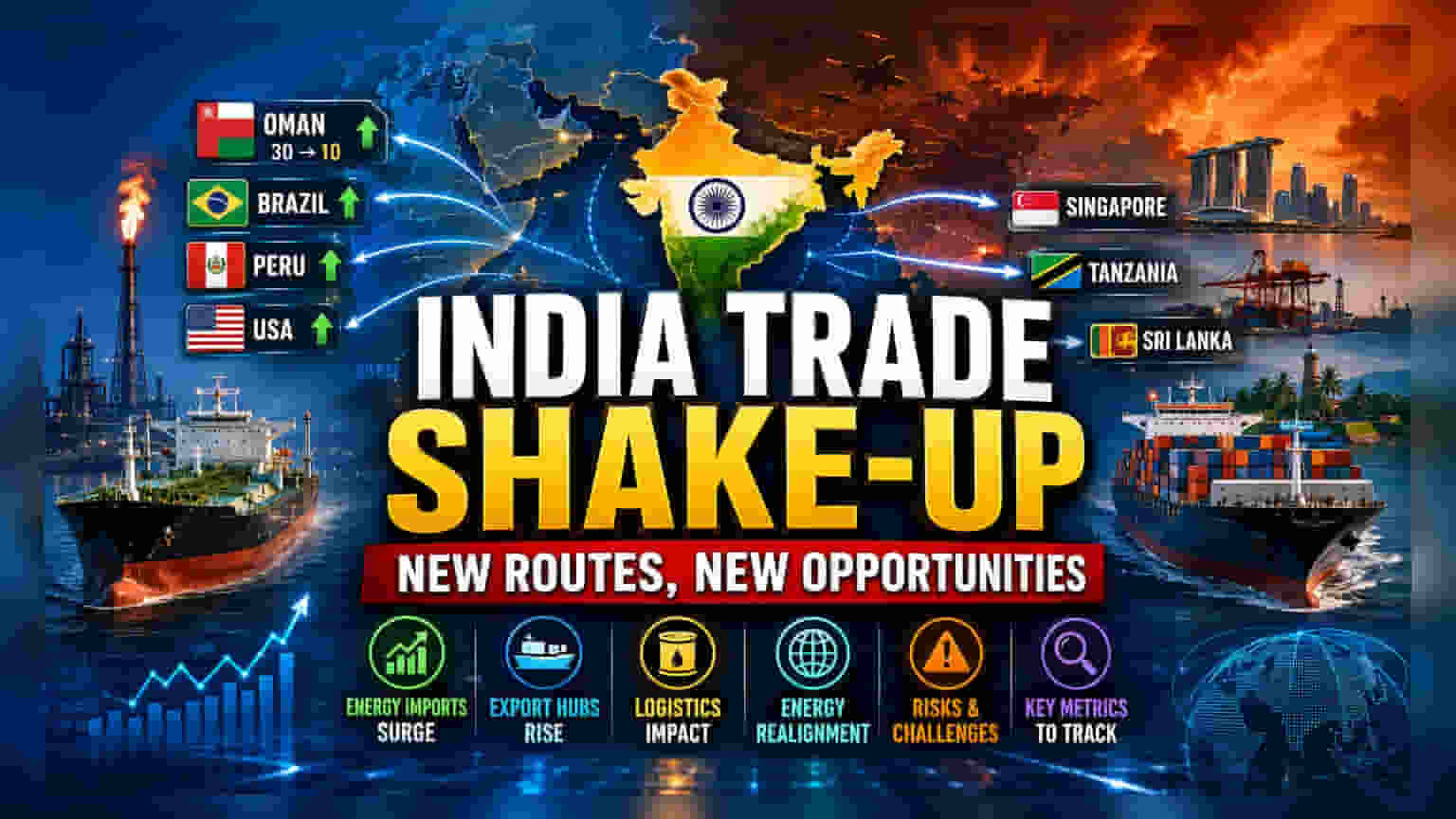


Geopolitical tensions in West Asia are causing a significant recalibration of India's trade routes. With energy import sources diversifying toward Oman, Brazil, and Peru, and new export hubs emerging in Singapore and Tanzania, the trade landscape is changing rapidly. Investors should track the impact on freight costs, energy import bills, and shipping logistics, as these factors directly influence the operational environment for energy and shipping companies.
What Happened
Geopolitical tensions in West Asia have triggered a major shift in India's international trade map over the last few months. The most striking change is the rapid rise of Oman as a key import source, jumping from the 30th position to the 10th in just two months. This is largely driven by a 3.8-fold surge in energy imports from the nation, which reached $3.4 billion. Other nations, including Brazil and Peru, have also seen their contribution to Indian imports rise sharply, as India diversifies its energy supply chain. On the export side, Singapore has become the third-largest destination for Indian goods, while Tanzania and Sri Lanka have gained prominence as critical export hubs.
Why This Matters For Investors
For investors, these shifts in trade routes are not just geopolitical news; they have a direct impact on the cost structure and efficiency of several key sectors. When trade routes change or lengthen due to conflict, the immediate consequence is often an increase in logistics and shipping costs. Companies that rely on imported raw materials, particularly oil marketing companies (OMCs) and chemical manufacturers, may see changes in their landed cost of materials. Furthermore, the diversification of energy sources is a strategy to manage supply security, but the cost-effectiveness of these new routes compared to traditional ones will be a critical factor for bottom-line profitability.
Impact On Shipping And Logistics
The rerouting of trade has broader implications for the logistics sector. As India relies more on transit hubs like Oman and increases exports to destinations like Singapore and Tanzania, the demand for shipping capacity changes. Generally, when trade routes are disrupted or lengthened, it can lead to higher freight rates. This creates a complex scenario for exporters who may face rising shipping costs, potentially affecting their profit margins. Conversely, shipping companies might see a change in demand patterns, as longer routes or changes in port callings influence the utilization of their tanker and container fleets.
Assessing The Energy Landscape
Energy remains the central theme in this trade realignment. The surge in LPG and crude oil imports from the US, Oman, Brazil, and Peru underscores India’s effort to secure energy supplies amidst regional instability. For Oil Marketing Companies (OMCs), this shift means they are continuously adjusting their procurement strategy to balance the landed cost of crude oil and gas against international price volatility. Investors monitoring this sector should look for management commentary on how these logistics and sourcing changes are influencing their refining margins and inventory management costs.
Potential Risks And Challenges
The primary risk inherent in this shift is cost inflation. Relying on new or more distant suppliers can sometimes come at a premium compared to traditional, established trade lanes. Additionally, if the conflict in West Asia persists or escalates, the stability of these new transit hubs could be tested. There is also the risk of currency fluctuations; as India imports more from diverse markets, the payment dynamics and currency risk exposure for Indian companies may increase. Investors should remain cautious about the potential for higher working capital requirements if supply chain lead times increase due to these logistical changes.
What Investors Should Track
Moving forward, the key monitorables are quite specific. Investors should keep a close eye on the gross refining margins (GRM) of energy companies, as this will reflect their ability to manage the cost of shifting import sources. The movement in freight indices and shipping rates will be a good indicator of the cost burden on exporters. Additionally, trade balance data and monthly export-import reports from the Ministry of Commerce will provide ongoing clarity on whether these new trade partners remain consistent, long-term suppliers or if they are temporary stop-gap solutions. Management discussions in upcoming quarterly earnings calls regarding supply chain resilience and cost-saving measures will be vital to understanding how these companies are navigating the changing global environment.