

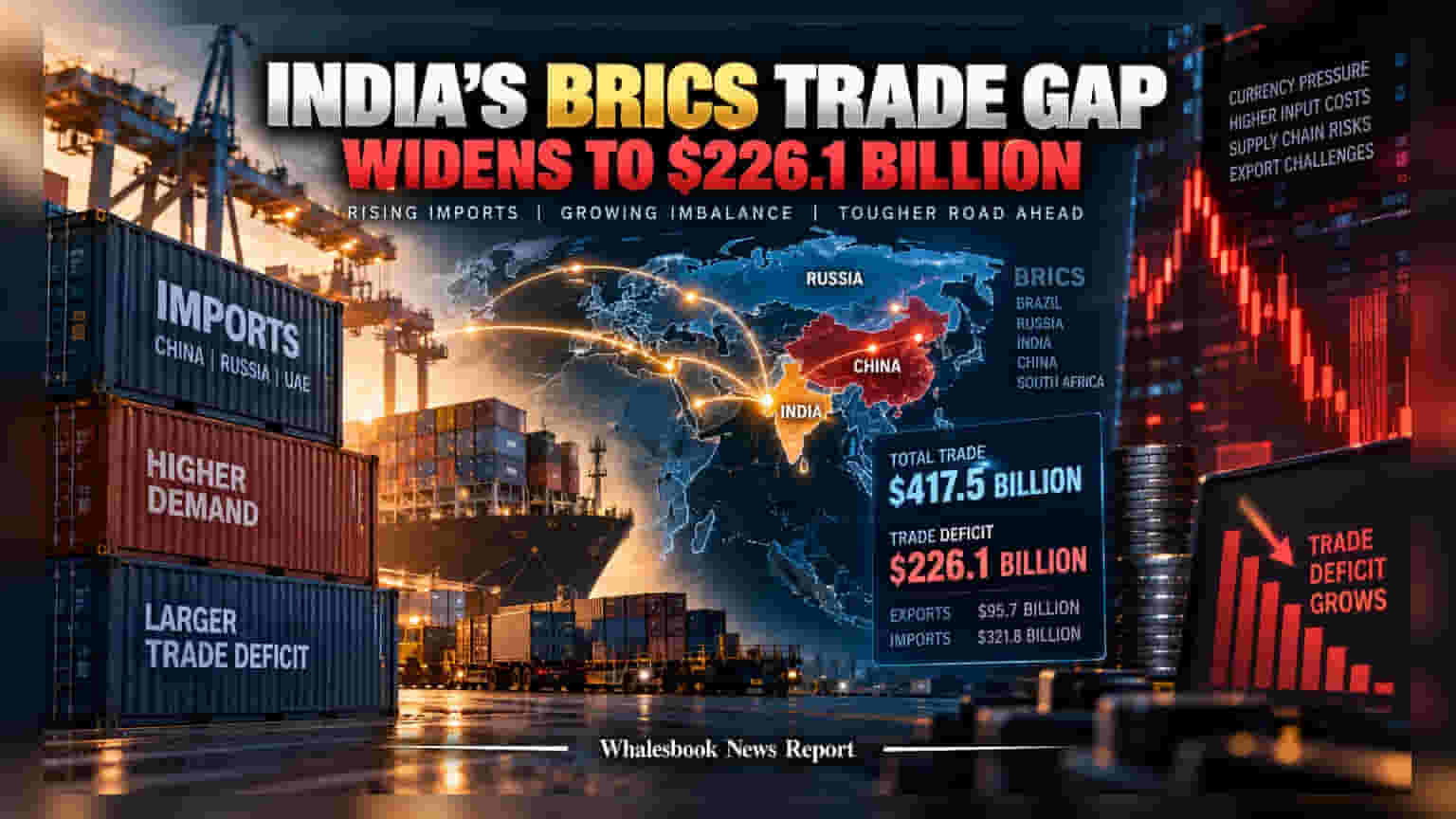
India's trade deficit with BRICS nations reached $226.1 billion in FY26 as imports significantly outpaced exports. This widening gap, largely concentrated in trade with China, Russia, and the UAE, poses potential challenges for the rupee and highlights the need for structural shifts in India's export mix.
India’s commercial trade gap with the BRICS bloc widened to $226.1 billion in the fiscal year 2026, highlighting a growing disparity between the country's rising demand for imports and its export performance. While total trade volume with these member nations climbed to $417.5 billion, the majority of this value was driven by an inflow of goods rather than outbound shipments, leading to an imbalance that now accounts for a significant portion of India's total merchandise trade deficit.
Concentration of Imports
A critical factor behind this trend is the high geographic concentration of India’s import reliance. Data indicates that 84% of India’s imports from within the BRICS framework originate from just three countries: China, Russia, and the United Arab Emirates. China remains the largest contributor to the bilateral trade deficit, which stood at $112.2 billion for the year. Meanwhile, imports from Russia have seen a substantial increase, primarily due to higher procurement of crude oil and energy-related commodities since 2022. This heavy reliance on a few suppliers creates a bottleneck, where India is exposed to price fluctuations and supply chain shifts in these specific markets.
Macroeconomic Implications
For the broader economy, a persistent trade deficit of this magnitude can exert pressure on the Indian rupee and the country’s foreign exchange reserves. When a nation consistently imports more than it exports, it requires a higher outflow of foreign currency to settle payments. If this trend continues without a corresponding rise in export earnings, it can lead to currency depreciation over time. This creates a difficult environment for companies that rely heavily on imports, such as those in the electronics, capital goods, and manufacturing sectors. As input costs rise due to currency fluctuations, these businesses may face profit margin pressure unless they can pass on the costs to consumers.
Export Hurdles and Future Outlook
Although India's exports to the bloc grew to $95.7 billion, the pace of growth has been insufficient to offset the rapid rise in imports. Economic analysts have pointed to the need for addressing non-tariff barriers and improving market access in key nations to boost competitiveness. The structural challenge lies in the composition of trade; the current dependence is skewed toward essential commodities and industrial machinery. Shifting the export strategy toward higher-value goods is becoming a primary focus to improve the trade balance in the long term. Investors will likely monitor government policy updates regarding export incentives and trade barrier negotiations, as these factors will be crucial in determining whether the trade deficit stabilizes or continues to grow.