

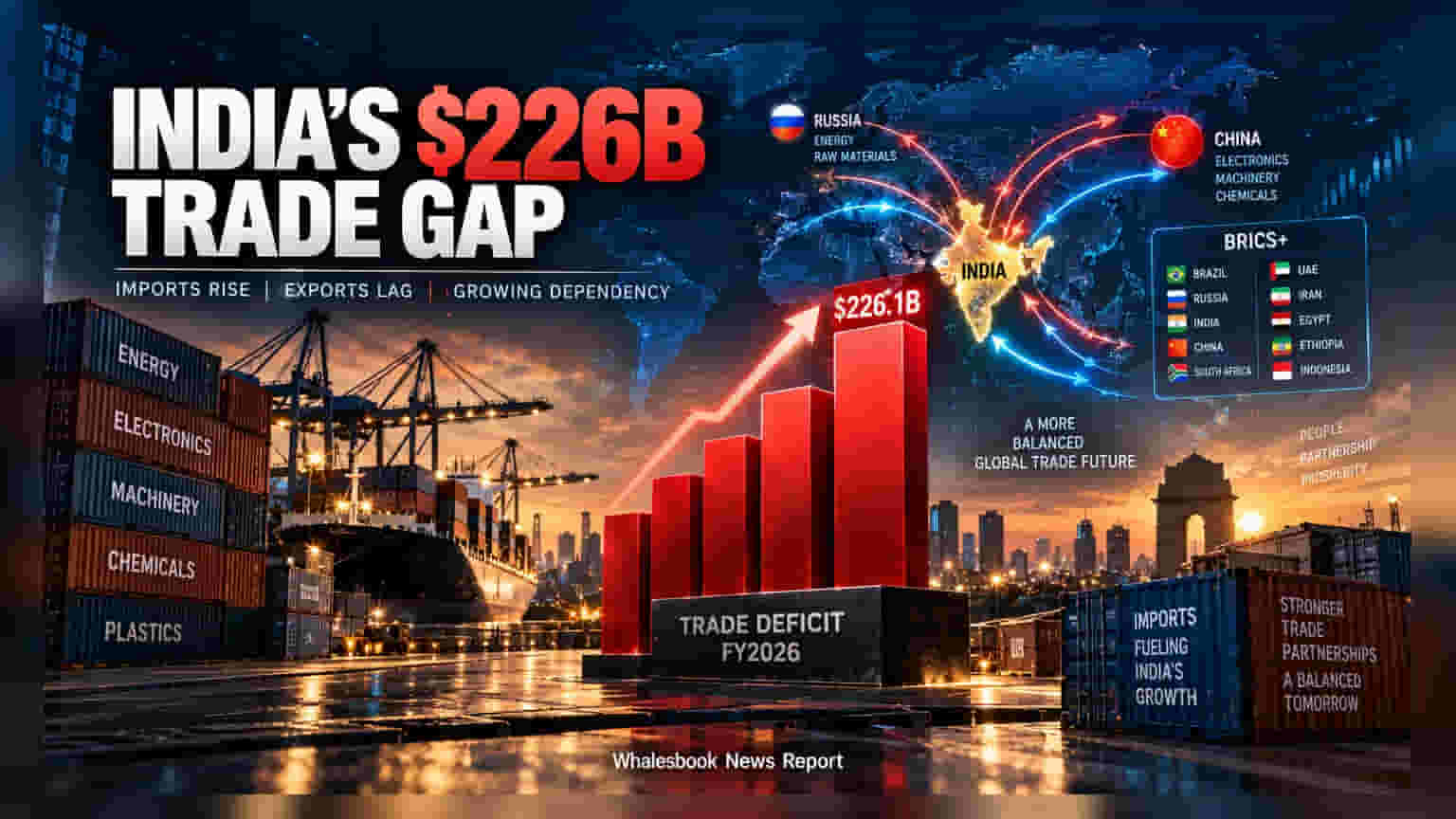
India’s trade deficit with the BRICS+ bloc reached $226.1 billion in FY26, accounting for 68% of the country's total trade shortfall. This significant imbalance, driven by heavy reliance on raw material imports from member nations, highlights a structural challenge for the economy despite the importance of these partners for industrial supply chains.
India’s trade relationship with the BRICS+ bloc has entered a complex phase, with the trade deficit widening to $226.1 billion in the 2026 financial year. This figure now accounts for 68 percent of India’s total trade deficit, creating a significant structural imbalance that is becoming a key point of focus for economic policymakers. While the bloc serves as a primary source of energy, raw materials, and components for Indian manufacturers, the trade data suggests it has not yet become a balanced reciprocal market for Indian goods and services.
The trade dynamics within the 11-member coalition are heavily skewed by specific relationships. The most significant pressure comes from China, where imports have surged by 131.8 percent over the last five years. In contrast, Indian exports to China have declined by 8.1 percent during the same period. This trend is driven by a massive inflow of electronics, machinery, organic chemicals, and plastics—essential inputs that domestic factories utilize for manufacturing intermediate and capital goods.
While the reliance on these imports supports the growth of domestic production, the persistent trade gap creates a dependency that policymakers are watching closely. Similar trends are visible in India’s trade with Russia, largely linked to energy and material requirements. However, not all BRICS+ relationships follow this pattern. The United Arab Emirates remains a notable example of a more balanced relationship, serving as India’s largest export market within the bloc with trade flows reaching $37.4 billion.
For investors and the broader economy, this concentration of the trade deficit has implications for foreign exchange management and long-term manufacturing competitiveness. The data shows a shift in strategic focus, as India looks to balance its need for essential raw materials with the necessity of finding more reciprocal trade partners. As the country aims to integrate deeper into global supply chains, the ability to diversify export markets beyond the current bloc structure is becoming a critical monitorable for India’s macroeconomic stability. Future economic policy may prioritize geographic trade diversification to address this dependency, especially as the country continues its push to become a global manufacturing hub.