

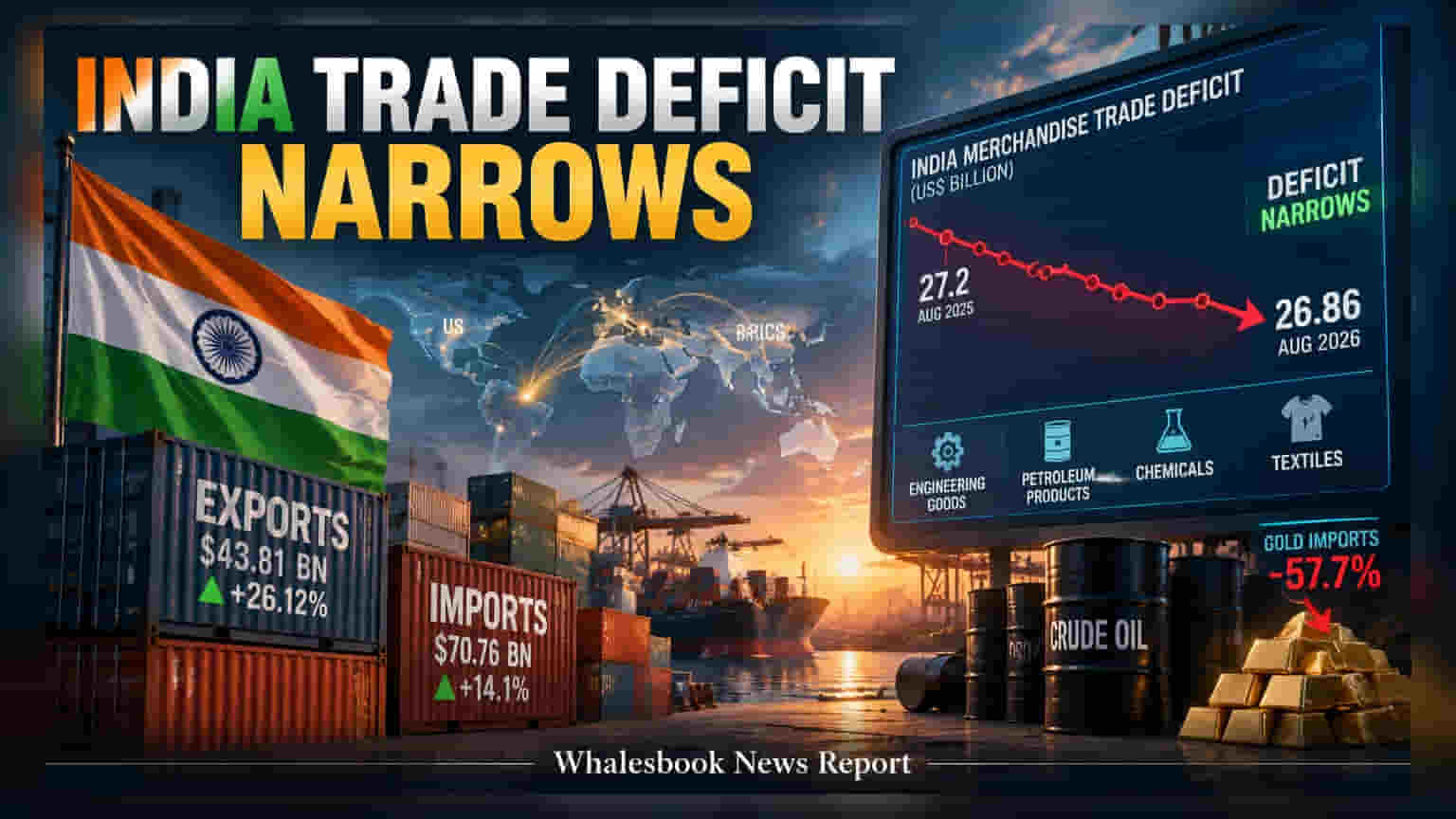
India’s merchandise trade deficit narrowed to $26.86 billion in August 2026, supported by a 26.12% surge in exports and a sharp drop in gold imports. While this reduction eases pressure on the trade balance, total imports rose to $70.76 billion. Investors should track the sustainability of export-oriented sectors like engineering and chemicals amidst global geopolitical and energy price uncertainties.
India’s merchandise trade deficit narrowed to $26.86 billion in August 2026, showing an improvement from the $27.2 billion recorded in the same month of the previous year. This shift was primarily driven by a robust performance in the export sector, which outpaced the growth in import volumes during the month.
Merchandise exports reached $43.81 billion, marking a significant year-on-year increase of 26.12%. This momentum was largely supported by healthy demand for Indian goods in major markets, including the United States, the European Union, and BRICS nations. Key sectors that contributed to this export growth included engineering goods, petroleum products, chemicals, and textiles. These segments have become vital for maintaining the country's export revenue.
On the import side, the total bill for the month climbed to $70.76 billion, reflecting a 14.1% increase compared to August 2025. While this rise in imports indicates sustained domestic consumption and industrial activity, the overall trade gap was kept in check by a notable decline in precious metal purchases. Gold imports fell by 57.7% to $2.3 billion, a significant drop from the $5.4 billion recorded in August of the previous year. This lower spending on gold provided a necessary cushion, preventing the trade deficit from widening further despite the higher cost of other non-gold imports.
Despite the narrowing deficit, the economy remains sensitive to global energy costs. Persistent reliance on crude oil and coal imports continues to be a primary driver of the import bill. Investors should note that geopolitical instability, particularly in regions that supply energy to India, remains a potential risk factor that could impact future import costs. Additionally, while current export demand from major economies like the US and EU has been strong, any shift in global economic conditions or supply chain disruptions could impact the momentum of sectors such as engineering and chemicals.
The key monitorable for the coming months will be the sustainability of export growth in these primary sectors. As global trade dynamics fluctuate, market participants will track whether the current export strength can offset the underlying pressure from high energy imports, which remain a structural component of India’s import profile.